
Removing baffles from a Harley exhaust takes 20-45 minutes and requires basic hand tools – but it is federally regulated under 40 CFR Part 205 (noise) and the Clean Air Act (emissions), and illegal for on-road use in most states. Baffle removal voids EPA compliance on the exhaust system and can trigger warranty denials on powertrain components. We reviewed the federal regulations, five state statutes, and HDForums owner reports to lay out exactly what you are getting into before you pick up a drill.
- Federal noise law (40 CFR Part 205, Subpart E): The EPA sets noise emission standards for 1986+ street motorcycles under the Noise Control Act. This regulation governs exhaust noise levels and prohibits defeat of noise-control components. Separately, the Clean Air Act (42 U.S.C. §7522 and 40 CFR Part 1068) prohibits tampering with emission control systems. Baffle removal can implicate both frameworks – noise (Part 205) and emissions (Clean Air Act) are distinct legal requirements. Violations of either can result in civil penalties.
- Street use = illegal in most states: California, New York, Florida, and dozens of other states have their own motorcycle noise statutes with dB limits that unmodified stock baffles are specifically calibrated to meet. Removing them puts you over the legal threshold.
- Warranty risk: Per the FTC Magnuson-Moss framework, Harley-Davidson can deny powertrain warranty claims if a modification – including baffle removal – is shown to have caused the defect. On 2017+ Milwaukee-Eight bikes, HD’s service network uses Digital Technician II diagnostics that log unauthorized exhaust modifications.
- This guide covers the process for off-road, competition, and track use only. If you want more sound for street riding, the drilled-baffle and aftermarket-insert middle ground covered in Section 8 keeps you legal.
What Baffles Actually Do (Sound, Back Pressure, and EPA Certification)
This is where most guides get the physics wrong – and where it matters for your tuning decision.
A baffle is a perforated steel tube or chamber inserted inside the muffler canister. It does three things simultaneously: it dissipates sound waves by forcing exhaust gas through a longer, more turbulent path; it creates calibrated back pressure in the exhaust header; and it forms the core of the factory EPA sound certification.
On factory Harley mufflers, the baffle is a removable insert retained by one or two Allen-head screws (typically 5/16 in.) recessed near the end cap or seam. Aftermarket pipes from Vance & Hines, Rinehart, and Cobra use the same insert-style design. The stock Harley exhaust system is certified to meet the EPA’s 80 dB street motorcycle limit per 40 CFR §205.166 – that certification number is printed on the permanent label affixed to the muffler body, which federal law requires cannot be removed or destroyed (40 CFR §205.169).
The back-pressure debate is more nuanced than most forum threads acknowledge. Research compiled from threads across HDForums and V-Twin Forum, as well as DK Custom Products’ published exhaust analysis, shows that baffles reduce reversion (exhaust gas flowing backward into the cylinder) more than they create harmful back pressure. The net result: removing baffles on a stock-tuned Milwaukee-Eight typically reduces low-end torque and can introduce air-fuel ratio (AFR) problems – more on that in Section 6.
Tools You Will Need
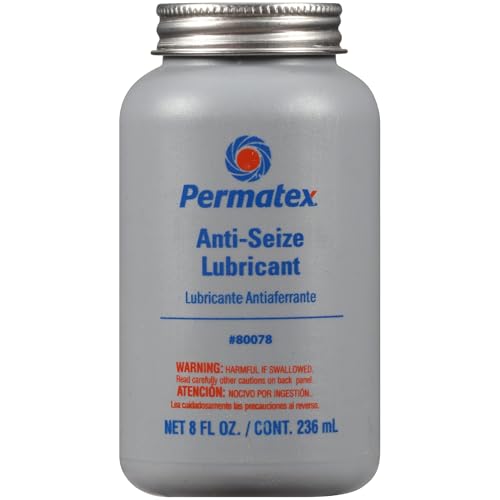
Apply to exhaust bolts – prevents seized fasteners on reinstall.
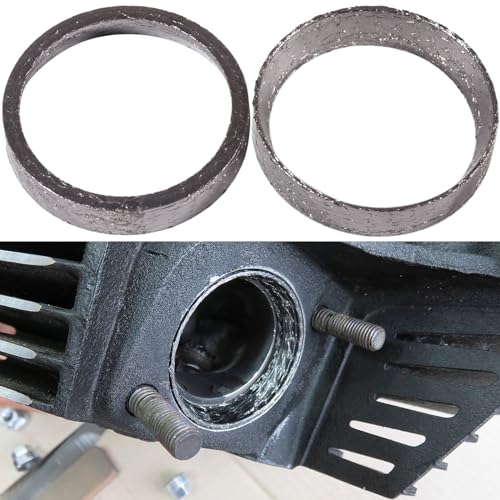
Graphite-and-steel gaskets – replace on every removal. OEM-fit for FLH/FXST/Dyna/Sportster.
You don’t need a full workshop for this job. Most of it you probably already have on a basic socket set – with one exception.
| Tool | Use | Notes |
|---|---|---|
| 3/8 in. or 5/16 in. Allen wrench / hex socket | Remove baffle retention screws | Most Harley stock and V&H mufflers use 5/16 in. Allen |
| 3/4 in. wooden dowel or 24 in. socket extension | Drive out baffle once screws removed | Fold a rag over it to avoid scratching canister |
| Penetrating oil (WD-40 or PB Blaster) | Loosen seized baffle | Let soak 15-20 min before driving |
| Titanium-coated step drill bits (if drilling) | Drill-out method on welded baffles | Standard HSS bits work but titanium lasts longer on hardened steel |
| Slide hammer with 3/8-16 threaded adapter | Extract stuck baffles without damage to canister | Thread into baffle louver; pull straight out |
| Loctite 243 (medium-strength threadlocker) | Reinstall baffle screws or re-baffle later | Per HD Service Manual guidance on exhaust fasteners; Loctite 242 vs. 243 – which to use |
| 15/16 in. socket or 24mm wrench | Remove muffler from header pipe | Required if you are pulling the muffler off for easier access |
We searched Amazon for these specific items. At time of writing, titanium step drill bit sets and slide hammer kits with threaded adapters are available via the links below. Always verify fitment before ordering.
– Titanium step drill bit set (Amazon)
– Slide hammer kit with threaded adapters (Amazon)
– Loctite 243 medium-strength threadlocker (Amazon)
Step-by-Step Baffle Removal (Vance & Hines, Stock, and Aftermarket Mufflers)
This process applies to removable insert-style baffles found in most V&H Shortshots, Power Duals, and stock Harley mufflers from 1984 onward. Welded baffles (found on some budget aftermarket pipes) require the drill method noted in Step 5.
Minimum 2 hours after the last ride. Muffler metal expands when hot; a cooled baffle slides out far more easily. Working on a hot pipe also risks burns and can warp the baffle slightly if you force it.
On most Harley and V&H mufflers, there is one Allen-head screw on the underside of the muffler canister, approximately 2 inches forward of the seam or end cap. Some models have two screws. Use a 5/16 in. Allen wrench or hex socket. If the screw is seized (common on high-heat applications), apply penetrating oil and allow 15-20 minutes before retrying.
Hold the muffler with the outlet end facing down over a folded rag. Insert a 3/4 in. wooden dowel or 24 in. socket extension through the inlet and tap firmly with a rubber mallet. On V&H mufflers, the fiberglass packing wraps the steel baffle tube – it will come out with the baffle. The steel baffle tube can be reinstalled without the packing for a louder sound, or with new packing for a quieter result.
Thread a 3/8-16 adapter into the louver holes on the baffle face. Attach a slide hammer to the adapter and pull straight out with steady, controlled strokes. This avoids denting the canister – a real risk if you hammer aggressively with a dowel. The HDForums community credits this method for extracting corroded baffles on high-mileage Touring models without damaging the muffler body.
If no retention screw is present, the baffle may be tack-welded. Use a titanium step drill bit to drill 4-6 evenly spaced 3/8 in. holes through the baffle near the center. Insert a Phillips screwdriver through the holes and use a hammer to break the baffle free from the weld points. This method is destructive and not reversible without replacement parts.
Check the header pipe gasket for damage before reinstalling the muffler. Torque the exhaust bracket bolt to 15-19 ft-lbs (20.3-25.8 Nm) per HD Service Manual specifications (2013 Dyna, p. 1-45, Table 1-15). Apply Loctite 243 to the bracket bolt threads – medium-strength is correct here; blue 243 allows future removal without heat.
Start the bike and let it idle. Listen for decel popping during warmup and on deceleration. Some decel pop is normal with open pipes and does not damage the engine – it is unburnt fuel igniting in the exhaust tract. However, persistent or loud decel pop on a stock-tuned Milwaukee-Eight indicates the AFR has gone lean and a tuner session is recommended. See Section 6.
Sound Expectations: What dB Numbers Actually Mean
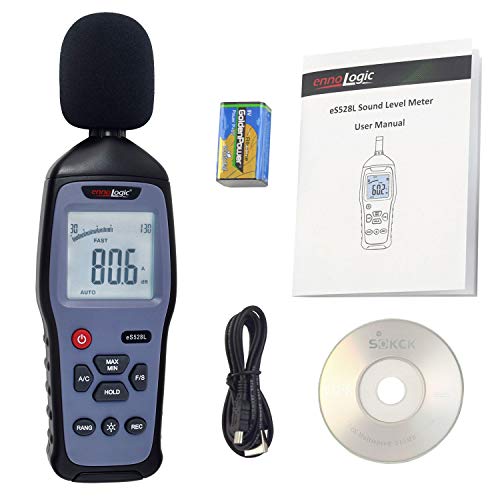
Verify your dB before and after with an SPL meter – the same type law enforcement uses.
The numbers here matter, because they are also the numbers law enforcement measures against.
A stock Harley-Davidson Touring model with factory mufflers registers approximately 80 dB at idle – exactly the EPA federal limit under 40 CFR §205.166 for 1986+ street motorcycles. At wide-open throttle, stock bikes typically reach 82-85 dB at the federally measured 50-foot distance.
Removing baffles from stock mufflers typically adds 8-15 dB, bringing the bike into the 88-97 dB range at idle and higher under acceleration. That range:
- Exceeds California’s 80 dB limit (CVC §27202) for motorcycles manufactured after 1985
- Exceeds New York’s SLEEP Act (VTL §375) 80 dB limit, with fines up to $1,000
- Likely exceeds Florida’s 78 dB limit at 35+ mph (Florida Statute §316.293)
V&H Shortshots with baffles removed register approximately 93-95 dB at the 50-foot measurement in owner reports compiled from HDForums threads (2019-2024). Rinehart True Duals baffle-out: approximately 90-92 dB. Stock Touring pipes baffle-out: approximately 88-90 dB. These are owner-reported estimates, not laboratory measurements – actual dB will vary with throttle position, speed, and measurement distance.
Performance Implications: Decel Pop, Lean AFR, and What Actually Changes

After baffle removal AFR runs lean – this is the tuner most HD techs reach for.
Here is where a lot of riders get surprised – and occasionally disappointed.
The common expectation is that removing baffles adds power. The reality is more nuanced. Research across DK Custom Products’ published exhaust analysis and owner threads on HDForums and V-Twin Forum shows the following consistent pattern:
Decel pop: Almost universal with baffle removal on stock-tuned bikes. The AFR in the exhaust pipe – which is calibrated for the specific exhaust restriction baffles create – suddenly has too much unburnt fuel and too much air. This burns in the pipe, producing the popping sound. It is not harmful to the engine, but it is annoying and can confuse diagnostics.
Power: Owners consistently report minimal to no seat-of-the-pants power gain from baffle removal alone on stock-air-cleaner bikes. Multiple HDForums threads (including a 2022 thread with 40+ replies on Touring Models) conclude that you need three changes together for measurable dyno gains: open exhaust + performance air cleaner + tuner. Baffle removal alone on an otherwise stock Milwaukee-Eight typically gives you more noise and decel pop but not more power.
Fuel consumption: Some owners report a slight increase in fuel consumption after baffle removal due to the leaner AFR condition, though this varies by engine management system. Bikes with closed-loop O2 sensors (all M8 and most Twin Cam 103/110 models) will partially compensate via fuel trims, but not fully.
The practical takeaway from our research: Baffle removal makes noise. A proper exhaust + air cleaner + Screamin’ Eagle/Dynojet Power Vision tune makes both noise and power. Budget for the complete package if performance is the goal. For a full breakdown of the trade-offs before committing to any exhaust modification, our analysis of the pros and cons of removing baffles covers the acoustic, legal, and fuel-mapping implications in detail.
The Tunable Middle Ground: Drilled Baffles vs. Aftermarket Inserts
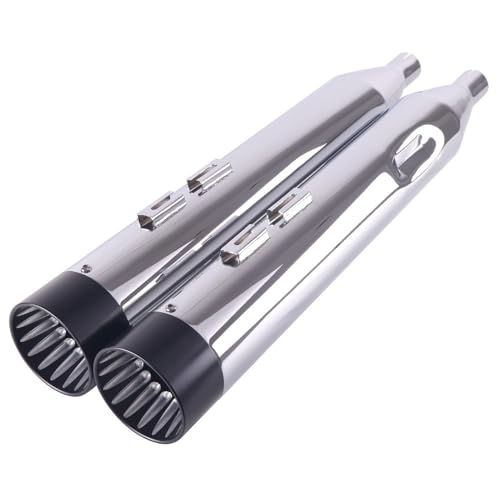
EPA-stamped slip-on alternative – avoids the drill-and-pray approach entirely.
This is the option most people don’t know about – and it solves the legal and performance problems at the same time.
Instead of full removal, you have three legal-adjacent options that add sound without crossing into the same dB territory as full baffle-out:
| Option | Estimated dB change | Reversible? | Approx. cost | Legal risk |
|---|---|---|---|---|
| Full baffle removal | +8 to +15 dB | Yes (reinsert) | $0 | High – exceeds 80 dB limit in CA, NY, FL |
| Drill 4-6 holes in existing baffle | +3 to +6 dB | No (replace baffle) | $0-$5 | Moderate – may stay under 80 dB depending on bike |
| TAB Performance louvered baffle | +2 to +4 dB over stock | Yes | $35-$60/pair | Low – designed to stay near stock dB levels |
| Vance & Hines quiet baffle insert | -3 to -5 dB vs. open pipe | Yes | $25-$45/pair | Low – adds restriction back to loud aftermarket pipes |
| Replace stock pipes with EPA-certified aftermarket | +4 to +8 dB | Yes (reinstall OEM) | $400-$1,200 | Low – EPA label means street-legal at sale |
The drilled-baffle method is the most cost-effective middle ground. Drilling 4-6 holes of 3/8 in. diameter in the center section of a Harley stock baffle or V&H insert reduces restriction and opens up the sound noticeably without the AFR disruption of full removal. Owner reports on StreetGlide.com and HDForums put the result at “about 80% of the baffle-out sound” with significantly less decel pop because the flow restriction is only partially reduced.
For the best aftermarket exhaust options including EPA-certified pipes that come louder from the factory, see our full guide: Best 2-into-1 Exhaust for Harley Baggers. For Softail-specific fitment options, our best 2-into-1 exhaust for Harley Softail guide covers the same comparison framework for the Softail chassis.
Re-Baffling: How to Put Them Back
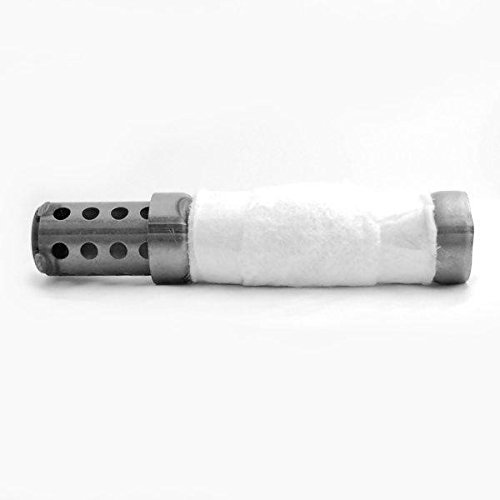
Manufacturer-spec replacement baffle – re-baffles a stock or V&H exhaust to street-legal volume.
If you pulled the baffles and want to reverse the decision – for street legality, for a tune, or for long-distance comfort – the reinstall is straightforward.
Insert the steel baffle tube back through the muffler outlet (outlet end first, or per your specific muffler’s orientation – check the retention screw hole alignment). If the original fiberglass packing came out with the V&H baffle, wrap new sound-dampening packing around the steel tube before reinserting (TAB Performance and Vance & Hines both sell replacement packing material for $12-$20). Align the retention screw holes, apply Loctite 243 to the Allen screw threads, and torque to snug – typically 15-20 in-lbs on the small baffle retention screw. Do not overtighten; these are small-diameter screws in aluminum end caps on many aftermarket pipes.
State-by-State Legal Status: The 5 Biggest HD Markets
State law enforcement – not federal EPA enforcement – is the practical legal risk for riders. Here is what our research found for the five states with the largest registered Harley-Davidson populations.
| State | dB Limit (post-1985 motorcycles) | Key Statute | Fine range | Enforcement level |
|---|---|---|---|---|
| California | 80 dB at 50 ft (post-1985) | CVC §27202 | $100-$500, escalating for repeats. Sound camera pilot in 6 cities (2025-2030). | Strict |
| New York | 80 dB; modified exhaust prohibited | VTL §375 / SLEEP Act (eff. April 2022) | Up to $1,000 per violation; shops found in willful violation 3x lose inspection certification | Strict |
| Florida | 78 dB at 50 ft (>35 mph); 82 dB (≤35 mph) | Fla. Stat. §316.293 | Non-criminal traffic infraction; fine varies by county | Moderate |
| Texas | No specific dB limit; “excessive or unusual noise” prohibited | Tex. Transp. Code §547.604 | $200-$400 typically; officer discretion on what constitutes “excessive” | Subjective |
| Pennsylvania | 84 dB max (accelerating to 35 mph) | 75 Pa.C.S. §4523 / 67 Pa. Code §175.152 | Summary offense; fine varies by jurisdiction | Moderate |
Bottom line: California and New York are the strictest. Florida has specific dB numbers but enforcement is less consistent than the statute implies. Texas relies on officer discretion, making it the most variable. Pennsylvania is moderate with a specific 84 dB standard that most fully de-baffled bikes will exceed.
For a complete state-by-state database including all 50 states, the SEMA Action Network maintains an updated exhaust noise laws resource at semasan.com.
Frequently Asked Questions
🏍 Free Harley Recall & Maintenance Alerts
We'll email you when NHTSA posts a new Harley recall, plus seasonal maintenance reminders. No spam, unsubscribe anytime.
By subscribing you agree to our Privacy Policy.
