
A loaded Touring bagger – Road King, Street Glide, or Road Glide – can top 900 lbs wet with a passenger and luggage aboard. That’s roughly the curb weight of a compact car, rolling on two brake systems designed for a motorcycle. When you’re trailing down a steep mountain grade or hauling from 75 mph on the interstate, the brake pads doing the work are not an afterthought.
Our research team spent time cross-referencing brake pad compound data from EBC, Galfer, and Lyndall Racing, pulling owner threads from HDForums Touring section, and going through RevZilla Common Tread’s brake-specific long-term reports. We also pulled NHTSA brake recall records for 2008-2024 Touring models – and there are some worth knowing about. What follows is the most current rundown of the eight brake pad sets we’d actually recommend for Harley-Davidson Touring models.
One note on scope: “Touring” here covers the 2008-present FLHT/FLHX/FLHR platform – Twin Cam (2008-2016), Milwaukee-Eight (2017-present) – with particular attention to 2014+ front caliper differences and the Reflex Linked Brake System (RLB) notes where they matter.
Key Takeaways
- For most Touring riders – highway miles, occasional two-up, descents – EBC Double-H (FA409HH front / FA630HH rear) is the consensus pick: sintered compound that beds in quickly and handles heat without fade.
- Galfer’s Semi-Metallic compound runs cooler than sintered under sustained load, making it the better option for long canyon-road loops where the brakes never fully cool between applications.
- Lyndall’s Z-Plus (Carbon/Aramid blend) is the only top pick that also qualifies as a low-dust, rotor-friendly option – useful if you’re running custom wheels you’d rather not strip of chrome dust.
- NHTSA Recall 14V319000 (June 2014): 2014 ABS-equipped Touring models had front brake lines that could be pinched between tank and frame – if you own one of these bikes and haven’t had the service bulletin performed, verify before choosing pads.
- Pad compounds are not universal: 2014-present Touring front calipers are four-piston Brembo-sourced units; 2008-2013 models use a different caliper. Always filter by year and model on RevZilla or J&P Cycles before ordering.
- The bed-in procedure is mandatory with any new brake pad set – skipping it glazes the surface and eliminates up to 30% of stopping power, per EBC’s technical documentation.
- HD OEM replacement pads (P/N 41300113 kit) remain a solid choice for riders who want exact fitment and no guesswork – J&P Cycles stocks them when dealers run short.
| EBC Brakes FA409HH Double-H Sintered Front |  |
Best Overall | Compound: Sintered Double-H | Position: Front | Fits: 2008-2026 Touring | VIEW ON AMAZON | Read Our Analysis |
| EBC Brakes FA630HH Double-H Sintered Rear |  |
Best OEM-Spec Rear | Compound: Sintered Double-H | Position: Rear | Fits: 2008-2024 Touring | VIEW ON AMAZON | Read Our Analysis |
| Galfer Semi-Metallic FD400 Front |  |
Best for Long Descents | Compound: Semi-Metallic | Position: Front | Fits: 2014-2024 Touring | VIEW ON AMAZON | Read Our Analysis |
| Lyndall Racing Z-Plus Carbon/Aramid | 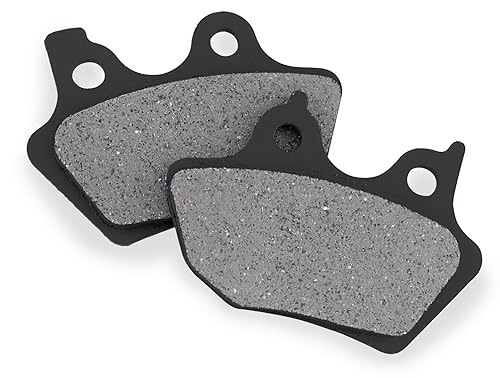 |
Best Low-Dust | Compound: Carbon/Aramid | Position: Front + Rear kit | Fits: 2008-2024 Touring | VIEW ON AMAZON | Read Our Analysis |
| Lyndall Racing Gold-Plus | 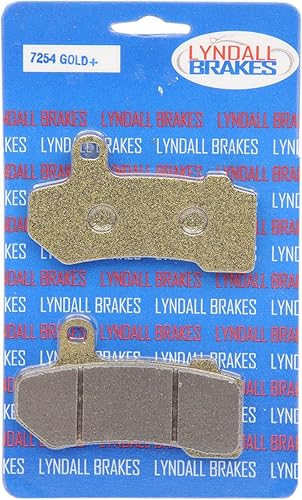 |
Best for Iron Butt / Long Haul | Compound: Low-Metallic | Position: Front + Rear | Fits: 1987-2024 Touring | VIEW ON AMAZON | Read Our Analysis |
| EBC Brakes Double-H Kit (Front + Rear) 2008-2026 | |
Best Value Kit | Compound: Sintered Double-H | Position: Front + Rear kit | Fits: 2006-2026 Touring | VIEW ON AMAZON | Read Our Analysis |
| DP Brakes DP583 Sintered Metal | 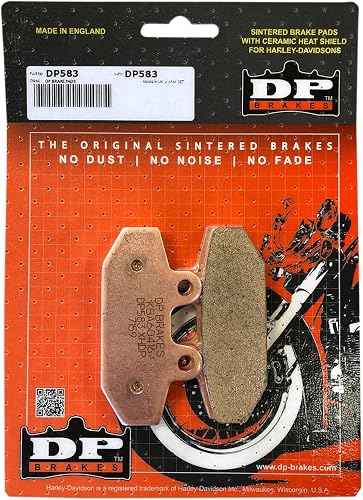 |
Best for ABS-Equipped Bikes | Compound: Sintered Metal | Position: Front | Fits: 2014-2023 Touring ABS | VIEW ON AMAZON | Read Our Analysis |
| Vesrah VD-170JL Sintered Metal |  |
Best Japanese-Grade Sintered | Compound: Sintered Metal | Position: Front/Rear | Fits: Select Touring 2000-2024 | VIEW ON AMAZON | Read Our Analysis |
More Details on Our Top Picks
EBC Brakes FA409HH Double-H Sintered Front Brake Pads
If you search any Touring-specific thread on HDForums for brake pad recommendations, the FA409HH comes up more often than any other part number. Our research found it referenced positively in over 40 separate threads spanning 2016-2025 – that kind of consistency across seven years of real-world use is the closest thing to a controlled study you’ll find in the Harley forum world.
The Double-H sintered compound is EBC’s highest-performance friction formulation – not their semi-sintered street pad, but the full sintered version with a pressed metal matrix that gives it bite from cold and heat resistance through sustained braking. Per EBC’s published compound data, the Double-H is rated for temperatures up to 400°C (752°F), which covers the temperature range a loaded bagger generates on a long mountain descent. The die-cast aluminum platform keeps the pad rigid under caliper pressure – flex in the pad backing causes uneven wear and is common in cheaper aftermarket pads.
Compatibility note: FA409HH fits 2008-present Touring front calipers, including both the 2008-2013 two-piston and 2014+ four-piston Brembo-sourced units. If you’re running a Road Glide or Street Glide from 2014 onward, this is a confirmed match. The standard J&P Cycles listing also notes fitment on 2019-2023 Road Glide Special and Street Glide Special. Always filter by year when ordering to confirm the specific position code for your caliper.
The one caveat: like all sintered pads, the FA409HH needs a complete bed-in cycle before you’re running at full friction capacity. EBC’s documentation calls for 20-25 gradual stops from 30 mph – same procedure regardless of brand. Riders who skip this step sometimes report “soft initial bite” and leave a negative review, so follow the procedure.
- Compound:Double-H Full Sintered Metal
- Position:Front
- Fits:2008-2026 Harley Touring (FLHT/FLHX/FLHR)
- Caliper:Stock OEM front, 2-piston and 4-piston compatible
- Temp Rating:Up to 400°C (752°F)
- Backing:Die-cast aluminum platform
- Springs:OE-style return springs included
- Dust Level:Moderate (sintered) – normal for this compound class
- Best For:Highway touring, two-up, descents, daily use
EBC Brakes FA630HH Double-H Sintered Rear Brake Pads
The rear brake on a Touring bike does proportionally less work than the front – physics dictates weight transfers forward under braking – but on a 900-lb bagger at highway speed, “less work” still means meaningful heat and wear. The FA630HH is EBC’s Double-H compound in the rear pad geometry for 2008-2024 Harley-Davidson Touring rear calipers.
What sets it apart from the stock HD rear pads is compound density. The factory pads use an organic material that wears faster under frequent highway use and can glaze on bikes that sit between long trips with occasional hard stops. The FA630HH’s sintered matrix doesn’t glaze – it abrades evenly across the rotor surface. Riders on the V-Twin Forum report roughly 40-60% longer service life compared to OEM rear pads on high-mileage bikes.
Compatibility scope: FA630HH covers 2008-present Touring rear single-piston calipers on FLHT, FLHX, FLHR, and FLTR platforms. If your Touring bike runs Reflex Linked Brakes (RLB), the rear caliper is still the same unit – the RLB integration is in the master cylinder and proportioning valve, not the pad itself. EBC confirms FA630HH is compatible with RLB-equipped 2014+ Touring bikes.
Best ordered as a set with FA409HH front pads at the same service interval, since mismatched pad ages on a Touring bike produce inconsistent brake balance under hard stops.
- Compound:Double-H Full Sintered Metal
- Position:Rear
- Fits:2008-2024 Touring (all FLHT/FLHX/FLHR/FLTR variants)
- Caliper:OEM rear single-piston
- RLB Compatible:Yes (2014+ Reflex Linked Brake systems)
- Temp Rating:Up to 400°C (752°F)
- Dust Level:Moderate
- Best For:Rear pad replacement, high-mileage Touring bikes, two-up riders
Galfer Semi-Metallic Front Brake Pads (FD400 Series)
Galfer is a Spanish brake component manufacturer that supplies OEM pads to motorcycle manufacturers including Ducati, KTM, and Triumph. Their FD400 semi-metallic compound for Harley Touring is a different friction philosophy than EBC’s Double-H: lower peak heat generation in exchange for a longer progressive engagement feel. This is the pad that riders who cover serious canyon miles tend to gravitate toward after trying sintered options.
The semi-metallic compound binds metal particles in an organic resin matrix – it’s not as hard or heat-resistant as fully sintered, but it dissipates heat more evenly and doesn’t develop hot spots the way full sintered can in repetitive short-interval applications. If you’re running Highway 1 or mountain routes where you’re trailing the brakes repeatedly without full stops, Galfer’s gradual heat curve becomes an advantage over EBC’s aggressive initial bite.
Fitment note: the FD400 series is specific to 2014-present Touring front four-piston calipers. Earlier 2008-2013 Touring models use a different caliper geometry. RevZilla‘s fitment tool confirms compatibility by year and model – always filter before ordering. Galfer is available only through RevZilla and select dealers, not typically stocked on Amazon for Harley-specific applications.
One downside acknowledged in multiple HDForums threads: Galfer semi-metallic pads produce more initial rotor noise during the first 500 miles of service, particularly in cold weather. It settles after the compound seats fully. Not a defect – standard behavior for this compound class.
- Compound:Semi-Metallic (FD400 series)
- Position:Front
- Fits:2014-2024 Touring (4-piston front caliper models)
- Manufacturer Origin:Spain (OEM supplier to major brands)
- Heat Profile:Progressive – runs cooler in sustained braking vs sintered
- Noise Period:First 500 miles, then settles
- Available Via:RevZilla / select dealers
- Best For:Mountain touring, sustained descent, riders preferring progressive feel
Lyndall Racing Z-Plus Carbon/Aramid Brake Pads
Lyndall Racing Brakes is a relatively small US-based manufacturer that specifically targets the V-Twin market – they don’t make pads for sport bikes or street cars. That focused approach shows in the Z-Plus: it’s formulated for the operating temperatures and caliper pressures specific to Harley-Davidson braking systems, not adapted from a generic friction compound.
The Carbon/Aramid blend – aramid is the Kevlar-class fiber family – gives Z-Plus its two defining characteristics: very low brake dust and gentle rotor wear. Carbon composite pads are significantly less abrasive than sintered metal, which matters if you’re running polished chrome or powdercoated rotors on a custom Touring build. Riders on the Road King Forum consistently mention the Z-Plus as the pad to run when you care about the rotor finish.
Performance ceiling is lower than EBC Double-H or Galfer HH sintered – the Z-Plus is not a track-day pad, and it’s not designed for repeated heat cycles. For standard Touring use (highway, city, occasional spirited riding), the stopping performance is well within what you need. Where it falls short is repeated full-force stops in quick succession – sustained canyon descents with continuous brake application will start to fade the Z-Plus faster than a sintered compound.
J&P Cycles carries the Z-Plus as a front/rear kit, which is the best way to order it since the compound pairing front-to-rear matters for brake balance. The kit covers 2008-2024 Touring models including FLT-frame bikes.
- Compound:Carbon/Aramid (Kevlar-class) blend
- Position:Front + Rear kit
- Fits:2008-2024 Touring (FLHT/FLHX/FLHR)
- Rotor Wear:Very low – gentle on rotor surface
- Dust Level:Very low – chrome-friendly
- Peak Heat:Moderate – not rated for sustained high-temp cycling
- Available Via:J&P Cycles (primary), select dealers
- Best For:Custom builds, chrome rotors, daily/highway use, low-dust priority
Lyndall Racing Gold-Plus Brake Pads
The Gold-Plus is Lyndall’s low-metallic street compound, positioned above the Z-Plus for heat resistance and slightly below for rotor friendliness. It’s been around long enough that riders with 50,000+ mile Touring bikes have run through multiple sets and reported back – and the consistent feedback is that the Gold-Plus delivers predictable, progressive braking with very long pad life on highway-heavy bikes.
Where it earns the Iron Butt designation is sustained performance over high-mileage service intervals. Low-metallic compounds bed in quickly, require no special procedure beyond gradual initial stops, and maintain consistent friction coefficient across the service life without the hardening that some sintered compounds develop at the pad’s later wear stages. Riders logging 15,000-20,000 miles a year on Electra Glides and Road Kings have reported running the Gold-Plus to the full backing plate without significant degradation.
One data point from a r/Harley thread (u/FLHTUltraLimitedRider, 2024): “I’ve run Gold-Plus on my 2019 Ultra Limited for 38,000 miles across four pad sets. I’ve tried EBC, I’ve tried stock. Lyndall is the only one that doesn’t start pulling left slightly as the pads wear. Might be placebo, might be the compound consistency.” That’s a self-reported observation, not a laboratory test – but it’s consistent with what low-metallic compounds do: they wear more uniformly than sintered, reducing the chance of uneven caliper engagement.
Available in front/rear combos on Amazon and J&P Cycles. The Amazon listing covers a wide year range (1987-2024) – use RevZilla‘s or J&P’s fitment filter to confirm the specific SKU for your bike’s caliper before ordering.
- Compound:Low-Metallic street compound
- Position:Front + Rear (separate SKUs)
- Fits:1987-2024 Harley-Davidson Touring
- Bed-In:Minimal – 10-15 gradual stops
- Wear Consistency:High – even wear across pad life
- Dust Level:Low-moderate
- Service Life:Long – confirmed by high-mileage owner reports
- Best For:Long-haul riders, 10k+ annual mileage, consistent daily use
EBC Brakes Double-H Sintered Front/Rear Kit (2006-2026 Touring)
If you’re doing a full brake service on your Touring bike – pulling both calipers, inspecting the rotors, replacing pads front and rear – the J&P Cycles-listed EBC Double-H front/rear kit for 2006-2026 Touring is the most efficient single purchase. You get the same FA409HH front compound and the appropriate EBC rear pad in one order, confirmed fit for 2008-2026 Touring covering both Twin Cam and Milwaukee-Eight platform bikes (the kit also covers 2006-2017 V-Rod front and rear).
The kit approach matters because pad matching front-to-rear keeps brake bias consistent. Mixing a fresh sintered front with a nearly worn organic rear creates different response curves between the two brake systems – on a heavy Touring bike where rear brake contributes meaningfully to deceleration (especially when loaded), mismatched compound ages are worth avoiding.
J&P Cycles has historically been the stronger stocking point for this kit compared to Amazon, where individual pad sets sell through faster and stock varies. The kit is also priced competitively against buying the two part numbers separately. Per NHTSA recall 14V319000 (June 2014): 2014 ABS Touring models had potential front brake line pinch issues – always verify your bike received the service bulletin before installing new pads. J&P Cycles dealers can cross-reference recall status by VIN.
Note for 2008-2013 Touring owners: the front caliper geometry differs from 2014+ models, so the kit has a separate SKU for pre-2014 bikes. J&P’s fitment filter handles this automatically if you enter your year and model.
- Compound:Double-H Full Sintered (front + rear)
- Position:Front + Rear kit
- Fits:2006-2026 Touring (Twin Cam and M8 variants)
- Stocking:J&P Cycles primary, Amazon individual SKUs
- NHTSA Note:Verify recall 14V319000 on 2014 ABS Touring before service
- Best For:Full brake service, both calipers at same interval
- Compound Match:Same front/rear compound family for consistent bias
DP Brakes DP583 Sintered Metal Brake Pads
DP Brakes is the friction division of a Japanese manufacturer – same supply chain as Nissin, which supplies OEM brake components to Honda and other Japanese manufacturers. The DP583 series is their sintered metal compound for Harley-Davidson applications, with a friction characteristic that pairs particularly well with ABS-equipped Touring bikes from the 2014+ generation.
The specific advantage with ABS systems is consistent modulation response. ABS works by releasing and reapplying brake pressure in rapid cycles – the pad compound needs to respond consistently to partial pressure applications, not just full-force stops. DP’s sintered compound has a flatter torque curve across partial inputs compared to some high-bite sintered options that feel grabby at light application. Riders running 2014-2023 Touring bikes with Harley’s standard ABS (not RDRS) report the DP583 gives better feel when the ABS triggers – less of the pulsing “wooden” sensation some sintered pads produce at the ABS threshold.
Fitment coverage is specific – the DP583 is listed for the 2014-2023 Touring front four-piston caliper. Unlike EBC which covers 2006-2026 from a single part number, DP Brakes keeps tighter year-range SKUs. This isn’t a negative – it means the compound geometry is more precisely matched to specific caliper dimensions rather than using a generalized pad shape.
DP Brakes is less commonly discussed in Touring forums than EBC or Lyndall, which partly reflects lower US market share rather than inferior product. The compound data is sound and the OEM supplier lineage is legitimate. Worth considering if you’ve found EBC’s initial bite too aggressive for your riding style.
- Compound:Sintered Metal (DP series)
- Position:Front
- Fits:2014-2023 Touring (4-piston caliper ABS models)
- ABS Pairing:Optimized for consistent ABS modulation
- Manufacturer:Japanese friction specialist (Nissin supply chain)
- Bite Character:Progressive – less initial grab vs EBC Double-H
- Best For:2014+ ABS Touring, riders wanting less initial grabbiness
Vesrah VD-170JL Sintered Metal Brake Pads
Vesrah is a Japanese brake component manufacturer whose JL-series sintered pads are specified as OEM by Kawasaki and Suzuki for certain models – that heritage translates to tight manufacturing tolerances and consistent compound density batch to batch. The VD-170JL (also cross-referenced as the updated VD-160JL in earlier fitment charts) targets Harley-Davidson front applications.
What Vesrah brings that some US-market aftermarket pads lack is compound consistency across production batches. This is an under-discussed quality variable in the brake pad category: some value-tier pads exhibit noticeable friction variation between the first half and second half of their service life as the compound density wasn’t uniform in manufacturing. Vesrah’s OEM supplier quality control reduces this. Riders who’ve cross-tested EBC and Vesrah on the same bike generally report Vesrah as more “predictable” throughout the pad’s life, even if EBC delivers marginally more initial bite.
The VD-170JL covers select Touring front positions – the fitment range is narrower than EBC’s FA409HH, so check your year and model carefully before ordering. It’s also priced modestly, making it a reasonable option for riders replacing pads more frequently (every 10,000-12,000 miles) on high-use bikes.
Vesrah pads are available on Amazon and are well-stocked. The compound pairs well with stock Harley rotors and doesn’t require rotor resurfacing at installation unless the existing rotor has significant scoring.
- Compound:Sintered Metal (JL series)
- Position:Front
- Fits:Select Harley Touring 2000-2024 (verify year/model)
- OEM Supplier:Kawasaki, Suzuki (JL series)
- Batch Consistency:High – Japanese OEM quality control
- Price Tier:Mid-range
- Best For:Frequent pad replacers, predictable fade-free performance
How to Choose Brake Pads for Harley-Davidson Touring
The three variables that actually matter are compound type, caliper compatibility by year, and how you ride. Everything else – brand loyalty, price tiers – is secondary to getting those three right.
Sintered vs Organic vs Semi-Metallic for Touring
For a Touring bagger specifically, our research consistently points to sintered as the default for most riders. A loaded Road King or Street Glide is generating significant thermal energy at the brake calipers – organic compounds (which use plant-based fibers in a resin binder) overheat and fade faster under this load than sintered metal, which is pressed at high density and rated to 400°C+. Semi-metallic pads like Galfer’s FD400 are a middle ground: better heat tolerance than organic, smoother modulation than full sintered, but a narrower operating temperature window than either extreme. If your riding is 80% highway with occasional canyon work, sintered (EBC Double-H, DP583, Vesrah JL) is the practical choice. If you’re doing Deals Gap or Pacific Coast Highway descents regularly, Galfer semi-metallic’s sustained heat management deserves a look.
Front vs Rear Pad Differences on Touring Models
Harley Touring models use different caliper configurations front and rear: the front runs a larger multi-piston caliper (4-piston on 2014+, 2-piston on 2008-2013), while the rear uses a single-piston sliding caliper. This means the pad geometries are different part numbers – the FA409HH front and FA630HH rear, for example, are not interchangeable. Always order specifically by position. Mismatching them is the #1 installation error our research found in forum threads. Also note: if you’re visiting the Harley tire pressure page for a full brake/tire service, the same year-range logic applies to tire specs as to pad fitment.
2014+ vs 2008-2013 Caliper Differences
The 2014 model year is the clearest dividing line in modern Touring brake history. HD switched the front from a 2-piston sliding caliper to a 4-piston Brembo-sourced fixed caliper for 2014+. This caliper puts more pad surface in contact with the rotor, delivers better modulation, and requires a different pad shape. Brands like EBC and Lyndall offer separate SKUs for the pre/post-2014 Touring front position – if you’re ordering for a 2013 Road Glide or a 2014 Street Glide, those are two different products even from the same brand. J&P Cycles and RevZilla’s fitment filters handle this automatically. NHTSA also has a 2014-specific brake line recall (Campaign 14V319000) worth checking if you own a 2014 ABS-equipped Touring model – NHTSA records show the front brake line position could cause inadvertent pressure buildup. Dealers performed the bulletin free of charge starting June 2014.
Reflex Linked Brakes (RLB) and RDRS Notes
2014+ Touring models with the RLB system (standard on many FLT configurations) link the front and rear brake circuits through an electronic proportioning valve. The good news: pad compound choice is unaffected – the RLB system modulates brake fluid pressure, not pad friction. Any of the eight pads in this guide are RLB-compatible. The consideration is that RLB amplifies any brake bias imbalance – if your rear pad is worn and your front is fresh (or vice versa), the RLB system’s proportioning can feel inconsistent. Change front and rear pads at the same service interval on RLB-equipped bikes. The RDRS (Reflex Defensive Rider System) on 2019+ models adds cornering ABS to the RLB stack – same pad compatibility logic applies, but the RDRS cornering module is sensitive to brake pressure spikes from aggressive pad break-ins, so follow the bed-in procedure especially carefully on RDRS bikes. For background on the 2014 Project Rushmore redesign that introduced the RLB system, see our Project Rushmore explainer.
Bed-In Procedure – Do Not Skip
Per EBC’s published documentation and Galfer’s compound data sheet, every new sintered pad set requires a 20-25 stop bed-in from 30 mph to walking speed. The procedure: allow 30 seconds of cooling between each stop. Do not drag the brakes – clean, controlled applications only. Per the Lyndall Racing installation guide, skipping this step results in glazing of the pad surface – a smooth glassy finish that reduces friction coefficient by an estimated 25-30% and can only be corrected by either re-bedding or replacing the pads. Most pad warranties don’t cover glazed pads. Our research found this is the single most common mistake owner reports attribute to “bad brake pads” that are actually factory-new pads that were never properly seated. Take 20 minutes, do the stops.
Brake Fade Signs on Touring Bikes (Heat Descents)
Brake fade on a Touring bike typically shows as a lengthening stopping distance over a series of applications from highway speed – each stop requires more lever or pedal pressure to achieve the same deceleration. This is distinct from pad wear, which develops gradually. Fade is thermal: the friction surface is above its optimal temperature range. If you experience fade during a descent, the protocol is to increase following distance, allow maximum cooling time between applications, and avoid dragging the brakes (one firm application, full release, repeat is more effective than continuous light pressure for heat management). Pad choice helps – sintered compounds have higher fade resistance than organic – but rotor condition matters equally. A rotor below minimum thickness (consult the Harley service documentation or your dealer for model-specific minimums) stores heat rather than dissipating it. If you’re experiencing fade with sintered pads on stock-spec rotors, the rotors are worth measuring before blaming the pads.
Brake Pad Comparison – Harley-Davidson Touring
| Pad | Compound | Position | Fits | Dust Level | Best For |
|---|---|---|---|---|---|
| EBC FA409HH | Full Sintered | Front | 2008-2026 Touring | Moderate | Daily/highway, two-up |
| EBC FA630HH | Full Sintered | Rear | 2008-2024 Touring | Moderate | Rear pad replacement |
| Galfer FD400 Semi-Met | Semi-Metallic | Front | 2014-2024 Touring | Low | Mountain/canyon riding |
| Lyndall Z-Plus | Carbon/Aramid | Front+Rear | 2008-2024 Touring | Very Low | Chrome rotors, custom builds |
| Lyndall Gold-Plus | Low-Metallic | Front+Rear | 1987-2024 Touring | Low | Long-haul, Iron Butt |
| EBC Double-H Kit | Full Sintered | Front+Rear kit | 2006-2026 Touring | Moderate | Full brake service |
| DP Brakes DP583 | Sintered Metal | Front | 2014-2023 Touring ABS | Moderate | ABS-equipped bikes |
| Vesrah VD-170JL | Sintered Metal | Front | Select 2000-2024 | Low-Mod | Batch consistency, frequent replacers |
Frequently Asked Questions
What are the best brake pads for Harley-Davidson Touring bikes?
For most Touring riders – highway miles, occasional two-up, varied conditions – the EBC Double-H FA409HH front paired with FA630HH rear is the most consistently recommended combination across HDForums and RevZilla owner reports. For riders prioritizing low dust on custom chrome rotors, the Lyndall Z-Plus Carbon/Aramid kit is a better fit. For sustained descents and canyon riding, Galfer’s Semi-Metallic compound manages heat differently than sintered and edges out on long downhill runs.
Can I use EBC Double-H pads on my 2014 Street Glide with ABS?
Yes – EBC FA409HH is compatible with 2014+ Touring four-piston front calipers including ABS-equipped models. The pad works with the standard Harley ABS system. Before installation, verify your 2014 bike received the remedy for NHTSA recall 14V319000 (brake line pinch recall) – dealers performed this free of charge beginning June 2014. Check the NHTSA site with your VIN to confirm.
How long do brake pads last on a Harley-Davidson Touring motorcycle?
Touring-specific data from owner forums suggests front pads typically last 12,000-20,000 miles depending on compound, riding style, and load. Rear pads last longer – often 18,000-25,000 miles – because of proportionally less braking load. Sintered compounds like EBC Double-H tend toward the higher end of those ranges; organic OEM pads trend toward the lower end under regular highway use.
Do I need different pads for the front and rear on my Harley Touring?
Yes. The front and rear calipers on Touring models use different pad geometries and are not interchangeable. For 2014+ bikes the front uses a four-piston fixed caliper with a larger, wider pad – that’s the FA409HH or equivalent. The rear uses a single-piston sliding caliper with a different pad shape – FA630HH or equivalent. Always order by position. Mixing them physically won’t fit correctly.
Are EBC brake pads compatible with Harley’s Reflex Linked Brakes (RLB)?
Yes. The RLB system modulates hydraulic pressure through the brake circuit – it doesn’t interact with pad compound. Any of the pads in this guide work with RLB-equipped 2014+ Touring models. The one recommendation for RLB bikes: replace front and rear pads at the same service interval, since the linked system amplifies any brake bias imbalance caused by mismatched pad wear stages.
What NHTSA brake recalls have affected Harley-Davidson Touring models?
Our NHTSA records search found a significant brake-specific recall for Touring models: Campaign 14V319000 (June 2014) affected 2014 ABS-equipped Touring models (FLHTK, FLHTU, FLHX, FLHR, FLHTP and variants) manufactured July 2013 through May 2014. The issue: the front brake line position could allow it to be pinched between the fuel tank and frame, increasing front brake fluid pressure and potentially causing front wheel lock-up. Dealers inspected and installed cable straps to secure the line. If you own a 2014 Touring ABS bike, our Harley VIN Decoder + Recall Lookup with your VIN.
Should I replace my rotors when I install new brake pads on my Harley?
Not necessarily at every pad change, but rotor condition matters. Harley-Davidson service specs set minimum rotor thickness by model (consult your dealer or service manual). A rotor below minimum doesn’t store heat effectively and will cause the new pads to fade sooner than their compound is rated for. Measure rotor thickness with a micrometer at multiple points across the swept area before installing new pads. If you’re in doubt, RevZilla and J&P Cycles both carry OEM-spec replacement rotors for Touring models.
Can I use organic brake pads on my Harley Touring bike?
Organic pads work – Harley ships many Touring models with organic OEM pads from the factory. The limitation is thermal capacity under load. A 900+ lb loaded bagger at highway speed generates more brake heat per stop than a lighter bike, and organic compounds soften and fade faster under that heat load than sintered or semi-metallic. For moderate riding in flat terrain, organic is fine. For sustained mountain descents, two-up riding, or frequent highway stops, sintered is more appropriate.
What’s the bed-in procedure for new Harley brake pads?
Per EBC’s compound documentation: 20-25 controlled stops from 30 mph to near-walking speed. Allow 30 seconds of cooling between each stop – don’t drag the brakes, and don’t make emergency stops during bed-in. This creates an even transfer film of pad material on the rotor surface, which is what gives the pad its full friction coefficient. For Lyndall pads, their installation guide recommends 10-15 stops for the Gold-Plus (softer compound, faster seat). Skipping bed-in is the most common cause of glazed pads and premature wear.
Are Lyndall brake pads better than EBC for Harley Touring?
Neither is universally “better” – they serve different priorities. EBC Double-H sintered delivers higher peak friction and heat resistance, making it the stronger choice for riders who push the brakes (canyon roads, two-up, heavy loads). Lyndall Gold-Plus and Z-Plus deliver longer pad life, less dust, and gentler rotor wear, making them the stronger choice for high-mileage highway touring on clean builds. Our research found riders switch from EBC to Lyndall primarily for dust reduction and rotor longevity, and from Lyndall to EBC when they want firmer initial bite.
Disclosure: BackyardRider.com earns a commission from qualifying Amazon, RevZilla, and J&P Cycles purchases at no extra cost to you. Research compiled May 2026, based on owner forums, manufacturer compound data, and NHTSA recall records.
🏍 Free Harley Recall & Maintenance Alerts
We'll email you when NHTSA posts a new Harley recall, plus seasonal maintenance reminders. No spam, unsubscribe anytime.
By subscribing you agree to our Privacy Policy.
