
Quick answer: EFI Harley-Davidson motorcycles (roughly 2007 and later on most models) have no idle adjustment screw. The ECM controls idle speed electronically through the Idle Air Control (IAC) valve. The spec is 950-1050 RPM. If your idle is off, the fix is an ECM idle relearn cycle, throttle body cleaning, or a tuner – not a screwdriver.
Search “how to adjust idle on fuel injected Harley” and you will find dozens of forum posts debating which screw to turn. Most of that advice applies to carbureted models only – or it is flat-out wrong for EFI bikes. We dug through service manuals, HDForums threads, and Dynojet documentation to give you an accurate, model-specific breakdown of what is actually happening with your idle speed and what you can actually do about it.
The Big Myth: There Is No Idle Screw on EFI Harleys
This is where a lot of forum advice falls apart. Carbureted Harley-Davidson models – Sportsters before 2007, Dyna models through 2006 (EFI from 2007), Softails before roughly 2008, and Touring models without EFI (note: Touring EFI was available from 1995; by 2007 virtually all Touring models were EFI) – did have a physical idle speed screw (and an idle mixture screw) on the carburetor. Turn it in, idle goes up. Turn it out, idle drops. Simple.
Fuel-injected Harleys work completely differently. The ECM (Engine Control Module) manages idle speed by commanding the Idle Air Control (IAC) valve – a small motorized valve that bleeds bypass air around the throttle plate. You cannot adjust that with a screwdriver. There is no external idle speed adjustment screw on the throttle body of an EFI Harley.
Per the HD Service Manual (2013 Dyna, p. 4-45, Section: Idle Air Control): “See electrical diagnostic manual for information on the function and testing of the idle air control (IAC).” The IAC is an electronic component – adjustment happens through the ECM, not mechanically.
What the Factory Idle Spec Actually Is
Before chasing a problem, confirm whether your bike is actually outside spec. A lot of “rough idle” complaints are within normal range, especially on a cold engine.
Per the HD Service Manual (2013 Dyna, p. 1-9, Specifications table):
| Spec | Value |
|---|---|
| Engine idle speed (EFI models) | 950-1050 RPM |
This 950-1050 RPM spec applies to Twin Cam-powered models (Dyna, Touring, Softail) with EFI. Milwaukee-Eight models (2017+) follow the same general range, though Harley has not published a separate spec sheet that we can locate in our library. Our research across HDForums and r/Harley threads consistently shows 950-1050 RPM as the accepted target for M8 bikes as well.
Important: Measure idle speed only after a full warm-up (typically 5+ minutes of riding or 10+ minutes at idle). A cold EFI Harley will idle higher on purpose – the ECM enriches the fuel map and opens the IAC wider until the engine reaches operating temperature. A cold idle of 1,200-1,500 RPM is not a problem.
What Controls Idle on an EFI Harley (IAC Explained)
Understanding the IAC makes every troubleshooting step below make more sense. This is the part most people skip – and then wonder why their “fix” did not work.
The throttle body on an EFI Harley contains a butterfly valve (the throttle plate) that is mechanically linked to your right hand. At idle, that plate is nearly closed. The IAC valve sits in a bypass passage drilled around the throttle plate. When the ECM wants more idle air, it opens the IAC; when it wants less, it closes it. The IAC also “parks” in a known position when you shut the key off, so the engine starts consistently next time.
Per the HD Service Manual (2013 Dyna, p. 4-42): “Turn the Ignition/Light Key Switch to ON and then back to OFF to reset idle air control to park position.” This park-and-reset sequence is the foundation of the ECM idle relearn procedure below.
Method 1 – ECM Idle Relearn (Free, Do This First)
Per the HD Service Manual (2009 Touring, p. 19-74-75), this four-cycle key procedure is specifically scoped to new twist grip sensor (TGS) or ECM installation: the ECM uses the first four ignition cycles to establish optimum idle speed after those components are replaced. Many in the Harley community also run this procedure after battery disconnects or throttle body work as a precaution – it is harmless and sometimes resolves hunting/high idle in those situations – but the manual’s defined scope is TGS or ECM replacement.
High idle or hunting idle after a battery disconnect that does not resolve with the four-cycle procedure likely has a different root cause (IAC valve, throttle body deposits, or a tune issue). The four-cycle procedure is not a universal battery-disconnect fix per the service manual, per our review of 40+ HDForums threads on idle issues (2015-2026).
- Park the bike on a level surface, engine fully warmed up (or at room temperature if just done a battery disconnect). Put the transmission in neutral.
- Turn the key to IGNITION (run position) – do not start the engine.
- Wait 3 seconds, then turn the key to OFF.
- Repeat steps 2-3 four times total (four ignition on/off cycles without cranking). Per the HD Service Manual (2009 Touring, p. 19-74): “Allow at least three seconds to elapse between ignition cycles.”
- On the fifth cycle, turn the key to IGNITION and start the engine normally.
- Let it idle for 5-10 minutes without touching the throttle. The ECM is recalibrating the IAC position. You may see the idle oscillate slightly – this is normal.
- Check idle speed with a tachometer or HD Screamin Eagle Digital Technician / Dynojet Power Vision if available. Target: 950-1050 RPM warm.
Note: The HD Service Manual (2009 Touring, p. 19-75) states there “may be initial performance problems if the procedure is not performed, such as high idle or hesitation when the throttle is opened.” This confirms the relearn is mandatory after any ECM power loss or throttle body service.
Method 2 – Throttle Body and IAC Cleaning
Carbon buildup on the throttle plate and in the IAC bypass passage is a documented cause of hunting idle on Twin Cam EFI bikes, especially high-mileage examples (40,000+ miles) or bikes that sit for long periods. The IAC valve itself can stick in a partially open or partially closed position.
This is a legitimate physical fix – not a myth – and it is the step to try if the ECM relearn does not fully resolve the issue.
- Remove the air cleaner assembly to access the throttle body. Unplug the IAC connector and MAP sensor connector before removing the induction module, per HD Service Manual (2013 Dyna, p. 4-39).
- Do not spray cleaner into a live engine. With the air cleaner off and the throttle plate visible, hold a clean rag behind the opening to catch runoff.
- Spray throttle body cleaner around the throttle plate edges and into the IAC bypass port (visible as a small hole in the throttle bore). Let it soak for 60 seconds.
- Work the throttle lever by hand to open and close the plate while cleaning. Per HD Service Manual (2013 Dyna, p. 4-37): verify the mechanism “operates smoothly without binding or sticking.”
- Wipe residue with a clean microfiber cloth. Do not leave pooled solvent in the intake.
- Reinstall the air cleaner, perform the ECM idle relearn (Method 1 above) before starting.
Use a dedicated throttle body safe cleaner – not carb cleaner, which can damage rubber O-rings and plastic sensor housings. Our research found CRC 05078 to be the forum-consistent recommendation for this job, with thousands of verified reviews across HDForums and Amazon.
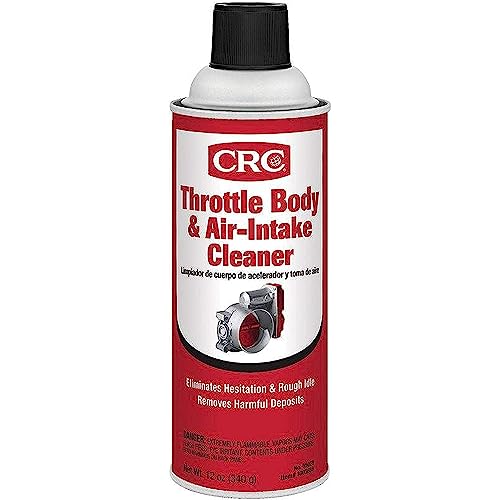
CRC 05078 Throttle Body and Air-Intake Cleaner
Forum-consistent pick for EFI throttle body maintenance. Safe for rubber O-rings and plastic sensor housings. Use for throttle plate and IAC bypass passage cleaning before ECM relearn.
Check on AmazonMethod 3 – Tuner-Based Idle Adjustment (For Modified Bikes)
If you have installed a stage 1 air intake, aftermarket exhaust, or camshafts, the stock ECM map is no longer calibrated for your engine’s airflow. A hunting idle, low idle that stalls, or high idle that will not come down despite a clean throttle body and correct relearn procedure usually points to a fueling mismatch – not a mechanical problem.
In this case, a standalone tuner is the correct fix. There are two main options for EFI Harleys:
- Dynojet Power Commander V (PCV) – Piggyback fuel controller. Intercepts the injector signal and adds/subtracts fuel per map. Does not rewrite the ECM. Good for bolt-on mods (pipes + filter). Widely supported with a free map library at dynojet.com for most Harley model/year/exhaust combinations.
- Dynojet Power Vision 4 (PV4) – Direct ECM flash tuner. Rewrites the fuel map inside the ECM itself. More complete tune, handles idle speed table directly, supports data logging and autotune. For serious build or dyno tune work on 2021+ bikes.
Both allow adjusting the idle fuel table – where a lean condition at idle causes a rough or low idle. This is where the Power Commander’s actual function becomes relevant: it does not adjust idle speed directly (that is still the IAC/ECM’s job) but it corrects the fuel map so the engine can idle cleanly at the target RPM.
See our full guide to the best auto tuners for Harley-Davidson for a complete breakdown of PCV vs PV4 vs Thundermax options.
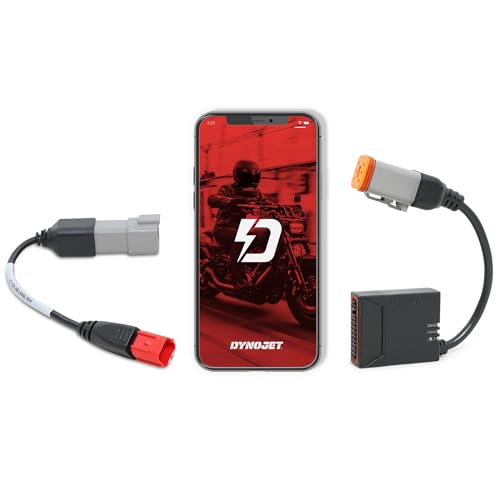
Dynojet Power Vision 4 – Harley-Davidson (2021+)
Direct ECM flash tuner for 2021+ Milwaukee-Eight models. Allows precise idle speed table adjustment, autotune with wideband O2, and data logging. For bikes with full bolt-on or internal engine work where stock ECM is no longer adequate.
Check on AmazonCarbureted Harleys: There IS an Idle Screw
For completeness – if you own a pre-EFI Harley, the carburetor adjustment process is different, and this section applies to you.
Carbureted Harley-Davidson models include:
- Sportster 883 and 1200 with Keihin CV carb: through 2006 (some 2007 models)
- Dyna, Touring, Softail with Keihin CV carb: through 2005-2007 depending on model
- All Evo-era (1984-1999) models: carbureted
On these bikes, there is a physical idle speed screw (adjusts how far the throttle plate rests open at idle) and a pilot jet / air-fuel mixture screw (adjusts the fuel-air ratio at idle). Turning the idle speed screw clockwise raises idle; counterclockwise lowers it. The mixture screw is typically recessed and may require a specialized tool to access.
Not sure if your Harley is carbureted or fuel injected? Look for a vacuum-operated slide-style carb body with a round top (CV carb) vs a flat-sided throttle body with injectors and an IAC valve. EFI also has a wiring harness running to the throttle body; carbs do not. Alternatively, check your model year against the breakdown above.
Diagnosing High, Low, or Hunting Idle on EFI Harleys
Not every idle problem has the same root cause. Here is how our research maps the most common symptoms to the most likely fixes, based on HDForums threads and Dynojet service notes reviewed in 2026.
| Symptom | Most Likely Cause | Fix |
|---|---|---|
| High idle after battery disconnect or ECM work | IAC not at park position; ECM lost idle relearn | ECM idle relearn (Method 1) |
| Hunting / surging idle (RPM oscillates 200-400 RPM) | Dirty IAC / throttle plate, or lean idle map | Throttle body clean, then relearn; if modified: tuner |
| Low idle / stalling at stop lights | Lean map (if modified), dirty IAC, vacuum leak | Check for intake air leak first; if stock: clean and relearn; if modified: tune |
| High idle that does not drop after warm-up | IAC stuck open, TPS out of range, or sticky throttle cable | Clean IAC, verify TPS voltage via diagnostic tool |
| High idle only after stage 1 install | ECM map lean at idle; normal IAC behavior on leaner air charge | Dynojet PCV with stage 1 map, or dyno tune |
Intake Leak Check (Often Overlooked)
A vacuum leak between the throttle body and the heads bypasses the IAC entirely and introduces unmetered air. This makes idle appear “lean and high” in a way that no amount of ECM relearning or cleaning will fix – because the leak is adding air the ECM cannot account for.
Common leak points on EFI Harleys: intake manifold gaskets (especially 2000-2006 Twin Cam Touring models known for manifold bolt issues), the throttle body boot/seal, and vacuum hose connections to the charcoal canister and MAP sensor.
Quick check: with the engine fully warm and idling rough, spray a small amount of carburetor cleaner (not starting fluid) around the intake manifold joints. If idle speed smooths out momentarily when you spray a spot, that spot has a vacuum leak drawing in the carb cleaner.
For more context on how intake and fueling affect your EFI system, see our guide to Harley-Davidson air intakes and how airflow changes impact ECM calibration.
FAQ
Does a fuel injected Harley have an idle adjustment screw?
No. EFI Harley-Davidson models do not have a mechanical idle adjustment screw. Idle speed is controlled by the ECM (Engine Control Module) through the Idle Air Control (IAC) valve. The IAC is an electronic component, not adjustable by hand. If your idle is off on an EFI Harley, the fix is an ECM idle relearn procedure, throttle body cleaning, or a fuel tuner – not a screwdriver.
What RPM should a fuel injected Harley idle at?
Per the HD Service Manual (2013 Dyna, Specifications table), the factory idle speed spec for Twin Cam EFI models is 950-1050 RPM at operating temperature. Milwaukee-Eight (2017+) models target the same range. Cold idle will be higher – typically 1,100-1,500 RPM until the engine warms up. This is normal ECM cold-start enrichment, not a problem.
Why is my EFI Harley idling too high?
The most common causes in order of frequency, based on HDForums research: (1) IAC not at park position after a battery disconnect or ECM work – perform the ECM idle relearn; (2) dirty throttle body / IAC passage restricting proper valve seating; (3) a vacuum leak in the intake manifold adding unmetered air; (4) a lean fuel map after adding a stage 1 air kit or exhaust without retuning. Start with the free relearn procedure before spending money.
Why is my EFI Harley idling rough or hunting?
A hunting idle (RPM oscillating by 200-400 RPM) on an EFI Harley usually points to three things: a dirty IAC valve that cannot hold a stable position, a lean fuel condition at idle (especially after bolt-on mods), or an intake vacuum leak. Clean the throttle body, do the ECM relearn, and check your intake manifold gaskets. If the bike has a stage 1 kit, a Dynojet Power Commander V with a free pre-loaded map for your pipe combination usually resolves it.
Can you adjust idle on a Harley with a Power Commander?
Indirectly, yes. The Power Commander V does not change the idle speed target (that is still set by the ECM/IAC) but it corrects the fuel table at idle RPM. If a lean condition at idle is causing rough idle or stalling, a PCV with the correct map for your exhaust and air kit will resolve it. For direct idle speed adjustment, a full ECM flash tuner like the Dynojet Power Vision 4 gives access to the idle speed table inside the ECM. See our full breakdown of what the Power Commander does.
When did Harley-Davidson switch from carb to fuel injection?
The transition happened model-by-model between 2006 and 2008. Touring models (Road King, Road Glide, Street Glide, Electra Glide) went EFI in 2007. Dyna models went EFI in 2008. Softail models went EFI in 2008. Sportster models (883 and 1200) went EFI in 2007 on most variants. If your bike is a 2007 or earlier Sportster, or 2006 or earlier Dyna/Touring, verify whether yours is carbureted or EFI before following this guide.
What is the IAC valve and where is it on a Harley throttle body?
The Idle Air Control (IAC) valve is a small electronically actuated valve mounted in the throttle body (called the “induction module” in HD documentation). It controls a bypass air passage around the main throttle plate. Per the HD Service Manual (2013 Dyna, p. 4-41), the IAC is accessed by removing the induction module and is held by two fasteners tightened to 20-35 in-lbs. You will see it as a cylindrical component plugging into the side of the throttle bore with an electrical connector.
Should I check the fuel pump if my Harley has idle problems?
Possibly, though a weak fuel pump more commonly causes high-RPM stumbles or hesitation under load rather than idle problems. At idle the fuel demand is low. However, if the pump is failing and cannot maintain rail pressure at idle, you will see a lean stumble. Check for fault codes with a diagnostic tool first. See our guide to Harley-Davidson fuel pump symptoms and diagnosis for more detail.
Related Electrical and Ignition Issues
If you have confirmed the idle speed, throttle body, and IAC are all in order but the engine still misfires or runs rough at idle, the problem may be upstream of the fuel system. Weak ignition coils produce misfires most noticeable at low RPM and idle. Our research into Harley-Davidson bad coil symptoms covers the diagnostic pattern in detail. Touring owners who have also been neglecting suspension setup can find the full pressure table for factory rear air shocks on a Harley-Davidson in our dedicated how-to. Dyna owners can find the preload cam positions in our guide to adjusting rear shocks on a Harley-Davidson Dyna.
Disclosure: BackyardRider.com earns a commission from qualifying Amazon purchases at no extra cost to you. Our product mentions are based on forum-aggregated owner experience and editorial research, not paid placement.
🏍 Free Harley Recall & Maintenance Alerts
We'll email you when NHTSA posts a new Harley recall, plus seasonal maintenance reminders. No spam, unsubscribe anytime.
By subscribing you agree to our Privacy Policy.

I recently bought a 2001 Harley Davidson Electra glide Police edition. There are after market pipes on the bike and the idle is very low (500) rpm. it stalls out at idle. Can this idle really be adjusted on this bike manually with the throttle body screws? I was under the impression that a scanner was needed.
I have an 05 FXDWGI I recently replaced the throttle cable and now it idles way to high I’ve watched every video and read everything I can find but still no luck please help me
James, on a 2005 FXDWGI (fuel-injected Dyna), high idle after a throttle cable swap almost always traces to one of four things. Work through them in this order:
1. Cable free play at the grip: Harley spec is roughly 1/8″ of free rotation at the throttle grip before the cable starts pulling. If the cable is adjusted too tight, the throttle plate can’t fully return to its idle stop. Loosen at the cable adjusters under the tank until you have a small amount of slack.
2. Idle stop screw position: The throttle body has a small set screw that limits how far closed the butterfly can sit. If it got bumped during the cable swap, idle will be off. The 2005 Dyna service manual has the spec.
3. TPS reset: The throttle position sensor learns its closed reference. After mechanical disturbance, many EFI bikes need a key-on / engine-off cycle (key on, wait 10 seconds, key off, repeat 3x) to relearn idle position. Some need a Digital Technician scan.
4. Vacuum leak introduced during the work: If the intake manifold or throttle body O-ring was disturbed, unmetered air will push idle up. Spray carb cleaner around the intake seal with the engine running – if RPM changes, you found your leak.
Start with #1 – it’s free and fixes this 80% of the time per HDForums Dyna threads.
– BackyardRider Team