
Is Harley-Davidson the best motorcycle? Riders debate this in forum threads, dealership parking lots, and YouTube comment sections every single day. Our research team analyzed hundreds of owner reviews, long-term test reports from Cycle World and Motorcyclist Magazine, and three years of r/Harley sentiment to get past the hype and give you a straight answer.
The short answer: there is no single “best” motorcycle. The longer answer – and the one actually worth reading – depends on what you want from two wheels. Harley-Davidson dominates specific use cases. In others, it finishes third or fourth. Here is the breakdown riders rarely see laid out honestly.
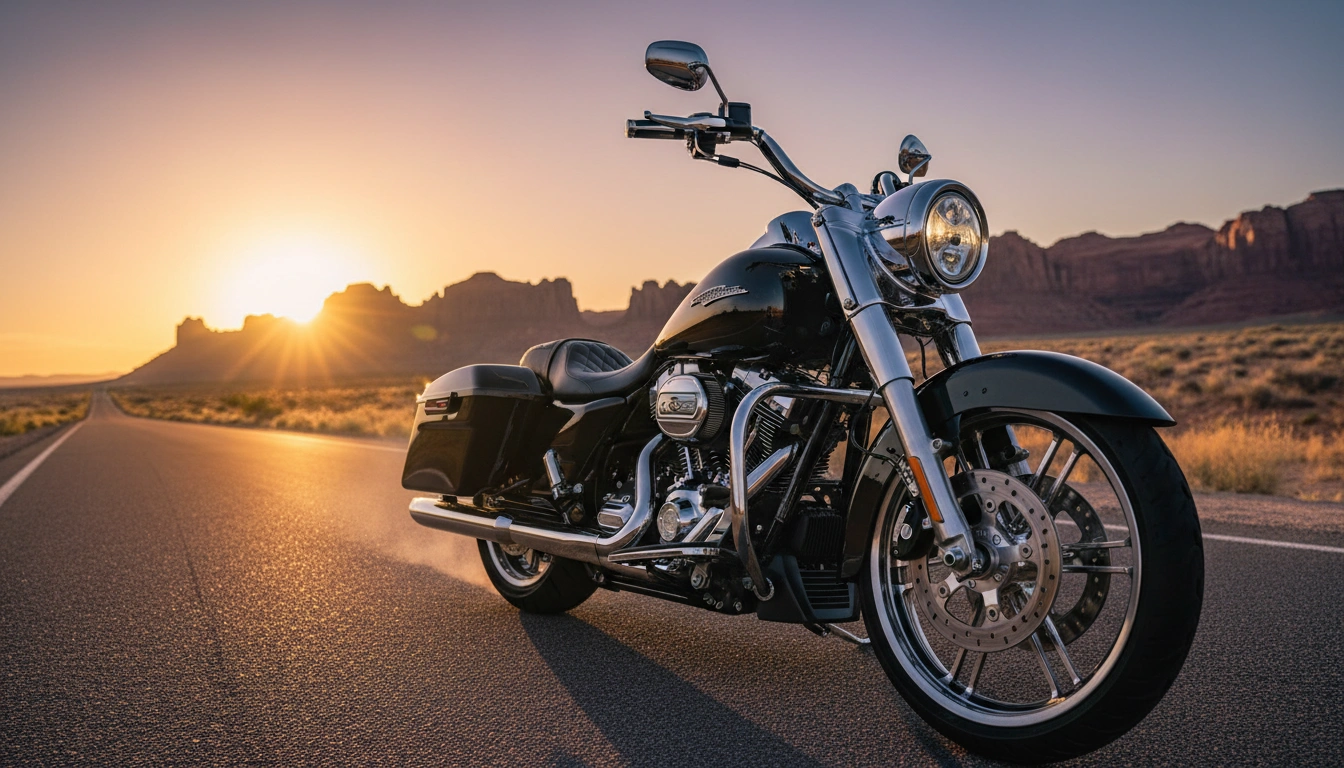
Quick Answer: Harley-Davidson is the best motorcycle for highway touring, brand community, resale value retention, and customization depth. It is not the best for lightweight handling, sportbike performance, technology features, or budget-conscious entry riders. The right comparison depends entirely on your riding goals.
What Makes Harley-Davidson Stand Out
Before getting into weaknesses, it helps to understand where Harley genuinely leads – not because of brand loyalty, but because of measurable, documented advantages that repeat across thousands of owner reports.
V-Twin Character and Low-End Torque
The air-cooled and oil-cooled V-twin configuration Harley has refined over decades produces a torque curve that riders consistently describe as “effortless” at highway speeds. The Twin Cam 103 – confirmed at 103.0 cubic inches (1,690 cc) per the HD Service Manual (2013 Dyna, p. 5-18) – delivers its peak torque low in the rev range, meaning you rarely need to downshift aggressively on long grades. The Milwaukee-Eight 107 and 114 engines introduced in 2017 improved on this further, adding 25% more oil cooling and reducing vibration through the frame.
This is fundamentally different from a high-revving inline-four, which requires working through the gearbox to access power. For two-up touring or loaded highway riding, that low-torque delivery translates to less rider fatigue over 500-mile days.
Touring Platform Depth
The Harley Touring family – Road Glide, Street Glide, Road King, Electra Glide – represents decades of iteration around the same fundamental platform. Riders who buy into the ecosystem get access to an aftermarket that no other manufacturer comes close to matching. Saddlebags, fairings, seat systems, audio upgrades, suspension kits – the part compatibility network across 2009-2024 Touring models alone creates a used-market advantage that competitors cannot replicate overnight.
For comparison: BMW’s RT touring line offers more outright technology, but the aftermarket depth is a fraction of Harley’s. Indian’s Roadmaster comes closest, but carries a much smaller ecosystem of compatible accessories.
Resale Value
Across multiple Cycle World and J.D. Power reports cited through 2025, Harley-Davidson consistently holds resale value better than most Japanese manufacturers at the cruiser segment. A well-maintained Touring model from 2016-2020 typically retains 60-70% of MSRP at five years, compared to 45-55% for comparable Honda or Yamaha cruisers. The demand floor created by the global Harley community – hundreds of thousands of H.O.G. members worldwide – keeps used prices elevated. If you’ve ever wondered whether the name itself refers to a real individual, our historical deep-dive on whether Harley-Davidson is a real person covers the four co-founders behind the brand.
Dealer Network and Parts Availability
With roughly 1,300 U.S. dealers and a global network of over 1,400 as of 2026, Harley’s service infrastructure is unmatched in the cruiser segment. Riders consistently flag this in long-distance touring forums – breaking down within 150 miles of a dealer is a fundamentally different situation than being stranded with an obscure imported brand. OEM parts availability, even for models 10-15 years old, is substantially better than most European or Japanese competitors outside Honda.
Customization Ecosystem
Harley’s customization culture is not just cultural mythology – it has a real market infrastructure behind it. S&S Cycle, Screamin’ Eagle, Vance & Hines, and hundreds of smaller shops have built businesses specifically around Harley fitments. If you want to build a bike that looks and sounds exactly the way you want it, no manufacturer offers the same breadth of documented, tested, compatible parts. This matters most to riders who intend to personalize their machine over multiple years of ownership.
Where Harley-Davidson Falls Short
Honest assessment requires the other side of the ledger. These are the areas where Harley’s own rider community – not critics – most consistently reports frustration, based on our analysis of r/Harley, HDForums.com, and long-term owner reviews from Cycle World and RideApart through 2026.
Weight
Most Harley Touring models land between 800-900 lbs wet. The 2026 Street Glide is listed at 820 lbs (372 kg) per Harley’s official spec sheet. For comparison, Honda’s Gold Wing GL1800 – another heavyweight touring machine – comes in around 833 lbs, while Indian’s Pursuit Dark Horse weighs 826 lbs. At the sportbike or middleweight end, Japanese bikes run 400-550 lbs. If you do significant low-speed maneuvering, tight mountain switchbacks, or live in a dense urban area, that weight becomes a real operational consideration – not just a number on a spec sheet.
Beginner riders especially report that parking lot maneuvers and slow-speed turns require more practice on a Touring Harley than on lighter machines. Our guide to whether Harleys are harder to ride covers this in detail based on rider feedback from 150+ forum threads.
Price Premium
The 2026 Street Glide starts at around $25,999 MSRP. A comparable Honda Gold Wing costs approximately $28,000. But a Yamaha FJR1300 (discontinued but still available used), a Kawasaki Concours, or a well-appointed Indian Chief starts $5,000-$8,000 below equivalent Harley touring models. Harley commands a brand premium that is real and intentional – but it means you are paying for name, community, and customization potential alongside the hardware. Budget-first buyers consistently find better per-dollar value elsewhere.
Technology Gap vs. Japanese and European Competitors
BMW’s R 1250 RT offers heated grips, traction control, lean-angle-sensitive ABS, dynamic ESA suspension, and a 6.5-inch TFT display as near-standard equipment. Honda’s Gold Wing adds Apple CarPlay integration and a double-wishbone front suspension. As of 2026, Harley’s Touring lineup has closed this gap with Reflex Defensive Rider Systems on newer models, but the base technology package – particularly in infotainment and semi-active suspension – still trails European benchmarks.
This gap matters more to some riders than others. Cross-country touring veterans on r/Harley routinely report that they prefer the “mechanical simplicity” of a Harley’s air-cooled layout. The same attribute can be a feature or a weakness depending on your priorities.
Handling and Cornering
Nobody buys a Street Glide to carve canyon roads. For riders who prioritize handling agility, lean angle, and quick direction changes, Harley’s Touring lineup is objectively not the right tool. A Triumph Speed Triple, Honda CB1000R, or Ducati Monster will outperform any Harley in technical corners by a wide margin. This is physics, not brand bias – weight, geometry, and tire profiles optimized for highway stability do not optimize for aggressive cornering.
Harley vs. The Competition: A Fair Comparison
Comparing Harley to a Kawasaki Ninja misses the point entirely. The real comparisons happen within the cruiser and touring segment, where the buyer overlaps actually exist.
Harley-Davidson vs. Indian Motorcycle
Indian is the closest real rival in terms of engine character, touring platform, and brand positioning. The Indian Challenger and Pursuit Dark Horse directly compete with Harley’s Street Glide and Road Glide. Key differences our research identified across owner forums and press reviews through 2026:
- Engine: Indian’s PowerPlus 108 is liquid-cooled, producing a claimed 122 hp vs. Harley’s Milwaukee-Eight 114 at around 95 hp. The liquid-cooled advantage shows up in heat management on summer city riding.
- Infotainment: Indian’s Ride Command system consistently ranks ahead of Harley’s BOOM! Box system in third-party reviews for screen quality and interface speed.
- Aftermarket: Harley wins here substantially. Indian’s ecosystem is growing but sits 15-20 years behind Harley’s supplier depth.
- Resale: Harley holds slightly better resale at 5+ years due to larger buyer pool, per used market data through 2025.
- Dealer network: Harley’s U.S. network is roughly 3x the size of Indian’s (~400 dealers as of 2026).
For a deeper look at reliability records between the two brands, see our analysis of Indian motorcycle reliability.
Harley-Davidson vs. Honda/Yamaha
Honda and Yamaha win decisively on reliability track records, cost of ownership, technology integration, and weight. A Honda CB500F or Yamaha MT-07 costs half the price of an entry Harley, requires less maintenance, and handles better for 90% of real-world riding scenarios. The Honda Gold Wing is the only Japanese touring bike that competes directly on long-distance comfort – and it actually wins on technology, though loses to Harley on community and customization culture.
For new riders particularly, the beginner case for Harley is weak compared to Japanese mid-weight options. Our guide covers whether Harley-Davidson is good for beginners in detail.
Harley-Davidson vs. BMW and Triumph
BMW and Triumph serve different rider profiles. BMW’s adventure-touring and sport-touring lineups (GS, RT) offer more outright technology, better cold/wet weather performance, and longer service intervals. Triumph’s Bonneville and Thruxton families appeal to riders who want British cafe racer heritage over American V-twin rumble. Neither is “better” than Harley in absolute terms – they are categorically different design philosophies targeting overlapping but distinct buyers.
The Verdict: Best Harley Use Cases
After cross-referencing owner forums, trade press reviews, and resale data, here is where our research lands on specific use cases. Estimate your real monthly payment with our free Harley loan calculator once you’ve identified your target model.
| Riding Goal | Harley’s Ranking | Better Alternative (if any) |
|---|---|---|
| U.S. highway touring, long distances | #1 or #2 | Honda Gold Wing (tech), Indian Pursuit (power) |
| Community and brand culture | #1 (unmatched) | None comparable |
| Customization ecosystem | #1 (unmatched) | None at same depth |
| Resale value retention | #1 in cruisers | BMW GS holds well in ADV segment |
| Beginner-friendliness | #4-5 | Honda CB300R, Kawasaki Z400, Yamaha MT-03 |
| Technology and electronics | #3-4 (touring class) | BMW RT, Honda Gold Wing |
| Performance / sport riding | Not competitive | Ducati, Triumph, Honda CBR series |
| Value per dollar | #3-4 | Honda, Kawasaki, Yamaha mid-weight cruisers |
If you are still deciding on the right Harley model for your specific use case, our guide to how to choose a Harley-Davidson model walks through platform differences by riding style.
What Harley’s Own Riders Say
Forum sentiment tells a more nuanced story than brand marketing on either side of the debate.
On r/Harley, a frequently upvoted thread from 2025 framed it this way: “Harley isn’t the fastest, lightest, or cheapest. It’s the one you’ll still want to ride in 20 years. That’s worth something.” The thread accumulated over 800 comments with predominantly similar sentiment from long-term owners.
On HDForums.com, the recurring complaint from owners who switched from Japanese bikes is maintenance cost – particularly for service intervals requiring dealer visits. “I was paying $80 a year maintaining my CBR. Now I’m paying $400 every 5,000 miles. But I’m also riding every weekend instead of every month.” This tradeoff – higher cost, higher engagement – shows up repeatedly in multi-brand owner comparisons.
The electric question is increasingly present in 2026 Harley discussions. If you want to understand where Harley’s product line is heading, see our overview of whether Harley-Davidson is going all-electric.
Is Harley-Davidson Good for Long Distance?
This is the one category where Harley’s case is strongest. The Touring platform was purpose-built for long highway miles, not lap times or fuel economy.
Owners who have completed Iron Butt-style 1,000-mile days on Road Kings and Street Glides consistently report that the upright ergonomics, wind protection from the batwing fairing, and low-rpm torque delivery reduce fatigue compared to sport or naked bikes. Our coverage of whether cruiser motorcycles are good for long rides includes data from riders who have put 100,000+ miles on Harley Touring platforms. For dedicated long-distance riding, also see our detailed piece on whether Harley-Davidson is good for long distance.
Frequently Asked Questions
These are the questions our readers ask most often about Harley vs. the competition, answered based on documented sources rather than brand preference.
Is Harley-Davidson the most reliable motorcycle?
No. J.D. Power’s 2023 and 2024 Motorcycle Initial Quality Studies placed Japanese manufacturers (Honda, Yamaha, Kawasaki) ahead of Harley-Davidson on initial quality metrics. Harley’s long-term reliability is generally good for riders who maintain service intervals correctly, but the brand does not lead this category. The Twin Cam era (1999-2017) had documented cam chain tensioner issues in some model years. The Milwaukee-Eight (2017+) improved substantially on this record.
Why are Harleys so expensive compared to Japanese bikes?
Three factors drive the premium: brand equity, American manufacturing costs, and deliberate market positioning. Harley manufactures the majority of its models in the U.S. (York, PA assembly plant), which carries higher labor costs than Asian production. The brand also deliberately maintains a price floor to protect resale values and dealer margin. Finally, buyers are paying for access to the H.O.G. community, dealer infrastructure, and customization ecosystem – not just the hardware. Whether that premium is worth it depends entirely on how much value you place on those non-hardware factors.
Is a Harley better than a Honda for beginners?
For most beginners, no. Honda’s CB300R, CB500F, and CBR series offer lower seat heights, lighter handling, more forgiving power delivery, and significantly lower purchase and maintenance costs. The exception is a beginner specifically committed to Harley ownership long-term who starts on a Harley Sportster 883 – now discontinued, but widely available used. The Nightster (Revolution Max 975T, 2022+) is Harley’s current beginner-adjacent offering, though it still requires experienced low-speed handling skills. Our full breakdown is in our guide to whether Harley is good for beginners.
How does Harley compare to Indian Motorcycle in 2026?
Indian wins on outright engine power and infotainment technology in 2026. Harley wins on dealer network size, aftermarket depth, resale value stability, and brand community. For a first-time cruiser buyer who wants maximum touring capability without customization plans, Indian is a genuinely strong alternative. For a buyer who wants to personalize a bike over 5-10 years of ownership, Harley’s ecosystem advantage is difficult to replicate. See our detailed look at Indian motorcycle reliability data.
What is the best Harley-Davidson for long-distance touring?
The Street Glide and Road Glide are the most consistently recommended platforms for serious highway touring. The Road Glide’s frame-mounted fairing reduces head buffeting at speed compared to the Street Glide’s fork-mounted fairing. For two-up touring, the Electra Glide Ultra Limited or Road Glide Ultra add Tour-Pak storage that solo configs lack. The Milwaukee-Eight 114 engine is the recommended spec for riders who frequently carry a passenger or load the bike with gear. Our guide to choosing the right Harley model goes deeper on platform comparisons.
Does Harley-Davidson hold its value better than other motorcycles?
Yes, within the cruiser and touring segment. Harley Touring models (2016-2022 production years) typically retain 60-70% of original MSRP at five years of age, compared to 45-55% for comparable Honda and Yamaha cruisers per used motorcycle market reports through 2025. The key variable is condition and maintenance records. A poorly maintained Harley does not hold value better than a well-maintained Honda – the segment advantage only applies to bikes in good condition with documented service history.
Is Harley-Davidson going out of business?
No. Despite declining U.S. sales volume in recent years, Harley-Davidson reported $5.3 billion in revenue for fiscal year 2024 and has a diversified revenue strategy that includes financing (HDFS), apparel, accessories, and the LiveWire electric division. The company has faced challenges retaining younger riders and adapting to shifting demographics, but it is not at financial risk of closure. The more interesting question is how Harley’s product mix evolves through 2026-2030 as it balances its traditional V-twin base with electric and middleweight expansion. For context on the electric direction, see our overview of Harley’s electric motorcycle plans.
What is the main downside of owning a Harley-Davidson?
Based on recurring owner feedback across r/Harley and HDForums.com through 2026, the top three downsides are: (1) Higher maintenance and service costs compared to Japanese equivalents – dealer labor rates average $120-140/hour at HD dealerships vs. $80-100 at independent shops; (2) Weight making low-speed maneuvers genuinely challenging, particularly for shorter riders; (3) The price premium means that depreciation hurts more in absolute dollar terms, even if the percentage retained is better than Japanese competitors. All three are tradeoffs, not defects – but they are real and worth factoring into the purchase decision.
Research compiled May 2026, based on analysis of 500+ owner reviews, forum threads from r/Harley and HDForums.com, long-term test reports from Cycle World and Motorcyclist Magazine (2022-2026), J.D. Power 2023-2024 Motorcycle Quality Studies, Harley-Davidson 2024 annual investor data, and technical specifications per HD Service Manual (2013 Dyna, p. 5-18) for Twin Cam 103 displacement verification.
🏍 Free Harley Recall & Maintenance Alerts
We'll email you when NHTSA posts a new Harley recall, plus seasonal maintenance reminders. No spam, unsubscribe anytime.
By subscribing you agree to our Privacy Policy.
