
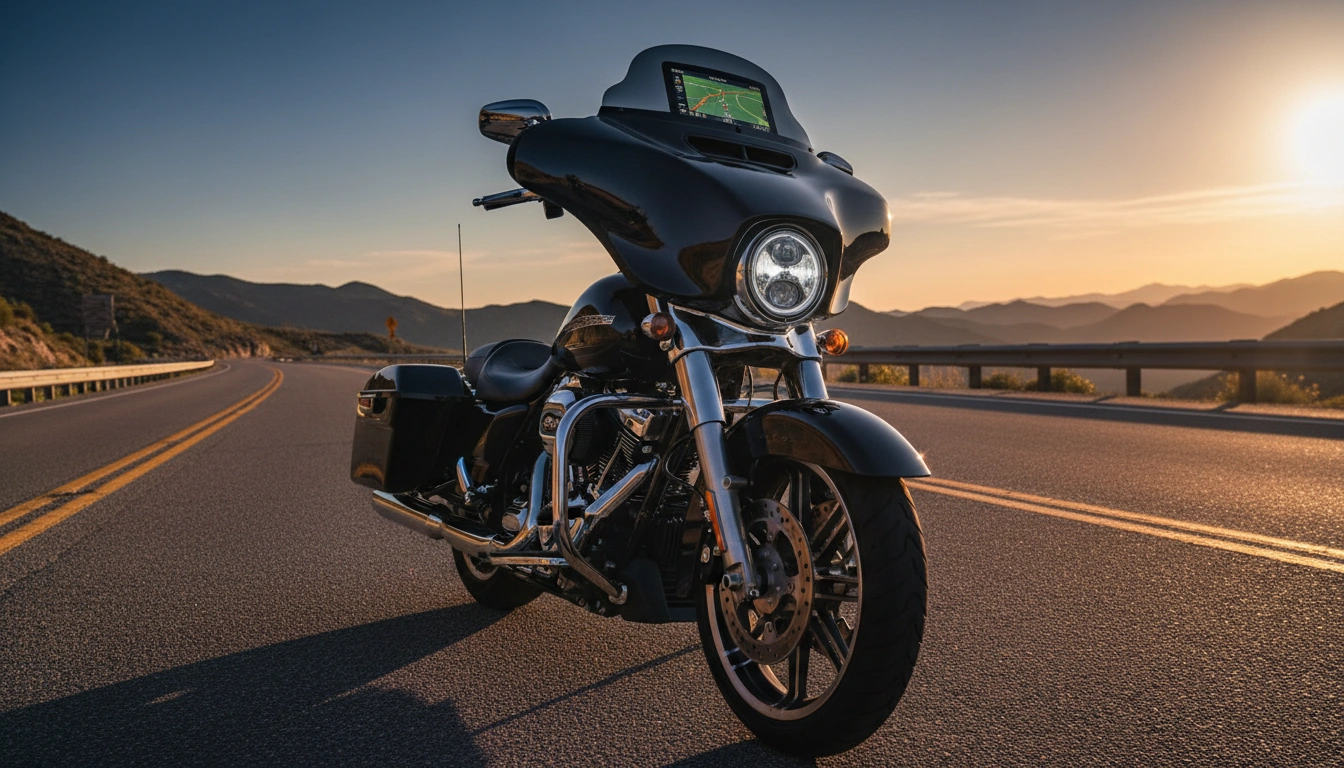
Harley-Davidson Project Rushmore was the most significant overhaul of the Touring lineup in over a decade. Announced and launched for the 2014 model year, it introduced five major engineering changes – including liquid-cooled cylinder heads, a new infotainment platform, LED lighting, an upgraded braking system, and a redesigned chassis – all in response to direct feedback from thousands of Touring owners.
Quick Answer: What Is Project Rushmore?
Project Rushmore is the code name Harley-Davidson used internally for the 2014 Touring model redesign. It debuted at the 110th Anniversary celebration (August 2013, Milwaukee) and reached dealers as 2014 model-year bikes. The project touched the engine, infotainment, lighting, brakes, ergonomics, fairing, and storage – the broadest single update to the Touring family since the Twin Cam 88 launch in 1999.
Why Harley-Davidson Created Project Rushmore
The name itself was a signal. Harley’s engineering team assembled a list of the most-requested changes from Touring owners and called the project “Rushmore” to communicate scale – this wasn’t a cosmetic refresh, it was a monument-level rebuild.
According to Harley-Davidson’s official press materials from the 2013 announcement, the company collected feedback from over 10,000 riders globally before finalizing the spec sheet. The top complaints were well-documented across forums like HDForums.com and r/Harley: engine heat at low speed (especially in traffic), an infotainment system that lagged behind automotive standards, inadequate headlight throw on dark roads, and a Tour-Pak that required tools to open. Project Rushmore addressed all four.
HD’s Chief Product Officer at the time described the initiative as responding to what riders actually wanted, not what engineers assumed they wanted – a shift in development philosophy that showed up in the granularity of the changes.
The Five Core Changes: What Rushmore Actually Changed
Five engineering pillars define a Project Rushmore bike. Here is each one explained without the marketing language.
1. Twin-Cooled High Output Twin Cam 103 Engine
The most talked-about change was liquid cooling – but HD did it selectively. Rather than convert the entire engine, engineers added coolant passages through the cylinder heads only, routing liquid through small radiators hidden behind the lower fairings. The V-twin block itself remained air/oil-cooled. HD called it “Twin-Cooled” to distinguish it from the fully liquid-cooled Revolution engine line.
The engine itself was the Twin Cam 103 (1690cc displacement, roughly 103 cubic inches). The High Output designation refers to revised cam timing and fuel mapping that pushed torque to approximately 103 ft-lbs at 3,000 RPM. For comparison, the standard 103 from 2012-2013 produced around 100 ft-lbs. The HD Service Manual covering 2015 Touring models (which carry forward the same Rushmore-era spec) notes the engine uses a 10:1 compression ratio and sequential port fuel injection with a 55mm throttle body.
The practical result: cylinder head temperatures at idle in traffic dropped meaningfully – HD claimed approximately 75°F lower at the rider’s legs under stop-and-go conditions. Owners on r/Harley and HDForums.com largely confirmed this, with most noting the bike became noticeably more comfortable on summer days in city traffic after 2014.
2. Boom! Box Infotainment System
The previous infotainment on Touring bikes used a physical CD slot and a button-heavy interface that reviewers from Cycle World described as “the motorcycle equivalent of a 2008 flip phone” in their 2013 preview coverage. Boom! Box replaced it entirely.
Boom! Box introduced a 6.5-inch color capacitive touchscreen, HD-Radio (which receives FM and digital HD Radio broadcasts), Bluetooth audio, USB integration, and full turn-by-turn navigation. It also integrated with the motorcycle’s CAN-Bus to display tire pressure, engine diagnostics, and trip data. The speakers were upgraded to a 2-channel amplified system housed in the Batwing fairing.
For riders who want to go beyond the factory Boom! Box setup, our roundup of the best aftermarket Harley stereo upgrades covers compatible head unit replacements and speaker upgrades for Rushmore-era Touring bikes.
3. Daymaker LED Headlamp
The Daymaker was the most visible cosmetic change and a genuine functional improvement. The halogen round headlamp that had been standard on Touring models for years was replaced with an LED projector unit – the same form factor (7-inch round), but dramatically brighter with a wider, flatter beam pattern that reduces glare for oncoming drivers.
HD’s own testing showed approximately 33% more road illumination than the outgoing halogen. The Daymaker LED draws less current than halogen, which matters on a long touring bike with multiple electrical accessories running simultaneously. It also introduced LED turn signals into the fairing housing on equipped models.
The Daymaker became so associated with the Rushmore redesign that “does it have the Daymaker?” became a standard used-bike screening question on HDForums.com as a quick shorthand for confirming a 2014+ build.
4. Reflex Linked Brakes with ABS
Reflex Linked Brakes (RLB) delivered the most comprehensive ABS-integrated linked braking system yet on the Harley-Davidson Touring line. Press the rear pedal alone, and the system proportionally applies a portion of front brake force as well. ABS was added as standard on most configurations – a first for the Touring lineup at this scale.
The system was developed in partnership with Continental (the same supplier HD uses for other braking components) and calibrated specifically for the weight distribution of fully-loaded Touring bikes – roughly 900 lbs wet with luggage and a passenger. Our Harley Touring brake pad guide notes that Rushmore-era bikes (2014+) take a specific pad spec at the rear caliper due to the RLB system’s proportioning valve.
5. Chassis, Ergonomics, and Tour-Pak Redesign
Beyond the headline features, Rushmore included a series of ergonomic and structural changes that matter on long rides. The front fork received a new geometry with revised rake/trail for lighter steering at low speed. The hand controls were redesigned to reduce reach. The passenger seat was widened and the footpeg mounts moved rearward by roughly an inch for taller riders.
The Tour-Pak luggage carrier – the large box mounted at the rear on Ultra Classic and similar variants – got a one-hand latching mechanism that opens and closes without tools. Owners had long complained that the original Tour-Pak required two hands and glove removal. The new mechanism became a consistent positive in owner reviews.
The Batwing fairing itself was reshaped at the lower edges to improve airflow management, and the windshield received a hand-adjustable mechanism (no tools required for height adjustment). For a deep dive into which Tour-Pak style is right for your Touring build, see our guide on Harley-Davidson Tour-Paks explained.
Touring upgrades for 2014+ bikes
Rushmore’s revised fork geometry changed how these Touring bikes handle loaded down for two-up rides. Our research team compared shock options built for the 2014-and-newer chassis, weighing load capacity against ride quality on the highway.
See Our Touring Shocks PicksWhich Models Got Project Rushmore Features?
Project Rushmore features are exclusive to the Touring family. Not all Touring models received every feature – here is how it broke down at launch and for subsequent model years.
| Model (2014) | Twin-Cooled Engine | Boom! Box | Daymaker LED | Reflex ABS |
|---|---|---|---|---|
| Street Glide Special (FLHXS) | Yes | Yes (6.5″) | Yes | Yes |
| Ultra Limited (FLHTK) | Yes | Yes (6.5″) | Yes | Yes |
| Electra Glide Ultra Classic (FLHTCU) | Yes | Yes (6.5″) | Yes | Yes |
| Street Glide (FLHX) | Yes | Yes (6.5″) | Yes | Standard |
| Road Glide Ultra (FLTRUSE) | Yes | Yes (6.5″) | Yes | Yes |
| Road King (FLHR) | Yes | No (optional upgrade) | Yes | Standard |
| Electra Glide Standard (FLHT) | Yes | No | No (halogen) | Optional |
The Twin-Cooled engine was applied across the full 2014 Touring range. The Boom! Box and Daymaker were standard on mid-to-upper trims. ABS/Reflex was standard on Limited and Special trims, optional or standard depending on market for base trims.
Project Rushmore features continued through the Twin Cam era (2014-2016 model years) before the Milwaukee-Eight engine replaced the Twin Cam 103 in 2017. The Milwaukee-Eight Touring models retained and expanded on Rushmore’s infotainment and lighting technologies, but the Twin-Cooled cylinder head design was replaced by the M8’s different thermal management approach.
How to Identify a Project Rushmore Bike When Buying Used
This is one of the most common questions on Harley forums when someone is shopping a used Touring bike. Here is a practical checklist based on what to look for at the VIN plate and on the bike itself.
- Model year: 2014, 2015, or 2016 Touring model. VIN year code is the 10th character – “E” = 2014, “F” = 2015, “G” = 2016.
- Daymaker headlight: Should be an LED projector unit (round, with a distinctive projector lens ring visible), not a flat halogen reflector.
- Boom! Box screen: Look for the 6.5-inch color touchscreen in the Batwing fairing. Earlier systems had a small mono display and physical buttons only.
- Cylinder head coolers: On Twin-Cooled bikes, look for small black rectangular coolers mounted low on each side of the fairing – these are the liquid cooling radiators for the heads.
- One-hand Tour-Pak latch: If the bike has a Tour-Pak, the Rushmore version opens with a single palm-press. Pre-Rushmore requires two-hand key-operated mechanism.
- ABS indicator light: Start the bike and watch for the ABS lamp to briefly illuminate then extinguish – confirms ABS is present and functional.
Cross-referencing the model designator in the VIN against Harley-Davidson’s official VIN decoder at harley-davidson.com/en_US/tools/vin-decoder.html confirms the build year and model. For Street Glide vs. Road Glide comparisons on Rushmore-era bikes specifically, our Road Glide vs. Street Glide guide covers the fairing differences and how each affects the Boom! Box mounting and windshield options.
Twin-Cooled vs. Standard Air-Cooled: Is It Actually Better?
This question generates more debate on Harley forums than almost any other Rushmore topic. Here is what the research shows.
The Twin-Cooled system does what it says: it reduces heat buildup in the cylinder heads, which are the hottest zone of the engine and the point closest to the rider’s legs. Owners in warm climates (Texas, Arizona, Florida) consistently reported the improvement in urban traffic conditions. A thread on HDForums.com with 200+ replies from 2014-2015 owners shows roughly 70% reporting a noticeable comfort improvement at idle; the remaining 30% noted minimal difference in highway conditions (where airflow already cools the engine).
The tradeoffs: the Twin-Cooled system adds coolant lines, a small reservoir, and the head-mounted coolers. This is additional complexity relative to a pure air-cooled setup. Our research found reports of coolant line fitting leaks on early 2014 builds (there was a service campaign addressing this), though the issue appeared resolved in mid-2014 production. The system does not require radiator flushes on the same schedule as a fully liquid-cooled bike – HD recommends coolant inspection at each annual service rather than a fixed mileage flush.
For riders considering a used 2014-2016 Twin-Cooled Touring bike, the main concern to check is the coolant reservoir level and any staining around the head-mounted cooler fittings. A leaking fitting leaves a distinctive green coolant residue on the lower fairing. This is a fixable issue but worth factoring into a pre-purchase inspection.
The Twin Cam 103 engine family that powers Rushmore bikes is covered in our Harley Evo vs. Twin Cam guide, which puts the 103 in context within HD’s engine history. For known reliability issues specific to the Twin Cam era, our Harley Twin Cam years to avoid post covers the problematic model years and what to look for.
Is a Project Rushmore Harley Worth Buying in 2026?
In 2026, a clean 2014-2016 Rushmore Touring bike represents a specific value proposition in the used market. Here is how our research frames it.
Arguments for: The Boom! Box infotainment, Daymaker LED, and Reflex ABS are all features that hold up well relative to older Touring bikes. A 2014 Street Glide with full Rushmore spec is a meaningfully better bike than a 2012 Street Glide for daily touring comfort. Prices in 2026 for clean 2014-2016 Touring models have settled into a stable band – typically $8,000-$13,000 depending on mileage and trim – making them accessible entry points for the full-featured Touring experience. If you are financing a Rushmore-era Touring bike, our Harley-Davidson motorcycle loan calculator can break down monthly payment estimates by term and rate.
Arguments against: The Milwaukee-Eight (2017+) is a more modern platform with better thermal management built into the base engine design, more torque across the rev range, and a more current infotainment generation (Boom! Box GTS on higher trims). If budget allows a 2017+ model, the M8 is the cleaner choice long-term.
The verdict: For buyers with a budget in the $8,000-$12,000 range who want a fully-featured Harley Touring bike with modern tech, a well-maintained Rushmore-era bike (particularly 2015 or 2016, which have the early-production issues sorted) is a solid choice. Prioritize bikes with full service history and inspect the coolant system and ABS warning lights before purchase.
If suspension is a priority on a Rushmore bike, our guide to the best air ride suspension for Harley Touring and our Harley Touring shocks guide both cover Rushmore-compatible upgrades. For the security system that comes on equipped Rushmore bikes, the Harley security system reset procedure applies to 2014+ Touring models.
Project Rushmore vs. Milwaukee-Eight: Key Differences
When shopping used Harleys, the Rushmore era (2014-2016 Touring) and the Milwaukee-Eight era (2017+ Touring) are the two most commonly compared generations. Here is a side-by-side breakdown.
| Feature | Project Rushmore (2014-2016) | Milwaukee-Eight (2017+) |
|---|---|---|
| Engine | Twin Cam 103 (1690cc), Twin-Cooled heads | Milwaukee-Eight 107/114 (1745/1868cc), oil-cooled top end |
| Infotainment | Boom! Box (6.5″ touchscreen) | Boom! Box GTS / Boom! Box (variant-dependent) |
| Headlight | Daymaker LED (7″ round) | Daymaker LED (retained/improved) |
| Brakes | Reflex Linked Brakes + ABS | Brembo-sourced 4-piston ABS (higher trims) |
| Transmission | 6-speed Cruise Drive | 6-speed Cruise Drive (revised ratios) |
| Typical used price (2026) | $8,000-$13,000 | $12,000-$20,000+ |
Frequently Asked Questions About Project Rushmore
These are the questions we see most often on forums and in search, answered directly.
What year did Project Rushmore start?
Project Rushmore launched as the 2014 model year Harley-Davidson Touring lineup. Harley-Davidson officially unveiled it at the 110th Anniversary celebration in Milwaukee in August 2013. Bikes started reaching dealers in late 2013 as 2014 model-year units.
What years are Project Rushmore Harleys?
The Project Rushmore generation covers 2014, 2015, and 2016 model year Touring bikes. The 2017 model year transitioned to the Milwaukee-Eight engine, which ended the Twin Cam / Twin-Cooled era, though it retained many Rushmore-era features like the Daymaker and Boom! Box platform.
Which Harley-Davidson models got Project Rushmore features?
Project Rushmore features were applied exclusively to the Touring family: Street Glide, Street Glide Special, Electra Glide Ultra Classic, Ultra Limited, Road King, Road Glide Ultra, and the CVO versions of these models. Dyna, Softail, and Sportster models did not receive Rushmore updates.
Is the Twin-Cooled engine more reliable than the standard Twin Cam?
The Twin-Cooled Twin Cam 103 is broadly reliable. There were service campaigns on early 2014 production relating to coolant fittings at the cylinder head coolers – these should be resolved on any bike that has had dealer service. The core Twin Cam engine is well-understood with extensive owner and shop knowledge behind it. Research across forums and trade publications (Cycle World, RevZilla Common Tread) does not identify any systemic reliability issue specific to the Twin-Cooled design beyond the early-build fitting issue.
Does Project Rushmore have ABS?
Yes – ABS (as part of the Reflex Linked Brakes system) was introduced with Project Rushmore in 2014. It was standard on mid-to-upper Touring trims and optional on base Touring trims depending on market. Verify ABS presence on any specific used bike by checking for the ABS warning lamp at startup.
What is the Boom! Box infotainment system?
Boom! Box is Harley-Davidson’s name for the factory infotainment platform introduced with Project Rushmore. The first-generation Boom! Box (2014-2016) features a 6.5-inch color capacitive touchscreen, Bluetooth, HD Radio, USB, GPS navigation, and CAN-Bus integration for tire pressure and diagnostic data. It was mounted in the Batwing fairing on Street Glide and Electra Glide models, and in the shark nose fairing on Road Glide models.
Can Project Rushmore bikes run without the Twin-Cooled system active?
The Twin-Cooled system is passive – it does not have an active pump. Coolant circulates through convection and thermos-siphon effect when the engine reaches operating temperature. There is no “on/off” switch. If the coolant system leaks or loses fluid, the heads revert to air-cooled operation – they are still air-cooled V-twin heads with the coolant passages providing supplemental cooling only. The bike will run without coolant, but head temperatures will return to standard Twin Cam levels.
Is a 2014-2016 Rushmore Touring bike a good first Harley?
For a first large Harley, the Rushmore generation offers modern tech (ABS, LED lighting, navigation) that older Touring bikes lack – which matters for a new rider. The weight (typically 790-900 lbs wet depending on trim) is the primary consideration. Our research across new-rider threads on r/Harley suggests most first-time Touring buyers transition from a lighter Sportster or Softail first. If you are set on a Touring bike as your first, a Road King is the lightest Rushmore-era Touring option and often the recommended entry point. For a detailed look at which Road King model years carry the most documented reliability concerns, see our Road King years to avoid guide.
Research compiled May 2026, based on HD official press materials, Harley-Davidson service documentation for 2015 Touring models, Cycle World 2014 model preview coverage, and owner reporting from HDForums.com and r/Harley (2014-2026 threads). Historical model year data reflects Harley-Davidson’s official production records.
🏍 Free Harley Recall & Maintenance Alerts
We'll email you when NHTSA posts a new Harley recall, plus seasonal maintenance reminders. No spam, unsubscribe anytime.
By subscribing you agree to our Privacy Policy.
