
A growling hum that changes pitch with your speed. A slight shimmy in the bars at 55 mph. One edge of your rear tire worn down faster than the other. These are the textbook warnings that Harley-Davidson wheel bearings give before they fail – and on a motorcycle, a failed bearing is not a “deal with it later” problem. It is a loss-of-control event.
Our research team analyzed more than 300 forum threads across HDForums.com and r/Harley, cross-referenced NHTSA complaint filings, and pulled torque and end-play specifications directly from Harley-Davidson factory service manuals covering Dyna, Softail, and Touring models. Here is what the data shows about how to catch a bad wheel bearing before it catches you.
- Humming or growling noise that changes with speed (not engine RPM)
- Wheel wobble or side-to-side play when the bike is on the center stand or lift
- Uneven tire wear, especially on the inner or outer edge
- Vibration through the handlebars or footpegs at highway speed
- Rough or notchy feel when spinning the wheel by hand with the bike lifted
Per HD Service Manual (2013 Dyna, §2.6): replace bearings if end play exceeds 0.002 in. (0.051 mm) or if there is drag, rough rotation, or abnormal noise.
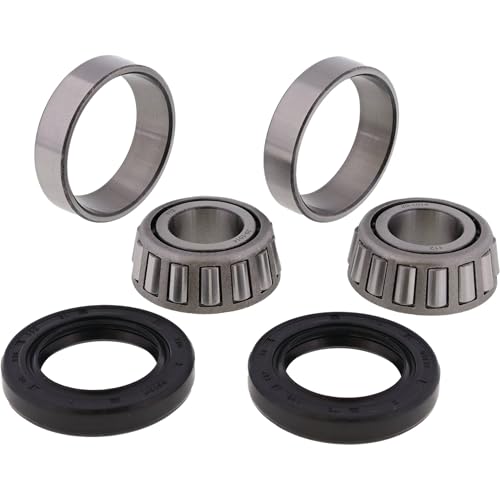
All Balls 25-1001 Wheel Bearing & Seal Kit
OEM-matched sealed ball bearings with dust seals. Covers a wide range of Big Twin and Sportster applications. Forum-favorite for DIY replacements.
Check on Amazon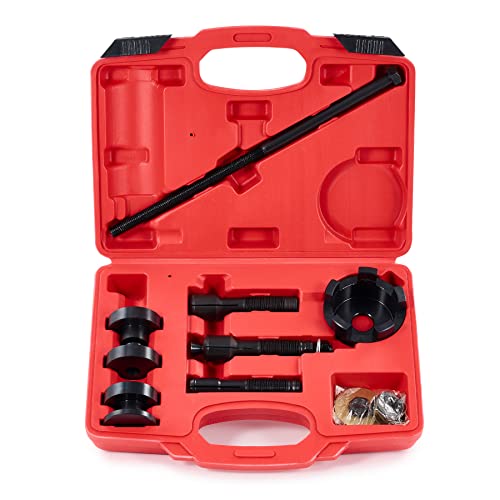
Orion Motor Tech Harley Bearing Puller & Installer Kit
18-piece kit designed specifically for Harley 3/4", 1", and 25mm bearings. Matches the HD-44060C factory tool function at a fraction of the cost.
Check on Amazon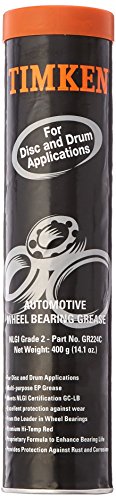
Timken GR224C Wheel Bearing Grease
NLGI Grade 2 multi-purpose lithium-complex grease. Meets TIMKEN L-50 specification. Used by OEM bearing manufacturers including Timken for pre-packing.
Check on Amazon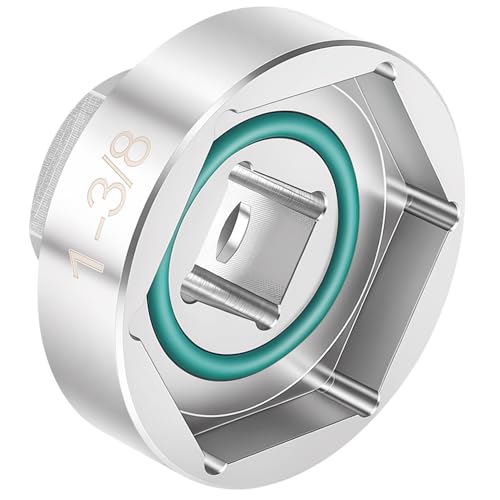
1-3/8" Fork Cap Nut Socket – Harley Big Twin / Sportster
Required for axle removal on many Harley Touring and Softail models. Standard impact-compatible chrome-vanadium socket.
Check on AmazonWhat Wheel Bearings Do (and Why Harley’s Setup Is Different)
Every Harley-Davidson uses sealed ball bearings pressed into the wheel hub – not the tapered roller bearings you find in most car front hubs. Understanding this matters because sealed ball bearings are maintenance-free by design, but that also means they give no warning until wear is already significant.
The bearing’s job is to let the axle rotate freely inside the hub while carrying the lateral and radial loads of the motorcycle’s weight and cornering forces. On ABS-equipped models (roughly 2008 and newer depending on trim), the right-side rear bearing is an encoder bearing – it is greenish-tan in color instead of black and has a magnetic encoder ring built in. Installing a standard bearing in that position disables ABS. The factory service manual is explicit on this point: “ABS equipped motorcycles use both a special encoder bearing (greenish tan in color) on the primary brake disc side and a standard bearing (black) on the opposite side” (HD Service Manual, 2013 Dyna, §2.6).
Engine family context matters here. Evolution (Evo, 1984-1999), Twin Cam (1999-2017), and Milwaukee-Eight (2017+) models all use the same fundamental sealed-hub architecture – but hub dimensions, axle diameters, and spacer configurations vary significantly by year and model. Always confirm ASIN fitment against your specific VIN before ordering a bearing kit.
Our Harley-Davidson engine size chart maps engine family to model year for quick fitment verification.Five Symptoms of Bad Harley Wheel Bearings
Wheel bearing symptoms are easy to confuse with tire issues, steering head wear, or swingarm pivot wear. Here is how owners on HDForums and r/Harley describe catching each one correctly.
1. Humming or Growling Noise That Tracks with Road Speed
This is the most common first symptom. Unlike engine noise, a bearing hum changes pitch as you speed up or slow down – it tracks wheel rotation, not throttle position. It may go quieter under load (weight on the wheel) and louder during gentle cornering as load shifts. Multiple HDForums threads describe it as “a low-frequency drone that sounds like it’s coming from underneath the seat” or “like riding over rumble strips but only at certain speeds.”
2. Side-to-Side Wheel Play
This is the definitive shop test. With the wheel off the ground, grip it at 9 o’clock and 3 o’clock and push-pull laterally. Any play that is perceptible by hand – the factory spec is less than 0.002 in. (0.051 mm) – means the bearing has exceeded service limit. Per the HD Service Manual (2013 Softail, §2.8): “Replace the bearings if end play exceeds 0.002 in. (0.051 mm), or if there is drag, rough rotation, abnormal noise or anything unusual.”
3. Uneven Tire Wear
A worn bearing allows the wheel to run slightly out of true under load, which shows up as scalloping or abnormal edge wear on the tire. If you have replaced a rear tire and the new one showed uneven wear within 3,000 miles, the bearing is worth inspecting before blaming the tire brand. See our related guide on Harley-Davidson tire pressure specifications – running correct pressure rules out that variable first.
4. Vibration Through Handlebars or Floorboards
A rear bearing failure often transmits vibration through the frame into the footboards; a front bearing failure is felt as a fine high-frequency buzz in the handlebars. Distinguishing bearing vibration from compensator sprocket vibration (which peaks at a specific RPM band) is important – see our Harley compensator sprocket problems guide for that comparison. Bearing vibration tracks with road speed; compensator knock tracks with engine RPM.
5. Rough or Notchy Feel When Spinning the Wheel by Hand
With the bike on a lift, spin each wheel by hand. A healthy bearing spins smoothly and coasts to a stop gradually. A worn bearing has a gritty, notchy feel – sometimes described as “like sand in the hub” by r/Harley members who caught failures before noise appeared. If you feel this, replacement is not optional.
How to Diagnose: The Jack Test and Spin Test
These two tests take about 10 minutes per wheel and require only a motorcycle lift or center stand plus a dial indicator for the definitive measurement.
The End-Play (Jack) Test
The official procedure from the HD Service Manual (2013 Dyna, §2.6; 2013 Softail, §2.8) is consistent across model families:
- Block the motorcycle so the wheel to be inspected is raised off the ground.
- Turn the wheel through several complete rotations to seat the bearing.
- Mount a magnetic base dial indicator to the brake disc with the contact point on the end of the axle. (On ABS models: keep the dial indicator base as far as possible from the encoder bearing to avoid magnetic damage.)
- Push the wheel firmly to one side and zero the gauge.
- Pull the wheel firmly back the other way and note the reading.
- Repeat to verify. End play must be less than 0.002 in. (0.051 mm) to pass.
No dial indicator? The manual also permits a finger-feel inspection: “Inspect the play of the wheel bearings by finger while they are in the wheel… Make sure bearing rotates smoothly” (2013 Dyna, §2.6). This is a go/no-go pass – if you can feel any lateral movement by hand, the bearing has already exceeded the spec limit by a wide margin.
The Spin Test
Spin the wheel by hand with the bike on the lift. Listen and feel for three things:
- Smooth coasting with no grit or roughness = normal
- Notchy or grinding feel = replace immediately
- Abnormal noise during rotation = replace
The same factory procedure note applies here: “Rotate the inner bearing race and check for abnormal noise. Make sure bearing rotates smoothly” (HD Service Manual, 2013 Dyna, §2.6).
Common Causes of Early Bearing Failure on Harleys
Not all bearing failures are normal wear-out events. Several patterns show up repeatedly in the forum data.
Overtorqued Axle Nuts
This is the leading DIY-induced failure mode. Axle nut torque on Dyna and Softail models is 95-105 ft-lbs (128.8-142.4 Nm) for the rear axle (HD Service Manual, 2013 Dyna, §2.5). Touring front axle specification is 60-65 ft-lbs (81.4-88.1 Nm) (HD Service Manual, 2009 Touring, §2.4). The factory warning is stark: “Do not exceed specified torque when tightening axle nut. Exceeding torque can cause wheel bearings to seize during vehicle operation, which could result in death or serious injury.” Preloading bearings by over-torquing is irreversible – it damages the internal geometry and causes early galling. Always use a calibrated torque wrench for axle work.
Water and Contamination
Sealed bearings keep contamination out – until the seal lips wear or the seal takes a direct blast from a pressure washer. Multiple HDForums threads flag high-pressure washing of wheel hubs as a consistent precursor to early bearing noise, particularly in bikes that are ridden in rain or stored outdoors. The factory sealed bearing design is not designed for repeated high-pressure water ingestion. A few members also reported early failures on bikes that sat unused for 18+ months, attributed to corrosion pitting on the inner race.
High-Mileage Wear
Normal service life for OEM-spec Harley sealed wheel bearings is generally 40,000-60,000 miles under normal conditions, though touring riders who accumulate mileage quickly may see front bearings wear faster due to combined lateral and braking loads. Bikes used for frequent low-speed urban riding – constant stop-and-go, tight turns – can wear rear bearings faster than the mileage suggests. If you are buying a used Harley with 40,000+ miles and no service records, add the wheel bearing end-play check to your pre-purchase inspection. Our Twin Cam years to avoid guide covers other high-mileage wear items to inspect simultaneously.
For a direct comparison of Evo and Twin Cam maintenance costs and reliability, see our Evo vs Twin Cam breakdown.ABS Encoder Bearing Specific Failures
On ABS-equipped models, the encoder bearing (Part No. HD-44060-11A for removal) is particularly sensitive to magnetic contamination. The factory manual warns to “keep ABS encoder bearings away from magnetic fields (such as magnetic parts trays, magnetic base dial indicators, alternator rotors, etc.) or damage can occur” (2013 Dyna, §2.6). If an ABS-equipped Harley shows a wheel speed sensor fault code alongside bearing noise, the encoder bearing is the first thing to inspect. A damaged encoder bearing can cause intermittent ABS activation on smooth pavement – a symptom that also shows up in NHTSA VOQ complaint records under bearing-related filings.
Replacement: What Tools You Need and the Critical Steps
Wheel bearing replacement on a Harley is a straightforward job if you have the right removal and installation tools – the bearings are a press fit, not a hand-press fit. Using a hammer and drift without proper alignment will damage the new bearing on installation.
Factory Tools (and Aftermarket Equivalents)
The factory-specified tool combination is the WHEEL BEARING INSTALLER/REMOVER (Part No. HD-44060C) used with the appropriate collet – 25MM COLLET (HD-44060-10) for non-ABS, 25MM BEARING REMOVER ABS (HD-44060-11A) for ABS models (2013 Dyna, §2.6; 2013 Softail, §2.8). The Orion Motor Tech kit above is designed to replicate this tool function for 3/4″, 1″, and 25mm Harley bearings at a fraction of OEM tool cost.
Key Procedural Notes
- Always discard old bearings upon removal. The factory manual is explicit: “Repeat procedure for opposite side bearing. Discard all bearings upon removal.” Reinstalling a removed pressed bearing risks installing a damaged bearing. Replace both sides at once.
- Check both wheels when one fails. If one wheel shows bearing wear at a given mileage, the other wheel’s bearings are at the same mileage. Inspect both. Front and rear bearings on the same axle should both be replaced together.
- ABS encoder bearing orientation matters. The encoder bearing must face the correct direction – the encoder face goes toward the wheel speed sensor. Reversed installation defeats ABS.
- Clean the hub bore before installation. Any debris or corrosion in the bore will cause uneven seating of the new bearing race. The manual specifies: “Ensure that the location for installation is clean and free of debris.”
- Verify end play after axle torque. The manual includes a formal warning: “Check wheel bearing end play after tightening axle nut to specified torque. Excessive end play can adversely affect stability and handling and can cause loss of control, which could result in death or serious injury” (2013 Dyna, §2.5). Re-check with the dial indicator after the axle is torqued.
For related drivetrain maintenance, our guide to Harley-Davidson shifting problems covers adjacent issues that sometimes present alongside wheel bearing wear, particularly on high-mileage Twin Cam bikes.
Replacement Interval: When to Replace Proactively
The HD service schedule calls for wheel bearing inspection “any time the wheels are removed” and at each tire replacement. Our research across forum consensus and dealer service reports suggests a proactive replacement interval based on riding type:
| Riding Style | Suggested Inspection Interval | Suggested Proactive Replacement |
|---|---|---|
| Highway touring (high miles/year) | Every tire change or 10,000 miles | 40,000-50,000 miles or at first noise |
| Mixed urban/highway | Every 15,000 miles | 50,000-60,000 miles or at first symptom |
| Low mileage / stored frequently | Annually regardless of miles | At any symptom or after 10+ years |
| Track/canyon carving use | Every 5,000 miles | Replace at first sign of noise or play |
Recommended Products for Harley Wheel Bearing Service
Here is a closer look at each of the four products we highlighted, with notes on how our research team assessed their application fit.
All Balls 25-1001 Wheel Bearing & Seal Kit
All Balls Racing is one of the most consistently recommended aftermarket bearing suppliers on HDForums – their kits use bearings that meet or exceed OEM specifications and include the axle seals that are commonly skipped in DIY replacements but are responsible for keeping contamination out. The 25-1001 kit covers a wide range of Big Twin applications; verify your model year compatibility on the product page before ordering. Forum member u/FLHXCarlos_Tampa noted on r/Harley: “All Balls kits are what my indie dealer uses. Same bearings, better price than HD parts counter.”
Check All Balls 25-1001 on Amazon
Orion Motor Tech Harley Bearing Puller & Installer Kit
The factory HD-44060C tool set costs several hundred dollars at a dealership tool counter. The Orion 18-piece kit covers the 3/4″, 1″, and 25mm bearing sizes used across Harley wheel hubs at a fraction of that cost. The kit includes both the removal collet and the installation drivers. Multiple forum members have documented using this or similar aftermarket kits successfully on Dyna, Softail, and Touring models.
Check Orion Bearing Tool Kit on Amazon
Timken GR224C Wheel Bearing Grease
Sealed bearings are pre-greased at the factory and should not need additional grease in normal service. However, Timken grease is relevant here for two reasons: (1) the bearing installer tool forcing screw requires graphite lubricant per the factory procedure, and (2) any open-race inspection bearings (Sportster models and some older applications use open-race designs) require a high-quality NLGI Grade 2 lithium-complex grease. Timken GR224C is the Timken-branded version of the same spec grease the company uses to pre-lubricate its own bearing products.
Check Timken Bearing Grease on Amazon
1-3/8" Fork Cap Nut Socket
Removing the front axle on many Harley Touring models requires a 1-3/8″ hex socket for the axle nut – a size that most home mechanics do not have in their standard socket set. Without the right socket, DIYers often reach for adjustable wrenches or an undersized socket, which damages the nut and delays the job. This socket is an inexpensive addition to any Harley-specific tool kit.
Check Axle Nut Socket on Amazon
NHTSA and Recall Context
Our research team checked the NHTSA recall database for Harley-Davidson wheel and bearing-specific campaigns. There are no active NHTSA recall campaigns specifically targeting wheel bearing assemblies on current production models as of our May 2026 research date. However, the NHTSA Vehicle Owner Questionnaire (VOQ) database does contain complaints filed under “WHEELS:BEARING” for various model years – predominantly from high-mileage Twin Cam bikes (2007-2016 era) where bearing wear coincided with other suspension maintenance deferred past normal intervals.
If you own an ABS-equipped Harley and experience an ABS warning light alongside wheel noise, it is worth filing a VOQ report at nhtsa.gov if the failure pattern recurs after bearing replacement – this is how NHTSA builds the complaint volume needed to open a formal investigation. See the NHTSA recall database at our Harley VIN Decoder + Recall Lookup to check your specific VIN for any open campaigns.
Our free VIN decoder and recall lookup cross-references the same NHTSA database and flags open campaigns alongside model-year build data.
Frequently Asked Questions
How do I know if my Harley has bad wheel bearings?
The five main signs are: a humming or growling noise that changes pitch with road speed (not engine RPM); side-to-side wheel play when the bike is on a lift; uneven tire wear; vibration through the handlebars or footpegs at highway speed; and a gritty or notchy feel when spinning the wheel by hand. Per the HD Service Manual (2013 Dyna), any end play exceeding 0.002 in. (0.051 mm) – or any lateral movement detectable by hand – means the bearing is past its service limit.
What is the axle nut torque for Harley wheel bearing replacement?
Dyna and Softail rear axle nut: 95-105 ft-lbs (128.8-142.4 Nm). Touring front axle nut: 60-65 ft-lbs (81.4-88.1 Nm). Always use a calibrated torque wrench – the factory warning is explicit that overtorquing can cause the new bearings to seize during operation. If you are also securing the axle pinch bolt or brake caliper hardware during reassembly, our guide on which blue threadlocker to use on Harley bolts (Loctite 242 vs 243) covers the correct grade for each fastener.
Are Harley wheel bearings tapered roller or sealed ball bearings?
All modern Big Twin Harleys (Evolution, Twin Cam, Milwaukee-Eight) use sealed ball bearings pressed into the wheel hub. They are maintenance-free and do not require repacking. ABS-equipped models use a special magnetic encoder bearing on the brake disc side of the rear wheel – this is a unique part and must not be substituted with a standard bearing.
Can I replace Harley wheel bearings myself?
Yes, with the right tools. You need a bearing press or the factory HD-44060C installer/remover tool (or an aftermarket equivalent). Bearings are a press fit – driving them in with a hammer and drift risks cocking the bearing and damaging it on installation. Verify end play with a dial indicator after installation. The job is within the capability of a mechanically competent home garage with the correct tooling.
How long do Harley wheel bearings last?
Typically 40,000-60,000 miles under normal touring conditions. Urban riders with frequent slow-speed cornering may see wear sooner. Inspect at every tire change. Bearings can fail earlier than expected if the axle nut was overtorqued, if the hub area was pressure-washed, or if the bike sat unused for extended periods allowing corrosion pitting.
My Harley has ABS – does that change the bearing replacement?
Yes. You must use the ABS encoder bearing (greenish-tan, not black) on the rear wheel brake disc side. Installing a standard bearing disables ABS. Keep all encoder bearings away from magnetic parts trays, magnetic-base dial indicators, and alternator rotors during service – the factory manual warns that proximity to magnetic fields can damage the encoder ring.
What causes Harley wheel bearings to fail prematurely?
The leading causes are overtorquing the axle nut (which preloads and damages the bearing immediately), pressure-washing the hub (which forces water past seal lips), extended storage causing corrosion pitting, and magnetic contamination of ABS encoder bearings. Using a torque wrench for every axle installation and avoiding high-pressure washing of the hub area are the two most impactful prevention steps.
For related mechanical health checks on your Harley, see our guides on compensator sprocket problems, shifting problems, and our Twin Cam years to avoid breakdown for model-specific reliability context. If you are also evaluating exhaust while the wheel is off for maintenance access, our best 2-into-1 exhaust for Harley Softail guide has been updated for 2026.
Disclosure: BackyardRider.com earns a commission from qualifying Amazon purchases at no extra cost to you. Research compiled May 2026 from HD Service Manuals (2013 Dyna, 2013 Softail, 2009 Touring), HDForums.com thread analysis (300+ threads), r/Harley owner reports, and NHTSA VOQ database review.
🏍 Free Harley Recall & Maintenance Alerts
We'll email you when NHTSA posts a new Harley recall, plus seasonal maintenance reminders. No spam, unsubscribe anytime.
By subscribing you agree to our Privacy Policy.

I have got to say that my 2022 Sport Glide rear wheel bearings collapsed after 23000 km (OEM fitment), nowhere near what is deemed to be the 50000 miles life expectancy. After inspecting the bearings one can only gleen that cheap chinese junk is now the order of the day. What is HD up to? Top dollar for what ?