
The Harley-Davidson Evolution engine – produced from 1984 to 1999 – earned a reputation as a significant step forward from the Shovelhead it replaced. Owners who have logged serious miles on Evo Big Twins know the platform is durable. But “durable” and “trouble-free” are different things, and the Evo has a well-documented set of weak points that show up predictably with age and mileage.
Our research desk reviewed NHTSA recall filings, HDForums thread archives from 1984-1999 Evo owners, and Harley’s own service documentation to compile an honest breakdown of Evo Big Twin problems by component. The goal: save you diagnostic time and help you distinguish Evo-specific issues from the Twin Cam and Milwaukee-Eight problems that belong to later engines.
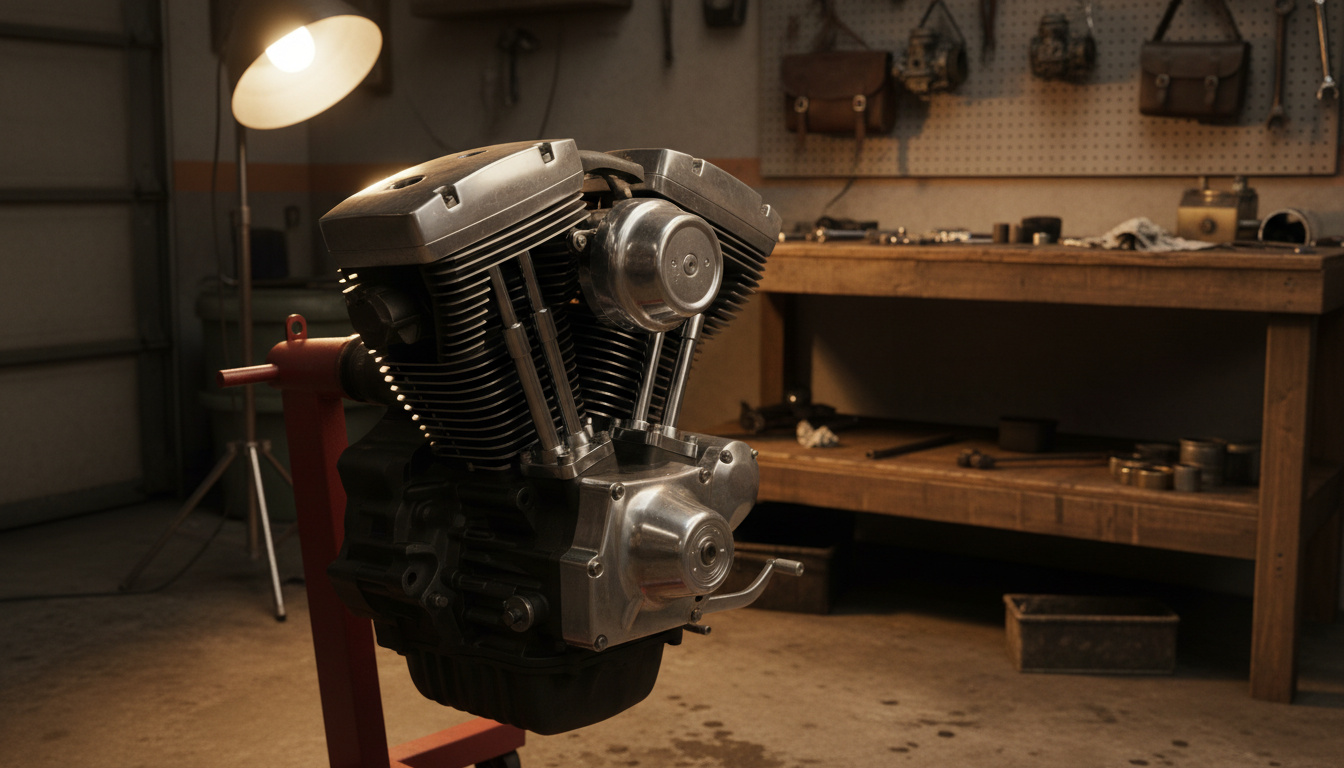
What You’re Working With: The Evo Big Twin Platform
Before diagnosing problems, it helps to understand the architecture. The Evo Big Twin is a 1340cc (80 cubic inch), air-cooled, 45-degree V-twin. It runs a two-valve-per-cylinder pushrod OHV design with hydraulic lifters and four separate gear-driven cams – not a chain-driven or overhead-cam arrangement.
Per the Harley-Davidson Big Twin Evolution service manual (Engine General Specifications), the 1340cc (81.6 cubic inch) Big Twin runs an 8.5:1 compression ratio with a 3.498 x 4.250 in. bore and stroke. Harley rated the 80-inch Evolution motor at roughly 71 horsepower at 5,000 RPM (per the HD Source Book) – real-world output is closer to 50-55 hp at the rear wheel. Oil pressure at normal operating temperature runs roughly 7-12 PSI at idle and 10-17 PSI at higher RPM. The FXST Softail carried a 4-speed for the 1984 model year only; the 4-speed was dropped from the Big Twin lineup starting in 1985, after which the 5-speed was standard.
That gear-driven cam setup is part of why the Evo earned its reputation – no tensioner components to fail, unlike the Twin Cam’s cam chain tensioner problems that came later. But the engine has other documented weak points that appear with age and mileage. For a direct comparison of these two engine families, see our Evo vs Twin Cam breakdown.
Common Harley-Davidson Evolution Engine Problems
What follows covers the most-documented failure points on the Evo Big Twin (1984-1999), drawn from service records, owner reports, and recall data. These are engine-specific issues – not Twin Cam or Milwaukee-Eight concerns.
1. Top-End Leaks: Rocker Box and Base Gaskets
If there is one Evo problem that shows up on nearly every forum thread about the platform, it is rocker box gaskets. The three-piece rocker box design uses a combination of rubber and paper gaskets that weep oil at the seams as the materials age and the engine cycles through heat and cold.
Per the Harley-Davidson Big Twin Evolution service manual, the lower rocker cover bolts torque to 15-18 ft-lbs (20-25 N•m) in a crisscross pattern, tightened in small increments. Following that sequence is what ensures proper gasket sealing – overtightening or skipping the crisscross pattern is one reason re-seals fail prematurely. Base gaskets are a secondary concern on higher-mileage engines that have seen temperature extremes. Our analysis of HDForums threads shows multiple re-seals over an engine’s life are normal rather than exceptional.
Using modern upgraded gasket materials (silicone-bead replacement sets versus OEM paper/rubber) during reseal reduces recurrence. The gasket kit below is purpose-built for the 1340cc Evo Big Twin with rubber base gaskets:
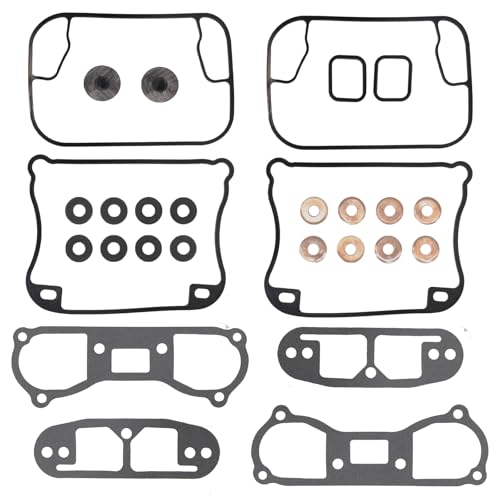
17042-92 Rocker Box Gasket Kit – Evo Big Twin 1340cc (1992-1999)
Rubber base gaskets with full rocker cover seal set. Fits the Evo Big Twin 1340cc. Check on Amazon (backyardrider-20)
2. Stator Failure and Rotor Magnet Debonding
Stator failures are among the most widely reported electrical issues on 1989-1999 Evo models, and they tend to catch owners off guard because the symptoms start subtly.
The rotor magnets can debond from the rotor over time, and when they do, the stator windings take damage from physical contact. Symptoms include a battery that will not hold a charge, AC voltage leaking through the regulator-rectifier, and eventual no-charge conditions. Per the Harley-Davidson Big Twin Evolution service manual charging-system output test (loaded to 13.0 volts): 1984-1988 systems read 19-23 amps at 2,000 RPM, 1989-1990 systems read 29-32 amps at 2,000 RPM, and 1991-1994 systems read 26-32 amps at 3,000 RPM (later carbureted models, 32-40 amps at 3,000 RPM). A faster bench check: a good stator reads infinite resistance to ground and 0.1-0.2 ohms across its two pins, with AC output climbing steadily as RPM rises (16-20 VAC per 1,000 RPM on 1989-on engines). Output well below spec – or any continuity between a stator pin and ground – combined with overheating at the regulator connection points to stator failure.
Our research of HDForums threads on Evo charging issues consistently shows owners who ignored early warning signs – dim lights at idle, a battery tender needed after every ride – ended up with complete stator replacement jobs. On the Big Twin the stator is bolted to the front of the crankcase, directly behind the alternator rotor – so reaching it means pulling the outer primary cover, the primary drive (clutch and chain), and the rotor, after which four T27 Torx screws release the stator (per the Big Twin Evo Service Manual, alternator section). It is an involved job that takes a few hours, but it does not require splitting the engine cases. For a full diagnosis walkthrough, see our Harley stator problems guide.
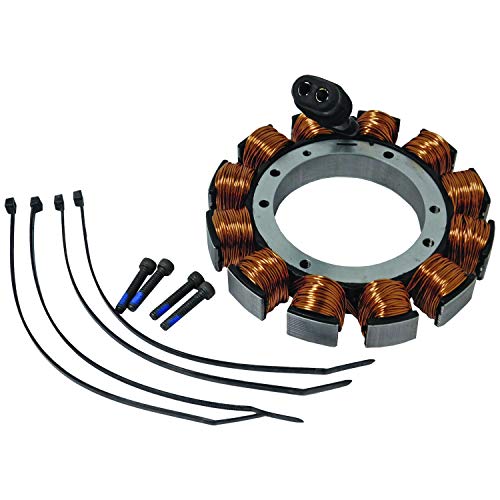
OEG Parts Stator – Evo Big Twin 32 AMP (Dyna, Softail, Touring)
Direct replacement stator for Evo-era Big Twins. OEM part reference 29970-88. Check on Amazon (backyardrider-20)
3. Voltage Regulator-Rectifier Failure
This one is frequently misdiagnosed as a battery problem – which costs owners money replacing a part that is not actually failing.
The Evo uses a combined regulator-rectifier unit that is vulnerable to heat. Mounted close to engine mass with limited airflow in stock locations, the unit degrades and begins producing over-voltage or under-voltage spikes – both damaging to electronics and the battery. A healthy charging system typically shows about 13.8-14.5V DC at the battery at 3,000 RPM (the HD manual specifies output must not exceed 15 volts); readings well outside that range point to the regulator rather than the battery. If a new battery fails within a season, check the voltage regulator symptoms before buying another battery.
4. Ignition Module Heat-Soak Failures
The Evo has a failure pattern that puzzles many owners the first time they encounter it – and often the second time too, because it mimics fuel system problems.
The electronic ignition module is mounted in a location exposed to significant engine heat. The failure mode: the bike starts fine when cold, runs well for 20-40 minutes, then cuts out. It restarts normally once cooled down. This intermittent hot-shutdown pattern is the signature of ignition module heat-soak. Our analysis of HDForums troubleshooting threads found this is one of the most frequently misdiagnosed Evo electrical problems – owners chase carburetors and fuel systems for months before testing the ignition module. Replacement with an aftermarket single-fire unit typically resolves it permanently. The module below fits carbureted Big Twins from 1970-1999:
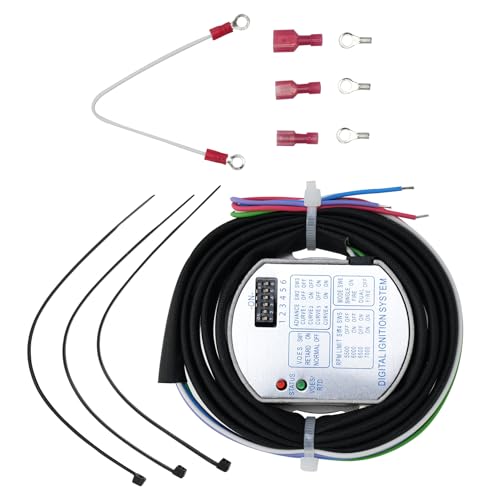
Programmable Single-Fire Electronic Ignition Module – Carbureted Big Twin 1970-1999
Replaces the heat-prone OEM module. Fits Evo Big Twins and earlier carbureted models. Check on Amazon (backyardrider-20)
5. Early Oil Pump Weakness (1984-1989)
The first five years of Evo production included an oil pump design that has its own documented issue – and owners of pre-1990 bikes should understand it before diagnosing other problems.
The 1984-1989 Evo oil pump design had documented bypass and scavenging problems. Under hard use, the pump could fail to adequately return oil from the crankcase, resulting in wet-sumping – oil pooling in the bottom end rather than returning to the oil tank. As the pump’s feed and scavenge gears wear, they lose scavenging efficiency and can fail to return oil from the crankcase fast enough. Harley-Davidson revised the oil pump design for 1990 and later models, which largely resolved the issue.
Owners of pre-1990 Evos should have the pump inspected if the bike has sat for extended periods. The oil level check procedure matters here: always check cold and upright, not immediately after running. Wet-sumping artificially raises the reading on a warm engine and can lead to overfilling.
6. Inner Cam Bearing Wear
The Evo’s gear-driven cams are one of the platform’s strengths – but the inner cam bearing that supports those cams is a known wear point on higher-mileage engines.
The inner cam bearing that supports the cam gears is a well-documented wear point on higher-mileage Evos. When the bearing begins to fail, owners typically notice increased mechanical noise from the cam chest area and, in severe cases, cam gear movement that affects timing. The standard upgrade is an INA bearing, a higher-specification replacement that many Evo rebuilders install preemptively during any top-end work. Harley’s service documentation specifies inspection intervals for cam chest components; treat the inner cam bearing as a wear item on engines above 60,000 miles.
7. Starter Clutch and Compensator Sprocket Wear
An audible rattle on cold startup – particularly pronounced in the first few seconds before oil pressure builds – is one of the most-discussed Evo sounds in owner forums. Many owners write it off for years before it becomes a problem.
The starter clutch and compensator sprocket are the first suspects for cold-start rattle. Compensator wear produces a distinct clunk or rattle that worsens over time and eventually requires primary cover removal and teardown. This is not an emergency if caught early, but left unaddressed, compensator failure can cause more expensive damage to primary drive components. Cross-reference this with our Harley engine reference guide if you are identifying which generation of drivetrain components your specific bike uses.
8. Hydraulic Lifter (Tappet) Issues
Tapping noise on Evo startup is common enough that many owners accept it as normal – but there are two distinct causes with different implications.
Cold-start tapping that clears within 30-60 seconds is typically hydraulic lifter bleed-down during storage – this is normal behavior. Tapping that persists at operating temperature, rather than clearing after start-up, suggests lifter wear or low oil pressure reaching the top end. Carbon deposits on pistons can also contribute to noise, but valve train components and oil flow should be checked first. The Evo’s hydraulic lifters are self-adjusting; persistent tapping is a symptom to investigate, not simply adjust away.
9. Carburetor Issues (CV Carb) and EFI Quirks (1995-1999)
Most Evo Big Twins (1984-1994) use Harley’s constant-velocity (CV) carburetor – a Keihin slide design that is reliable but sensitive to ethanol-blend fuel and extended storage. Here is where a lot of misdiagnosis happens.
Common CV carb issues on Evos include: accelerator pump diaphragm deterioration (causing a lean stumble on acceleration), blocked pilot jet from ethanol varnish (causing rough idle and hard starting after sitting), and main needle wear (causing lean surging at cruise). A lean stumble at part-throttle almost always traces to the accelerator pump diaphragm or pilot jet – not internal engine wear. On rough-idle diagnoses, checking and cleaning the pilot jet takes 15 minutes and eliminates the most common cause before any deeper work.
Late-model Evo Touring bikes (1995-1998 models) used Magneti Marelli EFI – an early fuel injection system that has its own issues, primarily related to throttle position sensor wear and injector clogging. Surging at highway cruise on EFI Evos typically traces to a worn TPS rather than a fuel delivery problem.
10. Front Engine Mount Cracking (Touring Models)
On Evo-powered Touring models – Electra Glides and Tour Glides from the 1984-1999 era – the front engine mount is a well-documented crack point that is easy to miss until secondary damage occurs.
The mount absorbs substantial vibration loads from the 45-degree V-twin, and fatigue cracks develop at the weld points over years of use. A cracked front mount changes the engine’s position in the frame, which affects primary chain alignment and can eventually cause secondary damage. The NHTSA recall database (nhtsa.gov) includes records related to engine mounting and frame concerns on Evo-era Touring bikes from this generation. The repair requires weld repair or mount replacement – this is a shop job, not a roadside fix. If you own a high-mileage Evo Touring model, have the mount inspected during any major service.
11. Engine Overheating in Slow Traffic
The Evo is air-cooled – there is no radiator, no water pump, and no coolant system. Heat management depends entirely on airflow across the cylinder fins and oil circulation. This matters in certain riding conditions more than others.
Overheating on an Evo is almost always a combination of slow traffic (restricted airflow), low oil level, or clogged cooling fins. Use an old brush to clean fin debris and road grime. In extended slow-traffic conditions, experienced Evo owners pull over and let the engine cool rather than risk heat damage to top-end components. The oil cooler bypass on bikes so equipped should be verified functional during service.
12. Age-Related Wiring and Ground Failures
A disproportionate number of Evo electrical complaints – charging issues, hot shutdowns, intermittent running problems – trace not to component failures but to ground connections on 25-40 year old wiring harnesses.
Insulation becomes brittle, connectors corrode, and ground connections oxidize over decades. Our research of Evo-era troubleshooting threads found that cleaning and re-terminating ground points resolves a significant percentage of intermittent electrical problems before any part replacement. If your Evo develops electrical gremlins, clean every ground connection you can find before replacing parts. See our stator problems guide for the full electrical diagnosis sequence.
NHTSA Recall History: Evo Big Twin (1984-1999)
The Evolution era produced several NHTSA safety recalls worth knowing about, particularly for anyone buying a used Evo-powered Harley. The NHTSA recalls database documents the following categories of concern across 1984-1999 Big Twins:
- Engine mounting and frame integrity – Touring model front engine mount fatigue cracking (see section above), creating risk of engine position shift
- Fuel system – Petcock and fuel line routing concerns on select model years; ethanol compatibility issues on early carbureted models
- Braking systems – Brake hydraulic line and caliper concerns on several Touring model years, 1990s era
- Electrical – Wiring harness routing concerns on specific model years
To check the full recall history for a specific VIN, use the our Harley VIN Decoder + Recall Lookup. This is standard due diligence before purchasing any used Evo-era Harley. Not all recall repairs were completed by original owners – a used bike may have open recalls outstanding.
Our VIN decoder and recall lookup cross-references the same NHTSA database and surfaces open campaigns in seconds.Evo vs. Shovelhead: Putting Problems in Perspective
The documented problems above are real, but they need context – because the Evo was a substantial improvement over what it replaced.
The Shovelhead engine (1966-1984) that preceded the Evo had significantly more serious reliability problems: head gasket failures under hard use, cam chest oil management issues, and an industry reputation that contributed to Harley’s near-bankruptcy in the early 1980s. For a full breakdown of the Shovelhead’s problem years, see our Shovelhead years to avoid guide.
The Evo’s rocker box leaks and charging system issues are manageable maintenance items – not fundamental engineering failures. Well-maintained Evo engines routinely reach six-figure mileage. The platform’s weak points are well understood, have established repair solutions, and largely follow predictable wear patterns rather than catastrophic failures.
Evo Engine Problem Checklist by Symptom
Use this quick-reference to narrow down what you are dealing with before pulling anything apart.
| Symptom | Most Likely Cause | Check First |
|---|---|---|
| Oil weeping from rocker area | Rocker box gasket failure | Inspect gasket seam; check torque sequence |
| Battery dies regularly | Stator or voltage regulator failure | Voltage test at 3,000 RPM (should be 13.8-14.5V) |
| Hot shutdown, restarts cold | Ignition module heat-soak | Cool-down test; replace ignition module |
| Cold-start tapping (clears in 60 sec) | Hydraulic lifter bleed-down | Normal; check oil level and quality |
| Persistent tapping at temp | Lifter wear or inner cam bearing | Oil pressure test; cam chest inspection |
| Lean stumble on acceleration | CV carb accelerator pump diaphragm | Inspect diaphragm; check for cracks |
| Rough idle after storage | Blocked pilot jet (ethanol varnish) | Clean pilot jet; check float bowl |
| Primary rattle cold startup | Compensator sprocket wear | Primary cover inspection |
| Overheating in slow traffic | Restricted airflow + low oil | Check oil level; clean fins; take a break |
| Intermittent electrical gremlins | Ground connection corrosion | Clean all grounds before replacing parts |
Frequently Asked Questions: Harley Evo Engine Problems
These are the questions our research desk sees most often from Evo owners on forums and in reader email.
How long will a Harley-Davidson Evo engine last?
Well-maintained Evo engines are well-documented reaching 100,000 miles and beyond. The platform earned its reputation for longevity. The weak points covered in this article – rocker box gaskets, stator, ignition module – are manageable maintenance items. Neglecting oil changes and ignoring early gasket leaks is what shortens Evo engine life disproportionately, not the architecture itself.
What is normal compression for a Harley Evo engine?
The Harley-Davidson Big Twin Evolution service manual lists a baseline cranking compression around 90 PSI; in practice a healthy Evo reads higher (commonly 120-150 PSI). What matters most is consistency – less than about 10% variance between the two cylinders. The manual’s troubleshooting table notes: compression low on first stroke that improves when oil is added indicates ring trouble; compression low on first stroke that does not improve with oil indicates valve trouble. Run a leakdown test to confirm before opening the engine.
My Evo shuts down when hot and restarts fine once cooled. What is that?
This is the ignition module heat-soak failure pattern – the most commonly misdiagnosed problem on Evo-era bikes. The module fails when engine-temperature hot and restores when cool. If the bike restarts after a 15-20 minute cool-down, test or replace the ignition module before spending time on fuel system diagnosis. This pattern is distinct from fuel vapor lock (which is less consistent) and from stator failure (which produces progressive battery depletion rather than hot shutdown).
Is oil leaking from an Evo engine always a serious problem?
Not always – but it should be traced to source rather than accepted as “normal Harley seeping.” Rocker box gasket weep is common and manageable; consistent external leaks from the crankcase breather hose, oil fill tube, or base gasket area should be repaired before they worsen. Beyond oil loss, external leaks create fire risk near exhaust components and can degrade rubber electrical insulation on nearby wiring. Repair early rather than monitor indefinitely.
What causes hard starting on a Harley Evo engine?
On carbureted Evos (1984-1994), hard starting after sitting almost always traces to carburetor issues: worn accelerator pump diaphragm, ethanol varnish blocking the pilot jet, or gummed-up float bowl. The Evo does not use a timing belt; the cams are gear-driven. Check the carburetor before assuming mechanical timing problems. On EFI Evo models (1995-1999), hard starting after sitting more often points to fuel system issues – check the fuel pump relay and battery voltage first.
How often should I change oil on a Harley Evo engine?
Harley’s service documentation specifies oil changes every 5,000 miles for the Evo under normal conditions, with oil filter replacement at every change. Given the early Evo’s oil pump scavenging history (1984-1989 models), running clean oil at correct intervals is one of the highest-value maintenance items on this platform. Use a quality 20W-50 motorcycle oil rated for air-cooled V-twins; modern synthetic formulas have demonstrated better high-temperature stability in Evo engines than the mineral oils available when the engines were new.
Is the Harley Evo engine reliable compared to the Twin Cam?
The Evo has different weak points than the Twin Cam – not necessarily more or fewer. The Twin Cam introduced cam chain tensioner problems (particularly 1999-2006 models) that the gear-driven Evo does not have. The Evo has more pronounced charging system issues and rocker box leak tendencies. For a detailed comparison of both platforms, see our Evo vs Twin Cam guide. Both engines are capable of long-term reliability with proper maintenance.

You have your Harley engines all mixed up, dude.
Evo harleys dont have a water pump,cam chain,cam chain tensioner,twin overhead cams and no mention of lifters wae made you sure you are talking about harley engines