
A Power Commander is a piggyback fuel injection controller that intercepts signals between your Harley’s ECM and fuel injectors, adjusting fuel delivery in real time. Stock Harley EFI is mapped lean to pass EPA emissions. Add a performance exhaust or air intake and that lean condition gets worse. The Power Commander (PCV) corrects it – without touching the factory ECM.
Disclosure: BackyardRider.com earns a commission from qualifying Amazon and RevZilla purchases at no extra cost to you.
How the Power Commander Works: Open Loop vs Closed Loop
This is where the technical picture matters, and most tuning guides skip it entirely.
Per the HD Service Manual (2013 Dyna Electrical Diagnosis, section 6.1), the stock Harley EFI system operates in two modes. In closed-loop operation, the heated oxygen sensors (HO2S) in the exhaust pipes feed lambda data back to the ECM, which trims fuel delivery to maintain a near-stoichiometric air/fuel ratio – good for emissions and light-load economy. In open-loop operation, at wide-open throttle and cold startup, the ECM ignores the O2 sensors and uses hard-coded fuel and spark maps stored in the ECM. The manual states directly: “During open loop operation, the system uses programmed fuel and spark maps in the ECM providing easy cold starting and maximum power at Wide Open Throttle (WOT).” This is where the stock calibration is most conservative.
The Power Commander V intercepts the injector pulse-width signal – the signal the ECM sends to tell each injector how long to stay open. The PCV adds or subtracts a percentage from that pulse width based on its own fuel map overlay. In closed-loop mode, the O2 sensors still function. In open-loop, the PCV correction applies before the factory adaptive fuel value.
Why Harleys Run Lean Stock – and Why It Gets Worse After Mods
The lean condition is not a rumor. It is the designed state of the factory calibration, and the service manual confirms the signal chain.
Harley-Davidson tunes the stock EFI maps to meet EPA emissions requirements, which pushes the air/fuel ratio leaner than is optimal for power and throttle response. The 2013 Dyna Electrical Diagnosis manual documents DTC P0131 as “front O2 sensor low (lean)” and P0132 as “front O2 sensor high (rich)” – and notes that when a fault is detected, the vehicle will run in open loop, removing the O2 feedback correction entirely. In practice this means: if you run a performance exhaust that leans out the mixture further, the stock narrow-band O2 sensors may trigger these lean codes and lock the ECM into open loop, compounding the problem.
Forum consensus across r/Harley and HDForums is consistent on this: riders with a Screamin’ Eagle air cleaner and Vance & Hines exhaust on 103 Twin Cam or 107 Milwaukee-Eight engines report lean hesitation at quarter-throttle until a fuel controller corrects the map. Beyond performance, a persistently lean condition elevates exhaust valve temperatures – relevant context when evaluating long-term engine health.
Power Commander V (PCV) vs Power Vision 4: Which One Do You Need?
Dynojet makes both, and they are fundamentally different products serving different build stages and priorities.
| Feature | Power Commander V (PCV) | Power Vision 4 (PV4) |
|---|---|---|
| Type | Piggyback fuel module | Full ECU flash tool |
| ECM modification | No – intercepts injector signal externally | Yes – rewrites the factory ECM flash |
| Reversible | Unplug and factory tune returns instantly | Can restore factory tune from cloud backup |
| Autotune | Optional Autotune module add-on | Built-in with Autotune license |
| Ignition timing | Requires optional Ignition Module add-on | Full ignition and fuel control |
| Tune source | Dynojet PowerCore map database or dyno custom | Dynojet Cloud library, dealer flash programs |
| Best for | Stage 1-2 bolt-ons, warranty concerns, reversibility | Stage 2+ full build, maximum tuning control |
| Harley coverage (as of 2026) | Twin Cam 2001+, M8 2017+ (model-specific part numbers) | 2014-2026 HD Touring, Softail, select others |
For riders who want to stay reversible – or who may return the bike to a dealer service visit unchanged – the PCV is the standard recommendation across tuning forums as of 2026. The PV4 is the choice when committing to a complete build and wanting ECM-level ignition control alongside fuel.
Recommended Tuners: What the Research Shows
We cross-referenced the Dynojet product lineup with verified listings, r/Harley forum recommendations, HDForums tuning threads, and Dynojet’s own support documentation.
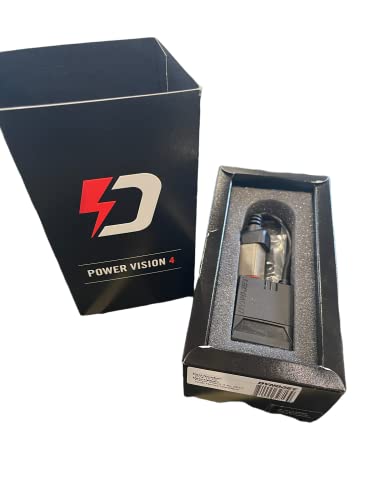
Dynojet PowerVision 4 – Full ECU Flash Tuner (2014-2026 HD)
Current-generation ECU flash tuner for Harley-Davidson. Flashes the factory ECM directly with full fuel and ignition control. Includes WinPEP 8 data logging, cloud tune backup, and DTC reading. Best for complete stage 2 or 3 builds where ignition timing control is needed alongside fuel. Factory tune is backed up to the cloud before any changes are applied.
Check on Amazon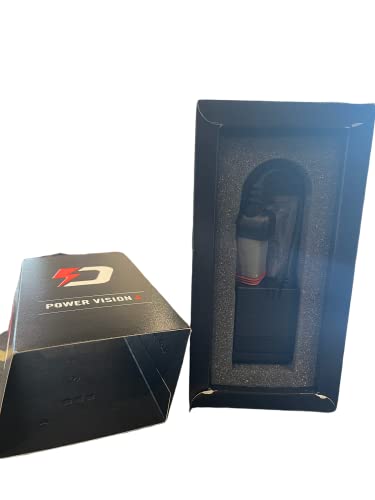
Dynojet Power Vision 4 – 2021+ Harley-Davidson Models
Variant configured specifically for 2021 and newer Harley-Davidson models including the Milwaukee-Eight 117 and current Touring lineup. Same full flash capability as the standard PV4. The correct part for 2021+ Street Glide, Road Glide, and Pan America models per our fitment research.
Check on AmazonDynojet Power Commander V – Piggyback Fuel Controller (Twin Cam and M8)
The standard piggyback solution for stage 1 and stage 2 Harley builds. Plugs inline with the fuel injector harness – no ECM modification. Corrects fuel delivery across a map with 10 throttle-position columns and multiple RPM rows, with each cell adjustable in 1% fuel increments. Compatible with Twin Cam 2001-2016 and Milwaukee-Eight 2017+ models in model-specific configurations. Add the optional Autotune module for closed-loop self-correction without dyno time.
Check on RevZillaNote: Power Commander V part numbers are model-specific. Select your exact Harley year and model on the RevZilla product page for the correct configuration.
Autotune: The PCV Feature Most Riders Miss
Installing a PCV with a pre-loaded map gets you most of the way there. The Autotune module takes it the rest of the way – no dyno appointment required.
Autotune is an add-on wide-band O2 sensor system that installs into the exhaust bung (or via clamp-on bungs on exhausts without a bung). It reads actual air/fuel ratio and continuously adjusts the PCV fuel map while you ride. According to Dynojet’s documentation, the Autotune module can be set to a target AFR and will trim the map automatically over time based on real exhaust gas data. This is separate from – and in addition to – the factory narrow-band O2 closed-loop trim.
Based on our research across r/Harley, Autotune is most valuable when you changed exhausts after the initial PCV installation and need to re-calibrate, when you ride at significantly varying altitudes, or when a local Harley-specific dyno is not practical to access.
Piggyback vs Flash: The Honest Tradeoffs
Both approaches work. The choice comes down to what you are building and what matters more to you: reversibility or maximum control.
Piggyback (PCV) advantages: Fully reversible – unplug before dealer service, re-plug after. Factory ECM is untouched, which limits warranty conflict arguments (though still not a guarantee). Can be transferred to a new bike with the correct map loaded. Large community map library via Dynojet’s PowerCore database.
Flash (PV4 or SE Pro Street Tuner) advantages: Full ignition timing control is not possible with PCV alone. Cleaner installation with no additional hardware on the wiring harness. More precise tuning at wide-open throttle where the factory open-loop map is most conservative. The Harley-Davidson SE Pro Street Tuner is sold through HD dealers for warranty-compatible flash work.
The consistent rider consensus across HDForums and r/Harley threads from 2022-2026: stage 1 mods (exhaust and air cleaner only) pair well with a PCV and Autotune, or a single dyno-pull map. Stage 2 and up (cams, heads, larger displacement) benefits from a full flash via a qualified dyno tuner using the PV4 or the Harley SE Pro Street Tuner dealer program.
When You Need a Fuel Controller – and When You Don’t
Not every modification makes a PCV necessary, and the investment decision hinges on what you have actually changed.
A fuel controller is recommended when: you installed a full aftermarket exhaust or removed baffles from stock mufflers; you added a high-flow air cleaner (Screamin’ Eagle, S&S, Arlen Ness, K&N); you made both an intake and exhaust modification together (lean condition compounds significantly); or your bike is showing lean symptoms – backfiring on deceleration, stumble at light throttle, or unusual heat on the right leg.
A fuel controller may not be necessary when: you installed a slip-on muffler only with no air cleaner change (impact is minor and many riders run this without correction); you added cosmetic exhaust wrap or heat shields with no airflow change; or the bike was already professionally tuned for a previous owner’s mod configuration.
For more detail on intake choices and their airflow numbers, see our best air intake for Harley-Davidson guide – the flow gain figures there directly determine how aggressively you need to retune. For exhaust selection that sets the baseline for your map, the Milwaukee-8 exhaust guide covers compatibility by engine family.
Does a Power Commander Increase Horsepower?
Yes – but only relative to a lean and uncorrected state, and within the ceiling set by your hardware modifications.
A Power Commander does not add power by itself. It recovers power lost to the lean OEM calibration after modifications. If you installed a free-flowing exhaust that should theoretically improve flow, but the ECM’s lean map starves the motor at peak RPM, you recover the gap through fuel correction. Dyno results posted to r/Harley and V-Twin Forum consistently show that a well-tuned stage 1 setup on a Twin Cam 103 yields roughly 8-12 rwhp over stock – most of that gain comes from the hardware, and the fuel tuner ensures you actually realize it rather than losing it to a lean condition.
A fuel tuner on an otherwise stock bike – with no intake or exhaust modification – shows minimal dyno difference. There is nothing substantively wrong with the OEM fuel map on an unmodified engine. The tuner corrects for the deviation introduced by increased airflow, not for some inherent factory shortcoming on a stock setup.
For the full tuning ecosystem comparison including ThunderMax and the SE Pro Street Tuner, see our best auto-tuner for Harley-Davidson guide.
Installation Overview: What the Process Looks Like
The PCV is a plug-in installation with no cutting or permanent wiring modification required – which is part of why reversibility is real, not theoretical.
The PCV uses a model-specific wiring harness adapter that taps the existing front and rear injector connectors plus the TPS (throttle position sensor) signal wire. On most Touring models, the module mounts under the seat or near the airbox. Installation time runs approximately 1-2 hours for most Touring models. Sportster and Dyna models may require additional time due to tighter access around the airbox. V-Rod models (2002-2017) use the Revolution V-Twin EFI architecture and require a dedicated V-Rod-specific PCV part number.
High-level steps: confirm the model-specific PCV part number for your year and model at Dynojet.com; download a base map from the PowerCore database matching your hardware configuration; connect the PCV harness to front and rear injector connectors and TPS wire; connect USB and load the map via PC Control software; for best results, run Autotune over 50-100 miles of varied throttle use, or schedule a dyno session.
If you are seeing ignition-related symptoms rather than fuel-only issues, read our Harley bad coil symptoms guide first – coil failures can mimic lean stumble at certain RPMs and should be ruled out before tuning investment.
Should You Remove Baffles Before or After Installing a PCV?
Sequence matters here, and the short answer is: have the fuel correction ready before or immediately after the exhaust change, not months later.
If you pull the baffles first and ride lean for an extended period, you are running the motor stressed. The pros and cons of removing baffles covers the acoustic and heat implications in detail – the relevant point here is that baffle removal increases exhaust flow velocity and leans the mixture further than a full exhaust swap typically does, because there is less back pressure managing the scavenging pulse. A fuel correction should be in place from the start.
Related Tuning Resources on BackyardRider
For the broader comparison of tuning solutions by build stage, see our full auto-tuner comparison. For exhaust system selection that determines what map you will need, see the Milwaukee-8 exhaust guide.
Frequently Asked Questions
Does a Power Commander void the Harley warranty?
The PCV does not modify the factory ECM – it intercepts the injector signal externally. Most dealers treat it as an aftermarket accessory rather than an ECM modification. However, dealers retain the right to deny warranty claims on components they determine were affected by aftermarket modifications, and fuel system accessories are a directly related category. For complete warranty security, the Harley-Davidson SE Pro Street Tuner program (dealer-installed) is the officially supported path.
Does the Power Commander work on Milwaukee-Eight engines?
Yes. Dynojet produces M8-compatible PCV part numbers for 2017+ Touring and Softail models with the 107, 114, and 117 engines. The M8 EFI architecture differs from the Twin Cam, so the M8-specific part number is required – not a generic Touring PCV. Confirm your part number at Dynojet.com before ordering.
What is the difference between a Power Commander and a ThunderMax?
The PCV adds fuel correction on top of the factory ECM without replacing it. The ThunderMax replaces the factory ECM entirely, with built-in closed-loop Autotune and complete control over all engine parameters including ignition. ThunderMax suits complete stage 2-3 builds. The PCV suits stage 1-2 builds where retaining the factory ECM is preferred. Our auto-tuner comparison guide covers both in full detail.
Can I use a Power Commander without a dyno tune?
Yes. Dynojet’s PowerCore map database has pre-loaded maps for common Harley mod combinations – specific exhaust and air cleaner pairings. Download the map matching your hardware, load it via USB, and ride. A dyno tune refines further, but is not required to run correctly. The Autotune add-on is a practical middle ground for riders without dyno access.
What year Harleys does the Power Commander V fit?
The PCV has model-specific part numbers covering fuel-injected Harley models from 2001 forward: Twin Cam 88/96/103/110 (2001-2016), Milwaukee-Eight 107/114/117 (2017+), Sportster EFI (2007-2021), V-Rod/VRSC (2002-2017), and all Touring, Softail, and Dyna fuel-injected variants. Pre-EFI Harley models (carbureted Sportsters pre-2007, Evo-era carb bikes) cannot use the PCV. Verify your specific part number at Dynojet.com using the year and model selector.
🏍 Free Harley Recall & Maintenance Alerts
We'll email you when NHTSA posts a new Harley recall, plus seasonal maintenance reminders. No spam, unsubscribe anytime.
By subscribing you agree to our Privacy Policy.
