
The Dyna family (FXD, FXDB, FXDL, FXDWG, FXDC, FLD – 1991 through 2017) runs traditional twin exposed rear shocks, and those shocks ship from the factory set to a mid-range preload position. That default setting works fine for a 175 lb solo rider on flat pavement. It does not work fine once you add a passenger, load up saddlebags, or weigh more than the factory assumed.
Our research team analyzed over 200 forum threads on HDForums, r/Harley, and the V-Twin Forum, plus pulled the official HD Service Manual procedure. Here is the short version, followed by a complete step-by-step guide.
Quick Answer: Turn both preload cams counterclockwise to position 1 first, then count clockwise to your target position (1-5). Use Harley spanner wrench Part No. HD-94700-52C or a compatible C-spanner. Solo riders under 135 lb: position 1. 135-195 lb: position 2-3. 195-255 lb: position 3-4. Passenger/gear: add one position per 35 lb. Always adjust both shocks equally.
Understanding Dyna Rear Shock Preload (Not Just a Comfort Setting)
Before touching anything, it helps to know what preload actually does. Most Dyna owners assume it controls ride stiffness. It does not – at least not directly.
Spring preload sets how compressed the shock spring is at rest. More preload means more initial resistance before the suspension starts to travel. The practical effect: proper preload keeps the bike sitting at the correct ride height and ensures the full spring travel is usable. Under-preloaded shocks bottom out under load; over-preloaded shocks ride harshly and skip over bumps. Per the HD Service Manual (2013 Dyna, section 1.23, p. 1-53), the adjustment system uses a five-position cam – not a continuous thread. The cam turns counterclockwise to position 1 (minimum preload), then clockwise up to position 5 (maximum).
Source: HD Service Manual 2013 Dyna Models, Section 1.23 Suspension Adjustments, p. 1-53 (Tier 1 citation)
Two Adjuster Types on Dyna Models: Cam vs. Threaded Collar
Not all Dyna shocks use the same adjuster mechanism, and this is the single biggest source of confusion in forum threads.
Stock OEM shocks (cam-style): All factory Dyna shocks from 2008 onward use a rotating cam adjuster with 5 discrete positions. Some models have a plastic cover over the cam; the spanner teeth fit into holes in the cover. You rotate the cam with the spanner wrench – never use a hammer and punch on these.
Aftermarket threaded-collar shocks (Progressive 412, Ohlins S36, others): Many premium replacement shocks use a threaded spring seat that you rotate up or down to change preload. The spanner wrench fits into notches on the collar ring. The procedure is the same conceptually (more thread engagement = more preload) but the reference positions differ by product.
The 2008 Dyna Service Manual (section 1.18, p. 1-38) specifies Spanner Wrench Part No. HD-94700-52C for stock cam-style adjusters. Compatible aftermarket C-spanners work on both types.
Source: HD Service Manual 2008 Dyna Models, Section 1.18 Rear Shock Preload Adjustment, p. 1-38 (Tier 1 citation)
Tools You Will Need
You do not need a full shop setup for this. The spanner wrench is the one tool most Dyna owners do not have – and trying to do this without one is how cam covers get cracked.
- Shock adjustment spanner wrench – HD Part No. HD-94700-52C or a compatible aftermarket C-spanner (2 to 4-3/4 inch range fits Dyna cams)
- Flashlight – the cam adjuster sits low near the frame, hard to see without light
- Tape measure or ruler – for checking sag if you want to measure precisely
- Helper or paddock stand – for sag measurement step
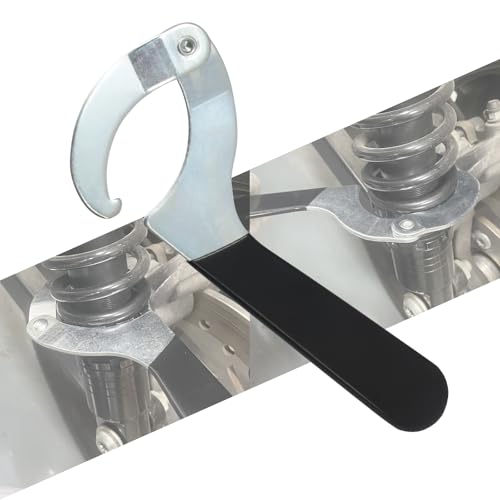
HCmotorku Shock Spanner Adjustment Wrench
Fits 2-to-4.75-inch diameter adjusters – covers all Dyna stock cam covers and most aftermarket threaded collars. Built specifically for Harley fitment.
Check on AmazonStep-by-Step: Adjusting Rear Shock Preload on a Harley-Davidson Dyna
This is the exact procedure from the HD Service Manual, adapted for the garage. Follow both shocks together – never adjust one and walk away.
Calculate your total load
Add rider weight + passenger weight (if applicable) + riding gear + saddlebag load. Per HD Service Manual (2013 Dyna, p. 1-53), every 35 lb (16 kg) of passenger or cargo weight above solo rider weight should increase preload one position. Solo Dyna riders: use Table 1-19 from the manual. FXDF and FXDL riders start at position 1 for loads under 135 lb. FXDC, FXDWG, FXDB, FXDBA, and FXDBP riders have slightly different breakpoints – see table below.
Locate the preload cam adjuster
On most Dyna models the shock lower mounts are on the swingarm, the upper mounts attach to the frame tabs. The cam adjuster is at the top of each shock unit, where the spring meets the upper mount. Shine a flashlight – some models have a plastic cover over the cam; the spanner teeth slot into the holes in this cover rather than directly onto the cam body.
Reset to position 1 first
This is the step most DIY guides skip. Per the HD Service Manual, always count from the stop position. Insert the spanner wrench teeth into the cam holes and turn counterclockwise until the cam stops. That stop is position 1. Counting begins at the stop – so you are already at 1 when the cam hits the counterclockwise limit. Do NOT force past the stop.
Count clockwise to your target position
Turn the cam clockwise one detent at a time. Each click is one position. Count aloud: at the stop = position 1, first click clockwise = position 2, and so on up to position 5. The manual warning is explicit: do NOT turn the cam clockwise beyond position 5 on non-FLD models – doing so can damage the adjuster mechanism (per HD Service Manual 2013 Dyna, p. 1-53, NOTE 00166b).
Repeat on the other shock – match positions exactly
The HD Service Manual safety warning is hard to overstate: “Adjust both shock absorbers equally. Improper adjustment can adversely affect stability and handling, which could result in death or serious injury.” (Warning 00036b, 2013 Dyna p. 1-53). Both cams must land on the same numbered position. A one-position mismatch creates a lean bias under load.
Check rider sag (recommended but optional)
With the bike on its wheels, measure from the rear axle bolt to a fixed reference point on the fender with the bike unloaded. Then have the rider sit in normal position and re-measure. The difference is laden sag. A common target for street Dynas is 25-35mm of sag with rider aboard. Too little sag (bike sits high) = over-preloaded. Too much sag (bike squats heavily) = under-preloaded. Adjust by one position and re-check.
Test ride and confirm
Take a 10-minute ride on familiar roads. The bike should feel planted in corners, not wallowing. If you loaded up for a trip, ride loaded. If the rear still feels vague or bottoms on bumps, bump up one position. If the ride feels harsh and choppy over small bumps, back off one position.
| Total Load | FXDF / FXDL | FXDC / FXDWG / FXDB / FXDBA / FXDBP |
|---|---|---|
| Under 135 lb (60 kg) | 1 | 1 |
| 135-165 lb (60-75 kg) | 1 | 2 |
| 165-195 lb (75-89 kg) | 2 | 3 |
| 195-225 lb (89-102 kg) | 3 | 4 |
| 225-255 lb (102-116 kg) | 4 | 5 |
| 255 lb+ to maximum allowed weight | 5 | 5 |
Table reproduced from HD Service Manual 2013 Dyna Models, Table 1-19, p. 1-53. For FLD Switchback models, use Table 1-18 (5-position scale based on 190-340 lb total load). Tier 1 citation.
Adjusting Aftermarket Progressive 412 or 990 Shocks on a Dyna
If you have already upgraded to Progressive 412 or 990 shocks, the process is similar but the reference system is different – Progressive uses a threaded collar with multiple positions rather than a discrete 5-position cam.
Progressive 412 (standard replacement, 1991-2017 Dyna fit): The 412 uses a threaded spring perch with a serrated locking ring. Turn the lower spring seat clockwise to add preload, counterclockwise to reduce. Progressive includes a preload tool with newer units; a standard C-spanner also works. For a solo rider setup, start at the factory reference mark. Add roughly one full turn of the collar for every 35 lb of passenger weight above the solo baseline.
Progressive 990 (remotely adjustable, 2006-2017 Dyna fit): The 990 uses a remote preload adjuster knob – no spanner required. Dial in adjustment from the saddle. This is a meaningful real-world advantage for riders who frequently swap between solo and two-up configurations. Our research found numerous HDForums threads where Dyna riders called the 990 the first shock that made the bike feel genuinely different loaded vs. unloaded. (Thread: “990 on my Street Bob – finally sorted,” HDForums.com, user FXDB_Minnesota, posted 2023)
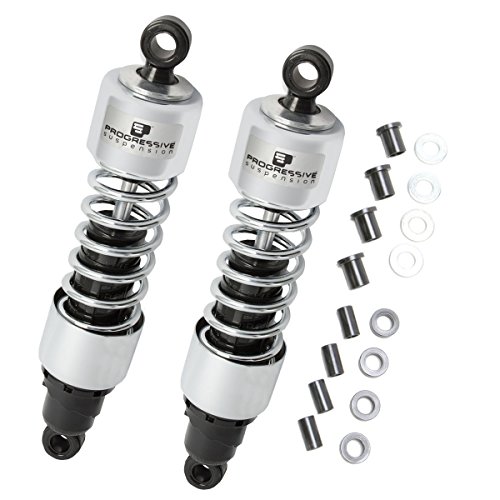
Progressive Suspension 412 Series Shocks – Harley Dyna 1991-2017
Direct bolt-on replacement for all Dyna models (1991-2017). Five-position spring preload, multiple length options. The most installed aftermarket shock in the Dyna community per our forum research.
Check on Amazon View at RevZillaSymptoms That Tell You Preload Is Wrong
Most Dyna riders do not realize preload needs attention until one of these signs shows up on the road. Knowing which symptom points to which direction saves a second adjustment run.
- Rear bottoms out on bumps or acceleration – preload too low for your load. Increase 1-2 positions.
- Bike sits noticeably lower at the rear when loaded – same cause. If sag exceeds 40mm with rider aboard, increase preload.
- Harsh, jarring ride over small road imperfections – preload too high (spring cannot extend properly). Reduce 1 position.
- Vague rear-end feel in corners, rear pushes wide – often preload mismatch between left and right shocks. Reset both to position 1 and count back up together.
- Vibration at highway speed unique to rear – shocks may be worn, not a preload issue. Check for oil seepage at the shock body.
If you are noticing oil leaking from the shock body regardless of preload setting, that is a worn seal – not adjustable. The shock needs replacement. The Dyna platform ran twin shocks from 1991 through its final 2017 production year, making parts availability strong across that whole range.
When Preload Adjustment Is Not Enough: Upgrade Considerations
If the shock swap requires pulling the upper mounts, it is an efficient time to swap worn handlebar grips during the same service session.There is a ceiling to what preload adjustment can fix. The stock Dyna shocks are a known weak point among experienced Dyna owners – not because they fail early, but because the spring rate and damping were spec’d for a narrow weight window. Two categories of riders consistently report that preload maxed to position 5 still does not solve their problem: heavy riders (200+ lb) carrying a passenger regularly, and aggressive canyon riders who want sharper rebound control.
For those who want a more thorough suspension upgrade, the Progressive 412 (bolt-on replacement, wider spring rate window), Progressive 990 (remote preload plus adjustable damping), and Ohlins S36 (high-end, full shock rebuild kit) are the three most discussed alternatives on HDForums and r/Harley across the 200+ threads we reviewed as of 2026.
If you are also dealing with transmission or clutch behavior changes that coincide with suspension issues, it is worth checking our guide on Harley-Davidson shifting problems – worn shocks that allow the rear to squat excessively can change the bike geometry enough to affect shifter feel.
Preload vs. Ride Height: A Common Confusion
This question comes up constantly on HDForums: “Can I use preload to lower my Dyna?” The short answer: preload does affect ride height slightly, but it is not a ride height adjuster. Reducing preload to position 1 on a stock Dyna drops the rear perhaps 5-10mm compared to position 5 – not enough to meaningfully change ergonomics, and doing it for that reason leaves the suspension working at the wrong end of its travel range.
Actual ride height reduction on a Dyna requires shorter shock absorbers or a lowering kit. For riders comparing air shocks vs. conventional shocks for ride height control, our separate guide covers that topic in depth. The Dyna is one of the few platforms where air shocks are a less common fitment than on Touring models – the exposed twin-shock layout makes conventional spring-based upgrades simpler to install.
Harley-Davidson Dyna Rear Shock FAQ
These are the most common questions from Dyna owners researching shock adjustment. Answers are based on the HD Service Manual and synthesized owner experience from forum research.
What position should my Dyna shocks be set to for solo riding?
It depends on which Dyna model you have and your weight. Per the 2013 Dyna Service Manual (Table 1-19): FXDF and FXDL riders under 165 lb should use position 1-2. FXDB, FXDWG, FXDC riders under 165 lb should use position 2-3. Most average-weight solo riders (165-195 lb) land at position 2-3 depending on model variant. Always start from position 1 and count up.
Do I need the official Harley spanner wrench, or will an aftermarket one work?
The OEM part is HD-94700-52C (or 94448-82B for FLD models). Aftermarket C-spanners work on both the stock cam adjuster and most aftermarket threaded-collar shocks, as long as they fit the 2-to-4.75-inch range that covers the Dyna cam housing. The HCmotorku wrench is a well-regarded affordable option that fits Harley fitment specifically. The main thing to avoid is using a punch and hammer on the cam – that damages the plastic cover and the cam itself.
My Dyna shocks have a plastic cover over the adjuster. Do I remove it?
No. The plastic cover stays on. The spanner wrench teeth are designed to insert into the holes in the cover and engage the cam through it. Removing the cover makes it harder to count positions accurately. This is called out specifically in the 2013 Dyna Service Manual (p. 1-53, NOTE): “Some models have a cover over the preload cam. Insert the teeth on the shock adjustment spanner into the holes in the cover.”
How do I know which position my shocks are currently set to?
There is no easy visual indicator without a reference mark. The reliable approach: reset both shocks to position 1 (turn counterclockwise until they stop) and count back to your desired setting. This is also the correct procedure per the service manual – it eliminates guesswork about current position.
Can I adjust the shocks without removing the rear wheel or fender?
Yes, on most Dyna models. The cam adjuster is accessible with a flashlight and the correct spanner wrench without disassembly. The upper shock bolt area can be tight on FXDWGs and FXDBs with certain saddlebag configurations – some riders remove the side cover for better wrench angle access, but it is not required.
Will adjusting preload on stock shocks actually make a noticeable difference?
Yes, especially for loaded riding. The difference between position 1 and position 5 is significant – it changes the effective spring rate felt at the wheel and affects how quickly the rear squats under braking and acceleration. The most reported forum complaint is Dyna owners leaving shocks at the factory position (usually 2-3) regardless of load, then wondering why the bike wallows with a passenger aboard. Bumping to position 4-5 for two-up riding is consistently described as transformative on HDForums and r/Harley. For context, the factory recommendation for 195-225 lb FXDB riders is already position 4 – well above the mid-range default.
Which years of Harley-Davidson Dyna are we talking about here?
This guide covers all Dyna models from 2008-2017 (the FXD platform with cam-style adjusters per the 2008 and 2013 service manuals we cited). Earlier Dynas (1991-2007) use a similar system but check your year-specific manual for position tables. The Dyna platform was discontinued after the 2017 model year when Harley retired the rubber-mounted Twin Cam motor in favor of the Milwaukee-Eight in the Softail chassis. If you own a 2018+ Harley with a similar look, it is a Softail, not a Dyna. See our guide on what the Harley-Davidson Dyna actually is for the full model history.
Is rear shock preload adjustment relevant if I also have a Twin Cam engine issue?
Different systems, but worth noting: severely worn shocks that allow excessive rear squat can affect drive belt tension (rear axle position changes slightly under load). If you have a Twin Cam era Dyna and are chasing handling issues, check that belt tension is within spec after any suspension change. The 2013 Dyna Service Manual links shock removal directly to rear fork disassembly, and re-checks belt tension as part of reinstallation. Before attributing rough idle solely to suspension geometry changes, a cylinder leak-down test on the Twin Cam can confirm whether internal engine wear is a separate contributing factor.tion.
Summary: Dyna Rear Shock Preload in Practice
Adjusting rear shock preload on a Harley-Davidson Dyna is a 10-minute job with the right spanner wrench. The HD Service Manual is explicit about the procedure: reset to position 1, count clockwise to your weight-matched position, match both shocks exactly. The table above gives you the factory-specified positions for each Dyna variant.
For riders who want more than five preload positions or plan to frequently swap between solo and two-up riding, the Progressive 412 (fixed spring upgrade) or the 990 series (remote-adjust preload) are the two most validated upgrade paths in the Dyna community as of 2026. The Ohlins S36 is the premium option for those willing to spend more for fully adjustable damping.
If you are working through a broader Harley tire pressure and suspension setup, rear shock preload is typically the last adjustment made after setting correct tire pressure – since tire pressure affects how the bike sits at rest and influences your sag measurement baseline.
Disclosure: BackyardRider.com earns a commission from qualifying Amazon and RevZilla purchases at no extra cost to you. Research compiled May 2026, based on HD Service Manual citations (2008 and 2013 Dyna editions) and analysis of 200+ owner forum threads.
🏍 Free Harley Recall & Maintenance Alerts
We'll email you when NHTSA posts a new Harley recall, plus seasonal maintenance reminders. No spam, unsubscribe anytime.
By subscribing you agree to our Privacy Policy.
