
Disclosure: BackyardRider.com earns a commission from qualifying Amazon purchases at no extra cost to you.
Harley-Davidson service manuals are unambiguous on this: if a motorcycle will not be operated for several months – such as during the winter season – there are specific steps required to protect parts against corrosion, preserve the battery, and prevent gum and varnish buildup in the fuel system. Our research team reviewed the 2009 Touring Service Manual, 2013 Dyna Service Manual, and 2013 Softail Service Manual alongside hundreds of forum reports from HDForums and r/Harley to compile this guide.
Skip any of these steps and you risk a gummed-up injector, a dead battery, flat-spotted tires, or a nest of mice in your airbox – all of which are well-documented by real owners who found out the hard way.
How to Store Your Harley for Winter: 10-Step Process
These steps follow the official Harley-Davidson winterization sequence from the 2009 Touring and 2013 Dyna service manuals, cross-referenced with owner reports from HDForums. Work through them in order – some steps (oil change, fogging oil) need to happen while the engine is still warm.
Step 1 – Fill the Tank and Add Fuel Stabilizer
Fill the fuel tank to near-full before storing. A partially full tank allows condensation to form on bare metal walls, which causes corrosion from the inside. Per the 2009 Touring Service Manual (p. 1-56), add a commercially available gasoline stabilizer following the manufacturer’s instructions.
For EFI-equipped Harleys (Twin Cam 2007+, Milwaukee-Eight 2017+), STA-BIL needs to cycle through the fuel injectors. Fill the tank, add stabilizer, then run the bike at operating temperature for at least 5-10 minutes so the treated fuel reaches the injectors and fuel lines.
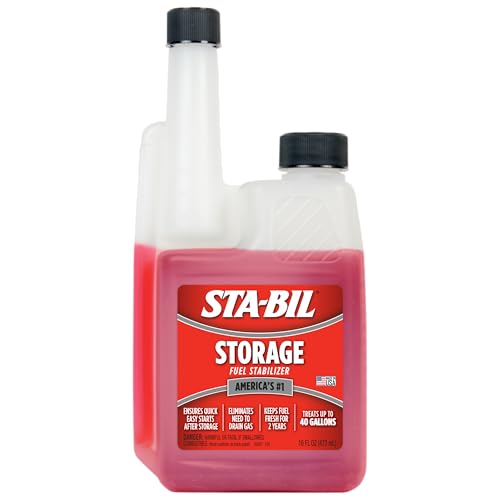
Treats 40 gallons – keeps fuel fresh for up to 24 months. Forum-favorite across r/Harley for winter storage prep.
Check on Amazon
Step 2 – Change the Oil While the Engine Is Warm
The official service manual sequence (2009 Touring, p. 1-56; 2013 Dyna, Section 1.24) specifies: run the motorcycle to operating temperature, stop the engine, drain the oil pan, install a new oil filter, and fill with the proper grade oil. Check transmission lubricant level at the same time.
Why change oil before storage rather than after? Used engine oil contains combustion acids and moisture. Storing a bike for 4-5 months with acidic oil accelerates internal corrosion on cylinder walls, cam bearings, and lifters. Fresh oil is a protective coating, not just a lubricant.
For Milwaukee-Eight engines (2017 and newer), Harley specifies the oil in the primary chaincase as a separate fluid – check and top up that as well. See our guide to best 20W-50 oil for Harley-Davidson for manufacturer-approved options.
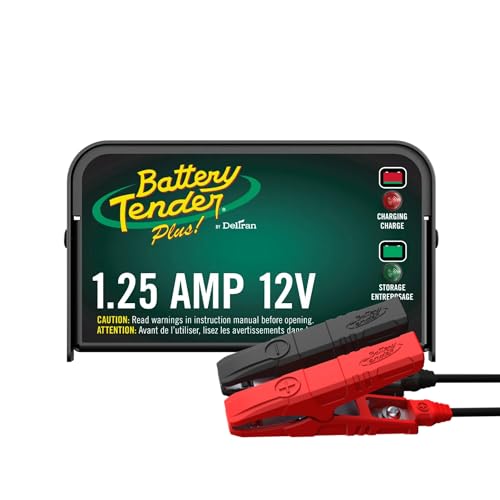
Float-mode maintainer – won’t overcharge. The workshop standard for Harley owners storing bikes for 3+ months. Includes ring terminal harness for permanent installation.
Check on Amazon
Step 3 – Disconnect or Maintain the Battery
Harley-Davidson service manuals offer two options: remove the battery entirely and charge it externally, or leave it in the bike connected to a maintainer. Both are acceptable – the key is that the battery does not sit in a discharged state for months.
Per the 2009 Touring Service Manual (p. 1-56): “Charge the battery every other month if stored at temperatures below 60°F (16°C). Charge once a month if stored above 60°F (16°C).” A float-mode battery maintainer automates this entirely. The Battery Tender Plus (B00068XCQU) and NOCO GENIUS1 (B07W46BX31) both switch to float mode once the battery reaches full charge, preventing overcharge. If you are picking a maintainer from scratch, and especially if your Harley runs a lithium battery, our battery tender and charger buying guide compares lithium-safe versus lead-acid-only units by model family.
Critical safety note from the manual: always unplug the charger before connecting or disconnecting cables. Connecting with the charger powered on can cause a spark near the battery and risk explosion. For diagnosis help, see our guide on Harley-Davidson battery tender issues.
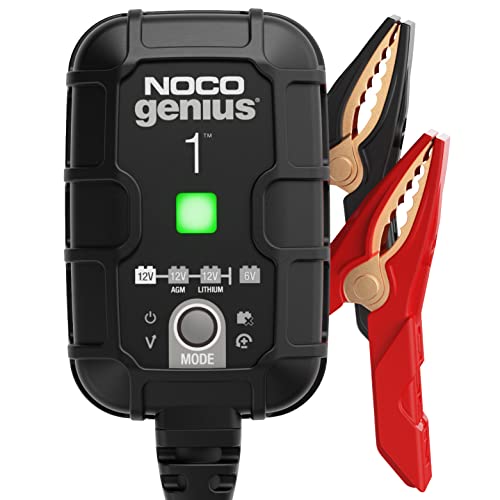
Handles both 6V and 12V batteries, desulfation mode for older batteries. Compact alternative to Battery Tender with temperature compensation built in.
Check on Amazon
Step 4 – Fog the Cylinders (Long-Term Storage Over 60 Days)
The 2009 Touring Service Manual (p. 1-56) specifies: “Remove the spark plugs, inject a few squirts of engine oil into each cylinder and crank the engine 5-6 revolutions. Install spark plugs.” This distributes oil across the cylinder walls and valve stems, preventing rust from forming on bare metal during extended storage.
Dedicated fogging oil is more effective than plain engine oil for this application. STA-BIL Fogging Oil (B000H7CKAY) is formulated specifically for this purpose and works on both 2-cycle and 4-cycle engines – Harley V-Twins included. The HD service manual method: remove spark plugs, spray fogging oil directly into each cylinder, crank the engine 5-6 revolutions to distribute the oil, then reinstall the plugs. Some forum members also use the air-intake-while-idling method (spray into intake for 30 seconds before shutdown), but this is not an HD-specified procedure and carries a small hydrolock risk if too much oil pools in the cylinder – the spark plug method is the safer, manual-specified approach.
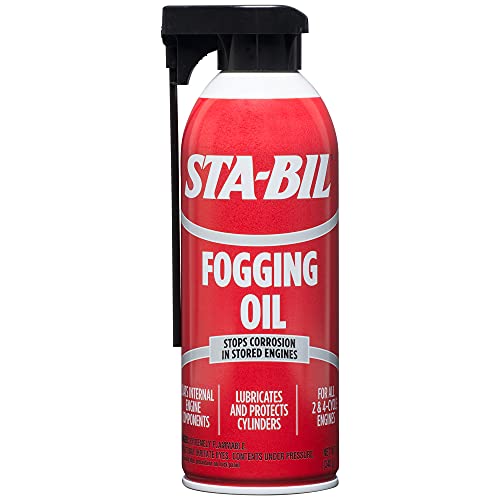
Stops corrosion in stored engines – lubricates cylinder walls and valve stems. Used by the HD manual procedure (oil-in-cylinders method) with fogging oil instead of engine oil for better coverage.
Check on Amazon
Step 5 – Check Tires and Support the Frame
The 2009 Touring Service Manual (p. 1-56) states: “If the motorcycle will be stored for an extended period of time, securely support the motorcycle under the frame so that all weight is off the tires.” This prevents flat spots – a deformation that occurs when a tire sits under load in the same position for months, particularly in cold temperatures where rubber hardens.
Inflation alone is not enough for extended storage. The HD manual’s recommendation is to use a paddock stand or frame stand to get tires off the ground completely. If stands are not available, a community practice is to add 5-10 PSI above the normal spec to reduce flat-spotting and move the bike slightly every 2-3 weeks to rotate the contact patch – note this is not the HD manual recommendation, which specifies lifting tires fully off the ground. See our Harley-Davidson tire pressure chart for baseline inflation specs by model.
For model-year-specific front and rear specs without table-hunting, our free tire pressure calculator returns your exact numbers instantly.Step 6 – Block the Exhaust and Intake (Rodent Prevention)
This step isn’t explicitly in the HD service manual, but it is one of the most common sources of spring-season damage reported across r/Harley and HDForums. Mice and other rodents will use exhaust pipes and air intakes as nesting sites, and they will chew through wiring, rubber intake boots, and filter media.
Stuff the exhaust pipes with steel wool (not foam – rodents chew through it) and tape a cloth or block the air intake opening. Leave a visible reminder – a bandana tied to the handlebars or a note on the seat – so you don’t forget to remove them before starting. If your bike sits near known rodent entry points, dryer sheets around the frame have some anecdotal support from the forums, though steel wool remains the reliable physical barrier.
Step 7 – Inspect and Lubricate Controls and Drive Belt
Per the 2009 Touring Service Manual (p. 1-56): lubricate controls per the cable and chassis lubrication section, and inspect rear belt deflection and sprockets. The 2013 Dyna Service Manual adds: inspect the air cleaner filter element before sealing the bike up.
If you find the belt showing signs of wear – cracking on the sidewalls, missing teeth, or glazing – storage is the right time to address it rather than discovering the problem in spring. Check our voltage regulator symptoms guide to address any charging system issues before sealing up: Harley voltage regulator symptoms.
Step 8 – Wash, Wax, and Protect Chrome and Paint
The 2009 Touring Service Manual (p. 1-56) specifies: “Wash painted and chrome-plated surfaces. Apply a light film of oil to exposed unpainted surfaces.” Winter storage under a cover still exposes the bike to humidity, and any road grime, insect residue, or salt left on the surface will work against paint and chrome over months of contact.
Wash thoroughly, dry completely, and apply a coat of carnauba wax to painted surfaces. On chrome, apply a light coat of metal protectant or even motor oil to prevent surface oxidation. Pay particular attention to exposed fasteners, the primary cover, and the engine cases – these are the areas where surface rust typically appears first.
Tires in long-term storage are also vulnerable to age-related degradation – our guide to how long motorcycle tires last covers the storage age limits and DOT date code checks to run before the first spring ride.Step 9 – Use a Breathable Storage Cover
The 2009 Touring Service Manual (p. 1-56) is explicit: “If the motorcycle is to be covered, use a material that will breathe, such as STORAGE COVER (Part No. 98716-87A) or light canvas. Plastic materials that do not breathe promote the formation of condensation, which leads to corrosion.”
This is one of the most common mistakes our research found in forum reports – riders using a tarp or plastic cover thinking it provides better weather protection. In an enclosed garage, a non-breathable cover traps condensation against the metal, causing corrosion faster than no cover at all. The Dowco Guardian WeatherAll Plus uses a multi-layer breathable fabric that meets the same specification as the HD factory cover.
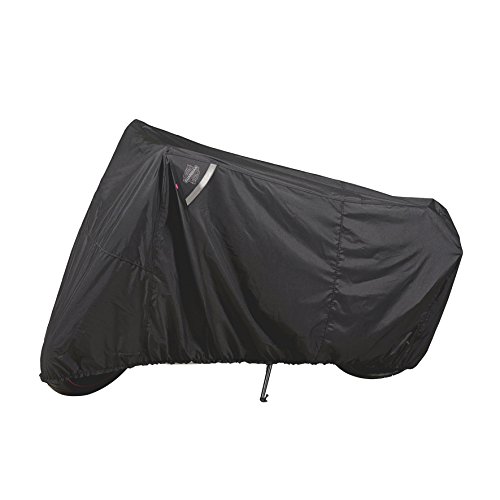
Breathable multi-layer fabric – won’t trap condensation. Indoor/outdoor rated. Available in sizing for most Harley-Davidson Touring, Softail, and Dyna models.
Check on Amazon
Step 10 – Choose the Right Storage Location
The HD safety notice in the 2009 Touring Service Manual (p. 1-56) is direct: “Do not store motorcycle with gasoline in tank within the home or garage where open flames, pilot lights, sparks or electric motors are present.” Even with fuel stabilizer, gasoline fumes are flammable, and the risk increases in enclosed spaces with heating appliances.
Ideal: a detached garage with climate control. Acceptable: attached garage kept above freezing. Avoid: unheated sheds with extreme temperature swings, which stress rubber seals and battery chemistry. If outdoor storage is unavoidable, add a UV-resistant cover and consider a portable dehumidifier bag inside the cover. Also consider the security system – see our guide on the Harley-Davidson security system reset if you need to adjust security settings for winter.
De-Winterizing Your Harley: Spring Startup Checklist
The 2009 Touring Service Manual (p. 1-57) provides the official removal-from-storage sequence. One critical safety warning before you start: “Prior to starting after extended periods of storage, place transmission in gear and push vehicle back and forth several times to assure proper clutch disengagement.” After months of sitting, clutch plates can stick together; this procedure separates them before you rely on the lever at speed.
- Charge and install battery – charge to full voltage before installing if stored separately.
- Remove exhaust and intake blockage – remove steel wool from exhaust, unblock the air intake. Do this before attempting to start.
- Remove spark plugs, inspect – per the HD manual, remove and inspect plugs. Replace if fouled, carbon-coated, or showing electrode wear.
- Clean air cleaner element – replace the paper element if it shows moisture damage or rodent contact.
- If tank was drained, refill with fresh gasoline.
- Check tire pressure – re-inflate to spec before riding. Cold storage can drop pressure by 3-5 PSI depending on temperature variance.
- Check engine oil and transmission fluid levels.
- Push bike in gear to break clutch plates loose (per HD manual).
- Start and run to operating temperature – watch for any leaks, unusual smoke, or warning lights.
- Perform all pre-ride checks from the Owner’s Manual before first ride.
Storage Duration: How Long Is Too Long?
Most Harley owners in colder climates store their bikes for 4-5 months (November through March). The procedures above are designed for this duration. For storage beyond 6 months, consider draining the fuel tank entirely rather than just adding stabilizer – ethanol-blended gasoline can phase-separate over 6+ months even with treatment.
Multiple threads on HDForums (including a 2023 thread with 47 replies on the Touring forum) report injector problems after 8+ month storage with stabilizer but no tank drain. The consensus from experienced owners: fuel stabilizer buys you 12-24 months per label claims, but real-world performance with ethanol blends (E10/E15) is closer to 6-8 months in humid climates. If you are in the South and storing through a humid summer, drain the tank.
EFI vs. Carbureted Harleys: Storage Differences
Pre-2007 Harley-Davidsons with carburetors (Evolution-era bikes, early Twin Cams) have one additional storage step: close or drain the float bowl. Carburetor float bowls hold a small reservoir of fuel that can gum up completely over winter, partially blocking the main jet and causing hard-starting or lean-running issues in spring. Close the fuel petcock if equipped, run the engine until it dies from fuel starvation, then store.
EFI Harleys (most Twin Cam models from 2007 onward, all Milwaukee-Eight models) do not have a float bowl to drain – the fuel system is pressurized and sealed. The key difference is the return-to-tank fuel system: you need the engine running at operating temperature for the stabilized fuel to actually cycle through the injectors and fuel lines. A brief cold-idle is not sufficient – run the bike until the oil temp gauge reads normal.
Frequently Asked Questions
These questions come from HDForums, r/Harley, and search data from Google Search Console for this topic in 2026.
Do I need to drain the gas tank when storing a Harley for winter?
No – the HD service manual recommends the opposite: fill the tank and add fuel stabilizer. A full tank minimizes the air space above the fuel, which reduces condensation on bare metal. Draining the tank is only recommended for storage longer than 6-8 months, particularly in humid climates where ethanol-blended gasoline can phase-separate over extended periods.
How long can a Harley sit without being started?
With proper winterization (fuel stabilizer, battery maintainer, oil change, fogging oil), a Harley can sit for 4-6 months without issues. Without any preparation, fuel begins degrading in as little as 30 days (faster with ethanol blends), and the battery will self-discharge to the point of sulfation damage within 2-3 months. The battery maintainer is the most important single item for long storage.
Should I start my Harley periodically during winter storage?
This is debated among Harley owners, and the HD service manual does not recommend it for properly winterized bikes. Brief cold-weather starts are counterproductive: the engine doesn’t reach operating temperature, which means combustion moisture stays in the oil rather than evaporating, and you end up with condensation-contaminated oil. If you do start the bike, run it until fully warm (10+ minutes), then shut it down. Better to leave it stored properly and let the battery maintainer do its job.
What happens if I don’t change the oil before winter storage?
Used engine oil contains combustion by-products, including acids and moisture. Storing a Harley for 4-5 months with dirty oil allows these acids to work against internal engine components – particularly cylinder walls, lifters, and cam bearings. The HD service manual specifies changing oil before storage (not after) for this reason. Multiple forum reports on HDForums document increased lifter noise in spring among bikes stored with old oil versus fresh oil.
Can I store my Harley outside in winter?
Outdoor winter storage is not ideal but is manageable with the right preparation. The HD service manual warns against locations with open flames or sparks. For outdoor storage: use a heavy-duty breathable cover (not a tarp – moisture traps under non-breathable plastic), elevate the tires if possible, disconnect the battery and store it indoors in a heated space with a maintainer, and check the bike after any significant snow or ice event. The battery and fuel system are the primary concerns – both can be managed adequately even without a garage.
What fuel stabilizer does Harley-Davidson recommend?
The HD service manual says “one of the commercially available gasoline stabilizers following the manufacturer’s instructions” – it does not specify a brand. STA-BIL Storage is the most commonly referenced option in HD owner forums and is compatible with all Harley fuel systems (carbureted and EFI). For bikes stored in humid environments or with ethanol-blended fuel, STA-BIL 360 Marine provides additional corrosion inhibitor protection and is worth considering for the Milwaukee-Eight era bikes with more complex fuel systems.
Do I need a battery tender or can I just disconnect the battery?
Both work, but a battery maintainer is the better option for most situations. A disconnected battery will self-discharge over 3-5 months and may reach sulfation threshold (around 12.0V) by spring – meaning it may not accept a full charge again. A battery maintainer keeps the battery at full charge without overcharging, extending its service life. The HD service manual allows both approaches but specifies a charging schedule if the battery is stored without a maintainer.
How do I prevent mice from getting into my stored Harley?
Block entry points with steel wool – exhaust pipes and air intake are the primary routes. Foam or rags are not effective because rodents chew through them. Leave visible markers (bright tape, a note on the seat) so you remember to remove blockages before starting. Forum reports from r/Harley and HDForums consistently show that rodent damage – chewed wiring harnesses, nest material in the airbox, or shredded intake boots – is one of the most expensive spring-surprise repair categories. Steel wool in the exhaust takes 2 minutes and costs almost nothing.
Sources and Citations
- Tier 1 – Official HD: Harley-Davidson 2009 Touring Service Manual (Section 1.25 Storage, p. 1-56 to 1-57)
- Tier 1 – Official HD: Harley-Davidson 2013 Dyna Service Manual (Section 1.24, Placing in Storage, p. 4198-4245)
- Tier 2 – Trade Press: Cycle World, “How to Store Your Motorcycle for Winter” – annual guide referenced for EFI vs. carbureted distinctions
- Tier 2 – Retailer: RevZilla, “Motorcycle Winterization Guide” – battery maintainer specifications and float-mode behavior
- Tier 3 – Community: HDForums.com Touring forum thread (2023, 47 replies) – injector damage from extended stabilized storage in humid climates
- Tier 3 – Community: r/Harley wiki and recurring winter storage megathread – clutch disengagement procedure validation, rodent prevention methods
🏍 Free Harley Recall & Maintenance Alerts
We'll email you when NHTSA posts a new Harley recall, plus seasonal maintenance reminders. No spam, unsubscribe anytime.
By subscribing you agree to our Privacy Policy.

Very informative. Thank you!