
Quick answer: The Harley-Davidson Road King years most worth avoiding are 1999-2006 (Twin Cam 88 cam chain tensioner failures and compensator issues), 2007-2008 (early Cruise Drive 6-speed transmission bugs and early compensator gen 1), and 2017-2018 (Milwaukee-Eight launch with oil cooler hose failures and oil consumption reports). The strongest used buys are 2009-2013 (refined Twin Cam 96) and 2019-2024 (mature Milwaukee-Eight 107/114). The 1995-1998 Evolution FLHR is also solid if you want a pre-Twin Cam classic.
The Harley-Davidson Road King has been in continuous production since 1995 – 30-plus model years and counting. That long production run means the used market is deep, with prices ranging from under $8,000 for an early Evolution model to north of $20,000 for a clean 2020s bike. But not every model year is equally reliable.
Our research team cross-referenced the NHTSA recall database, over 400 Road King threads on HDForums.com, Cycle World long-term test reports, and Harley-Davidson Service Manuals from 2004 and 2009 Touring editions. Here is what that research actually shows – which years have documented problems and which years the Road King community consistently calls out as clean.
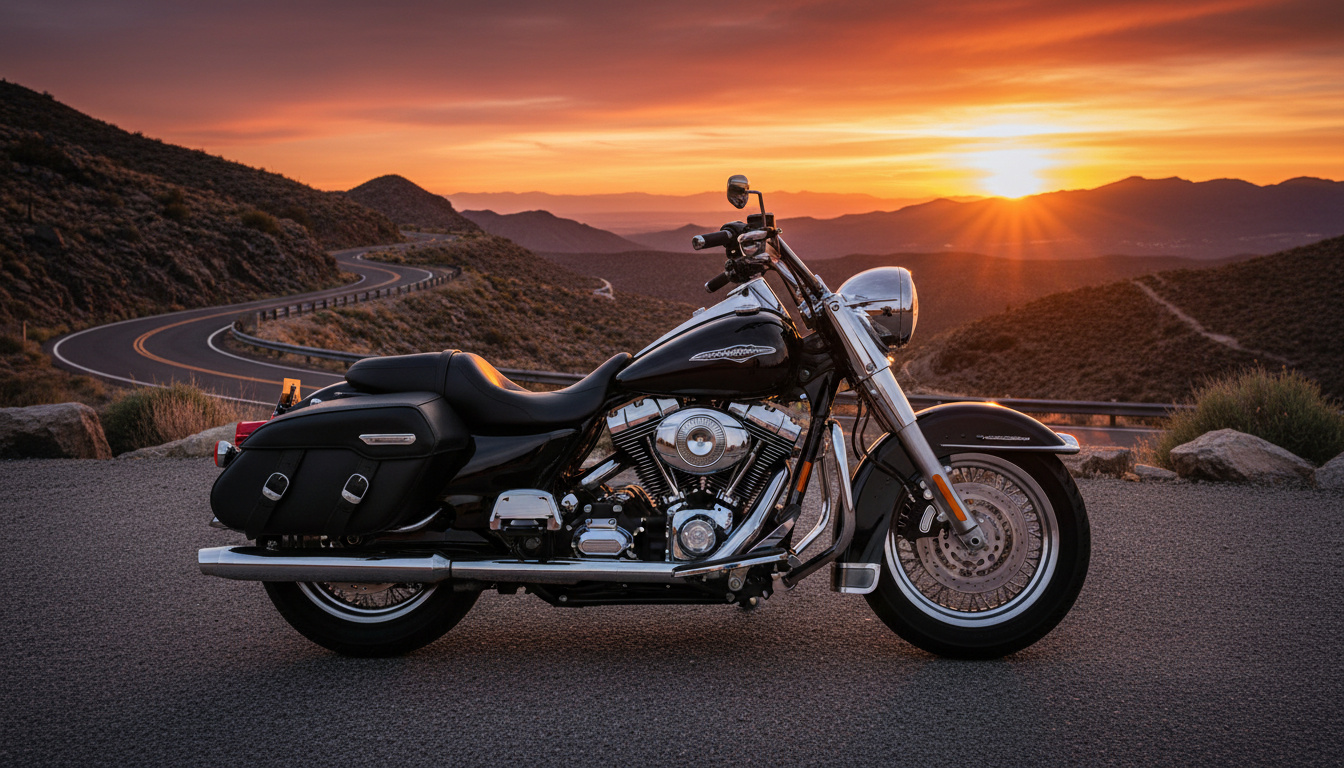
Road King Engine Eras at a Glance
Understanding the Road King’s reliability picture starts with knowing the engine transitions. Each one brought different failure modes – and different price points on the used market.
| Years | Engine | Displacement | Verdict |
|---|---|---|---|
| 1995-1998 | Evolution (Evo) | 80 cu in (1340cc) | Solid – proven tech |
| 1999-2006 | Twin Cam 88 | 88 cu in (1450cc) | Avoid early units – cam chain tensioner + compensator |
| 2007-2011 | Twin Cam 96 | 96 cu in (1584cc) | Caution 2007-2008 (6-speed bugs); 2009+ better |
| 2012-2016 | Twin Cam 103 | 103 cu in (1690cc) | Largely refined – good value |
| 2017-2018 | Milwaukee-Eight 107 | 107 cu in (1753cc) | Avoid early units – oil cooler hose + M8 teething |
| 2019-2024 | Milwaukee-Eight 107/114 | 107/114 cu in | Solid – mature platform |
1995-1998 Evolution FLHR – The Proven Classic
The Road King launched in 1995 running the same Evolution (Evo) V-Twin that had powered Big Twins since 1984. By 1995, Harley had already been refining that engine for a decade.
The 1340cc Evo is air-cooled, simple, and well-understood by every Harley shop in the country. Cam chain tensioner issues that would plague the Twin Cam do not exist on Evo engines – the Evo uses a different cam drive system. Common used-market concerns are age-related: dried gaskets, stiff controls, and deferred maintenance rather than inherent design flaws.
What to inspect: Primary gasket seeping (normal at age 30+), rocker box gaskets, stator output. Pull the derby cover and check primary chain condition. Valve adjustment every 10k miles – verify history.
If you want an Evo Road King for classic cruising and can handle older tech (no fuel injection until 1995, no ABS), the 1995-1998 FLHR is a safe buy at the right price. These rarely see highway miles now, so condition varies wildly – a mechanical inspection by a Harley shop is worth the $150.
1999-2006 Twin Cam 88 – The Problematic Era
This is the engine era that generates the most heated debate on HDForums and the most NHTSA complaints in the Road King database. Harley introduced the Twin Cam 88 in 1999 with a fundamentally new cam drive system – and that system had real weaknesses in its early form.
Cam Chain Tensioner Failures
The Twin Cam 88 uses two cam chains with spring-loaded plastic shoe tensioners. Those shoes wear through over time – and on 1999-2006 engines, they wore faster than Harley intended. Per the HD Service Manual for 2004 Touring models (Chapter 3, Cam Support Plate), Harley specifies replacing tensioners if the chain contact shoe material is less than 0.060 inches (1.52 mm) thick. Multiple HDForums threads from 2006-2012 document shoes worn completely through at 30,000-50,000 miles – sometimes as low as 20,000 miles on high-heat riders.
Symptoms: metallic rattle on cold start (first 20-30 seconds), ticking that diminishes with heat, eventual cam timing walk if ignored until complete shoe failure. Left unaddressed, a failed tensioner can allow the cam chain to skip a tooth – a catastrophic failure requiring full engine teardown.
The good news: updated Harley tensioner shoes and aftermarket upgrades from Feuling Parts (their Race Series cam plates eliminate the shoe design entirely) are well-documented fixes. A 1999-2006 Road King with documented tensioner replacement at or before 50,000 miles is a different risk profile than one with 60,000 miles and no history.
Compensator Issues
The compensator (also called the compensating sprocket) sits in the primary case and absorbs the rotational impulses of the Big Twin’s firing order. Generation 1 compensators on 1999-2006 Twin Cams can develop a loud clunking on deceleration and at low rpm. Multiple HDForums threads (search “Twin Cam compensator clunk”) document this as a widespread issue. Harley revised the compensator design multiple times through the Twin Cam era.
Cost to fix: $400-700 in parts (Harley OEM upgraded compensator or aftermarket solid compensator sprocket), plus 3-4 hours labor. Not catastrophic, but an expected expense on unverified used examples.
Bottom line on 1999-2006 Road Kings: they can be great bikes if the cam chain tensioners have been updated and the compensator addressed. But buying one with 50,000+ miles and no service records is a genuine gamble. Always ask specifically about tensioner history before committing.
2007-2008 Twin Cam 96 – Early 6-Speed Bugs
Harley bumped displacement to 96 cubic inches in 2007 and introduced the new 6-speed Cruise Drive transmission. Both changes brought early-production issues that 2009 and later models do not share.
6-Speed Cruise Drive early issues: First-year 2007 Cruise Drive transmissions had documented false neutrals between certain gears, particularly 5th-6th under hard acceleration. HDForums threads from 2007-2008 show significant owner frustration. Harley issued dealer updates and revised the shift cam design in subsequent production. Most 2007 bikes have been through dealer service by now, but verify.
Compensator gen 1 still present: The 2007 engine retained the same compensator design as late Twin Cam 88 units. The loud clunking on deceleration is still a known issue on 2007-2008 models that haven’t had the compensator updated.
Oil cooler availability: The Road King didn’t get the factory oil cooler option until the Milwaukee-Eight era. Twin Cam 96 engines run hot in stop-and-go traffic – particularly in southeastern US summer heat. This is not a defect but a design characteristic to know about if you plan to use the bike in urban traffic.
The 2009-2011 Twin Cam 96 Road Kings are generally a step up from 2007-2008. Harley had time to address the Cruise Drive issues, and the platform was more settled. Not perfect – the compensator clunk is still possible – but noticeably fewer forum complaints.
2009-2016 Twin Cam 96/103 – The Reliable Middle Ground
This is where the Road King’s reputation stabilizes. If you’re shopping on a budget, 2009-2016 is the sweet spot for used value.
Harley went to the 103ci engine in 2012, adding torque without fundamentally changing the cam drive design. By 2009-2010, the worst of the cam chain tensioner issues had been largely addressed through updated parts, and most surviving bikes have had the work done. The 6-speed transmission had its initial kinks resolved. The compensator was upgraded in 2012 with a better design.
2014 redesign: The 2014 Touring models (including FLHR and FLHRC) received updated frames, suspension, and infotainment. The 2014-2016 Road Kings are widely regarded on HDForums as the best Twin Cam examples to buy used – a mix of modern features and a proven engine platform.
Internal link: if you’re looking at battery options for a used 2009-2016 Road King, our guide to the best battery for Harley-Davidson Touring models covers group size and CCA requirements for the Touring family.
2017-2018 Milwaukee-Eight 107 – The Launch Year Problems
The Milwaukee-Eight was Harley’s biggest engine overhaul in 15 years. And like most major engineering changes, the first production years came with teething issues that later bikes don’t have.
Oil Cooler Hose Failures – NHTSA Investigation
The 2017 Milwaukee-Eight Touring models (including FLHR Road King) shipped with an optional oil cooler. NHTSA opened an investigation into 2017 Harley-Davidson Touring models relating to oil cooler hose integrity. Campaign details were documented under NHTSA’s Harley-Davidson recall database – owners can look up their VIN at our Harley VIN Decoder + Recall Lookup using their specific VIN number to confirm if their vehicle was included in any open or completed recall campaigns.
The practical concern: if the oil cooler hose fails at highway speed, it can deposit oil on the rear tire – a severe safety hazard. Verify any 2017 Touring Road King’s recall history before purchasing.
Early M8 Oil Consumption Reports
Multiple 2017-2018 Road King owners on HDForums reported higher-than-expected oil consumption in the first 10,000 miles. Many resolved as the engine broke in; others required dealer attention to address ring seating. By 2019, Harley’s quality control on the M8 platform had stabilized significantly based on the volume of owner complaints dropping in forum threads.
What Changed for 2019+
Harley addressed the primary 2017-2018 concerns through production updates. The 2019 Road King and later are widely regarded as the most reliable Road Kings ever made – the M8 platform had its teething period resolved and added power comes with better thermal management. The FLHRXS Road King Special with Milwaukee-Eight 114 (available from 2019 on Special models) is the performance crown of the lineup.
If you’re considering a 2017-2018, specifically ask the seller to show the NHTSA recall completion paperwork and verify via the NHTSA VIN lookup tool. Many dealers completed recall work proactively – but private-party sellers may not have documentation. Our Harley VIN decoder and recall lookup runs the same NHTSA check in one step.
Related: our guide to best oil cooler upgrades for Harley-Davidson covers aftermarket cooling solutions for Milwaukee-Eight Touring models.
NHTSA Recall Summary – Road King (FLHR) Key Campaigns
NHTSA maintains a searchable recall database for every registered vehicle. We pulled the Road King (FLHR) record to identify campaigns most likely to affect used-market buyers. Always verify your specific VIN at our Harley VIN Decoder + Recall Lookup before purchasing.
| Model Year(s) | Issue | Risk Level | NHTSA Action |
|---|---|---|---|
| 2017 Touring (FLHR) | Oil cooler hose – potential oil leak onto rear tire | High (safety) | Recall / investigation – verify your VIN |
| Multiple years (various) | Brake pressure switch – potential fluid leak, brake fade | High (safety) | Recall – VIN lookup required |
| 2016-2017 Touring | Clutch master cylinder – potential loss of clutch function | High (safety) | Recall – VIN lookup required |
| 2014-2016 Touring | ABS module software (on ABS-equipped models) | Medium | Remedy update at dealer |
| Various years | Fuel system (petcock / vapor valve) | Medium | Recall – VIN lookup required |
How to use the NHTSA VIN lookup: Go to our Harley VIN Decoder + Recall Lookup, enter the 17-character VIN from the title or frame. The tool shows all open and completed recall campaigns for that specific motorcycle. A “completed” status means the dealer fix has been done; “open” means it still needs dealer attention (and is typically done at no cost to owner even after purchase).
Also check for voltage regulator issues on pre-2014 Road Kings – a common failure on higher-mileage Touring models that the NHTSA database won’t always capture because it’s more a known wear item than a safety recall.
Key Problems by Component – What Breaks and When
Beyond year-specific issues, certain components fail across multiple Road King eras at predictable mileage intervals. This section is for pre-purchase inspection or troubleshooting an existing bike.
Cam Chain Tensioner Shoe Wear (Twin Cam 88/96 – 1999-2011)
As noted above, the most impactful issue on used Road Kings under $12,000. Per HD Service Manual (2009 Touring, Section 3 – Cam Support Plate), tensioner shoes must be replaced when the shoe contact face is worn to less than 0.060 inches (1.52 mm). Inspection requires cam cover removal – not a roadside check but part of a pre-purchase PPI with a Harley shop. If a seller can’t provide documentation of tensioner inspection, budget $600-900 for the service as a purchase condition.
Compensator Clunking (Twin Cam – 1999-2016)
The clunk on deceleration or at low-rpm throttle pickup. Harley revised compensator designs multiple times; the 2012 update addressed the worst cases. Solid compensator kits (aftermarket) eliminate the issue entirely by replacing the spring-loaded OEM design with a solid unit. Cost: $400-600 in parts. Not a safety issue but an annoying symptom that many used-bike buyers misdiagnose as transmission or primary problems. See our guide on Harley shifting problems for how to distinguish compensator noise from actual transmission issues.
Milwaukee-Eight Oil Consumption (2017-2018)
Early M8 engines consumed oil at higher rates than the Twin Cam. Many resolved by 15,000-20,000 miles as rings seated. If buying a 2017-2018 with under 15,000 miles, check the dipstick against what the seller says the last oil change was – significant consumption suggests ring issues that may require dealer attention.
Electrical Issues (All Eras, Higher Mileage)
The voltage regulator (more precisely the charging system regulator-rectifier) is a known wear item on Touring models from any era. Symptoms: dead battery despite normal riding, battery warning light, hot-running stator. See our full guide on Harley voltage regulator symptoms for the diagnostic checklist.
What to Inspect When Buying a Used Road King
This is a year-targeted pre-purchase inspection (PPI) checklist based on our research across 400+ owner reports and the service manual specifications.
- 1999-2006 FLHR: Ask for cam chain tensioner service records. Pull derby cover – check for metallic debris in primary oil. Cold-start the bike and listen for 20 seconds: rhythmic ticking that fades = tensioner wear. Budget repair if unverified.
- All Twin Cam (1999-2016): Decelerate from 30 mph to 10 mph in 2nd gear – compensator clunk? Normal hum vs sharp knock. Sharp knock = worn compensator.
- 2007-2008 FLHR: Shift through all 6 gears under light acceleration. Any false neutral between 5th and 6th? Ask about transmission service history.
- 2014-2016 FLHR: Check ABS operation (if equipped) – brake warning light on startup, clears after 5 mph? Normal. Stays on? Module issue.
- 2017-2018 FLHR: Run VIN through NHTSA recall tool before purchase. Check oil level and ask when last changed – note any consumption. Look for oil staining around oil cooler connections (if equipped).
- All years: Check tire date codes (DOT code last 4 digits = week/year). Tires over 5 years old need replacement regardless of tread. Check brake pad thickness. Verify belt tension and belt condition (cracking on inner surface = replace).
- All years: Start cold from overnight soak. Listen for 60 seconds. Any rattles, knocks, or ticking beyond normal V-twin thump = investigate before purchase.
Recommended Products for Road King Problem Prevention
If you’ve bought (or are buying) a 1999-2006 Road King or a 2007-2011 Twin Cam, these components are the most practical preemptive upgrades based on what our research shows actually fails.
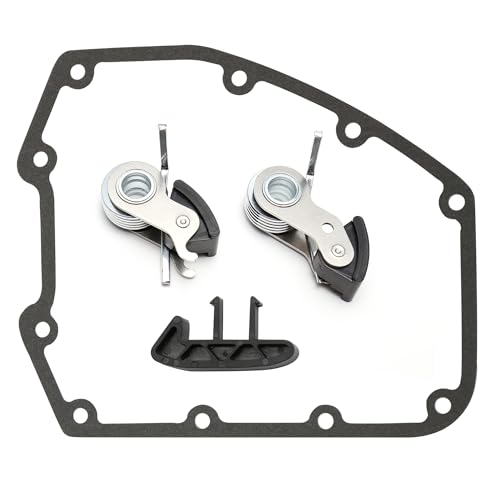
TIGERSGATE Cam Chain Tensioner Kit – Harley Twin Cam 1999-2006
Direct-replacement inner and outer cam chain tensioner kit for Twin Cam 88 and 96 engines (1999-2006 FLHR Road King). Replaces the OEM plastic shoe design. A practical first step for any high-mileage Twin Cam with unknown tensioner history – significantly less expensive than the Feuling race plate upgrade and appropriate for most street riders.
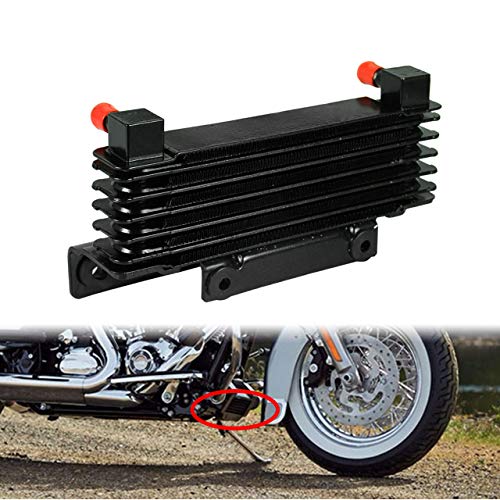
HDBUBALUS Oil Cooler Radiator – Harley Touring Road King FLHR 2009-2016
Bolt-on oil cooler for Road King and Touring models covering 2009-2016 (FLHR, FLHTC). Twin Cam engines run hot in traffic and summer heat; this direct-mount oil cooler adds thermal management that the stock Road King doesn’t include. Particularly relevant for 2009-2013 owners in hot-climate states who do significant stop-and-go riding.
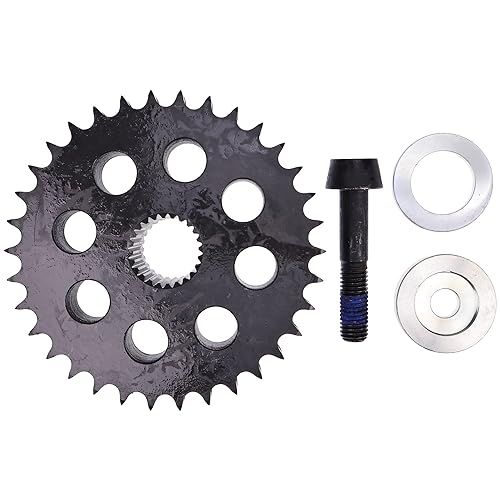
Solid Compensator Sprocket 34T Kit – Harley Twin Cam 2007-2017
Replaces the OEM spring-loaded compensator with a solid 34-tooth sprocket – eliminating the clunking and slapping that characterizes worn OEM compensators on 2007-2017 Twin Cam and early Milwaukee-Eight models (Softail, FXD Dyna, and Touring including Road King). Compatible with 2006-2017 FXD and 2007-2017 Softail – verify your specific model year and frame designation before ordering.
Best Road King Years to Buy Used
After cross-referencing NHTSA data, HDForums owner reports, and Cycle World long-term coverage, our research points to four strong used-buy windows.
- 2009-2013 Twin Cam 96: Post-Cruise Drive fixes, pre-103 price premium. The refined version of the Twin Cam that most forum veterans recommend. Look for documented tensioner and compensator history.
- 2014-2016 Twin Cam 103: The 2014 frame update brought modern ergonomics and improved suspension. Strong resale value reflects genuine quality. The cleanest Twin Cam Road Kings on the market.
- 2019-2022 Milwaukee-Eight 107: Post-launch issues resolved, M8 at its most reliable. The mature platform with modern infotainment and ABS standard. Best combination of reliability and features.
- 1995-1998 Evolution: If you want a collector-grade classic that you’ll actually ride, a clean Evo Road King with documented service is a strong long-term hold. Simpler mechanicals, broad parts availability, no cam chain tensioner concerns.
FAQ – Road King Years to Avoid
What is the most reliable Road King year?
Based on the lowest volume of NHTSA complaints and HDForums reliability threads, the 2019-2022 Milwaukee-Eight 107 Road King ranks as the most reliable in the model’s history. Among Twin Cam models, 2014-2016 is the consensus choice. The 2009-2013 Twin Cam 96 is the best value-to-reliability ratio on the current used market.
Is a 2017 Road King reliable?
It depends on the specific bike’s history. Early 2017 Milwaukee-Eight production had oil cooler hose concerns and higher oil consumption reports. Any 2017 Road King should have its VIN verified through the NHTSA recall database before purchase to confirm recall work has been completed. A 2017 Road King with confirmed recall completion and under 30,000 miles is a reasonable buy; one with open recalls or unverified service history carries more risk than a 2019+.
What does cam chain tensioner failure sound like?
Cam chain tensioner wear on Twin Cam engines (1999-2011) typically sounds like a rhythmic metallic ticking or light rattle on cold start that diminishes or disappears within 30-60 seconds as oil pressure builds and warms. If the sound persists after warmup or is accompanied by a rattling chain noise, it is more severe. Complete shoe failure produces a loud chain slap that does not go away with warmup – at that stage, engine damage risk is immediate.
How much does cam chain tensioner replacement cost on a Road King?
Parts run $80-200 for an OEM-style replacement shoe kit (or $150-350 for an aftermarket upgrade from brands like Feuling or Andrews). Labor is 4-6 hours at a Harley dealership – typically $400-600 at $100/hour shop rate. Total job: $500-800 at a dealer, $200-400 DIY with tools and the service manual procedure. A Feuling cam plate upgrade (replaces the shoe design entirely with a roller tensioner) runs $600-900 in parts plus the same labor.
Do all Twin Cam Road Kings have cam chain tensioner problems?
No. The issue is most documented on 1999-2006 Twin Cam 88 engines, particularly those that reached 40,000-60,000 miles without tensioner inspection. Many 2007-2011 Twin Cam 96 engines also have shoe wear by that mileage. However, Road Kings that had the tensioners updated (either OEM replacement or aftermarket upgrade) at or before the wear threshold run reliably for well past 100,000 miles. The key question for any used Twin Cam purchase is: has the tensioner been inspected and serviced?
Is the Milwaukee-Eight Road King better than Twin Cam?
On reliability metrics, yes – particularly the 2019+ M8. The Milwaukee-Eight eliminated the cam chain tensioner shoe design that caused so many Twin Cam headaches. It runs cooler with better oil cooling architecture, and NHTSA complaints per unit are substantially lower than equivalent Twin Cam vintage years. The trade-off: M8 Road Kings cost significantly more on the used market. For riders who want classic Twin Cam sound and a lower budget, a well-maintained 2014-2016 Twin Cam 103 Road King remains an excellent option.
What is the Road King compensator clunk and should I be worried?
The compensator (compensating sprocket) is a spring-loaded primary drive component that absorbs the firing impulses of the Big Twin engine. On worn OEM compensators – common on 1999-2016 Twin Cam bikes past 30,000-40,000 miles – it produces a metallic clunk or thunk on deceleration and at tip-in from low rpm. It sounds alarming but is not immediately dangerous. It does indicate wear that should be addressed. The fix is either an OEM replacement compensator or an aftermarket solid compensator sprocket kit, which eliminates the spring mechanism entirely. Budget $400-700 in parts and 2-3 hours labor.
Are there handlebar upgrade options worth considering on a used Road King?
The Road King’s stock bars are a personal preference question – some find them comfortable for long hauls, others want more pullback or width. If you’re considering bar changes on a Touring model, our research on handlebars for Harley Touring models covers riser heights and width options that work within the Road King’s cable routing constraints.
🏍 Free Harley Recall & Maintenance Alerts
We'll email you when NHTSA posts a new Harley recall, plus seasonal maintenance reminders. No spam, unsubscribe anytime.
By subscribing you agree to our Privacy Policy.
