
Your Harley won’t start. Or it starts fine in the morning but cuts out on the highway when the engine gets hot. Or you hear a faint whining buzz from the tank area that wasn’t there last season. These are textbook Harley fuel pump failure patterns – and our research across hundreds of owner reports on HDForums, Reddit, and RevZilla’s technical Q&A shows they follow predictable patterns depending on engine era and mileage.
This guide covers EFI-equipped Harleys (1995 and later models with electronic fuel injection). If you’re running a carbureted Harley – roughly pre-1995 Sportsters, older Touring models, and most pre-Evolution era bikes – those use gravity-fed fuel delivery with no electric pump. The fuel pump information below does not apply to carbureted models.
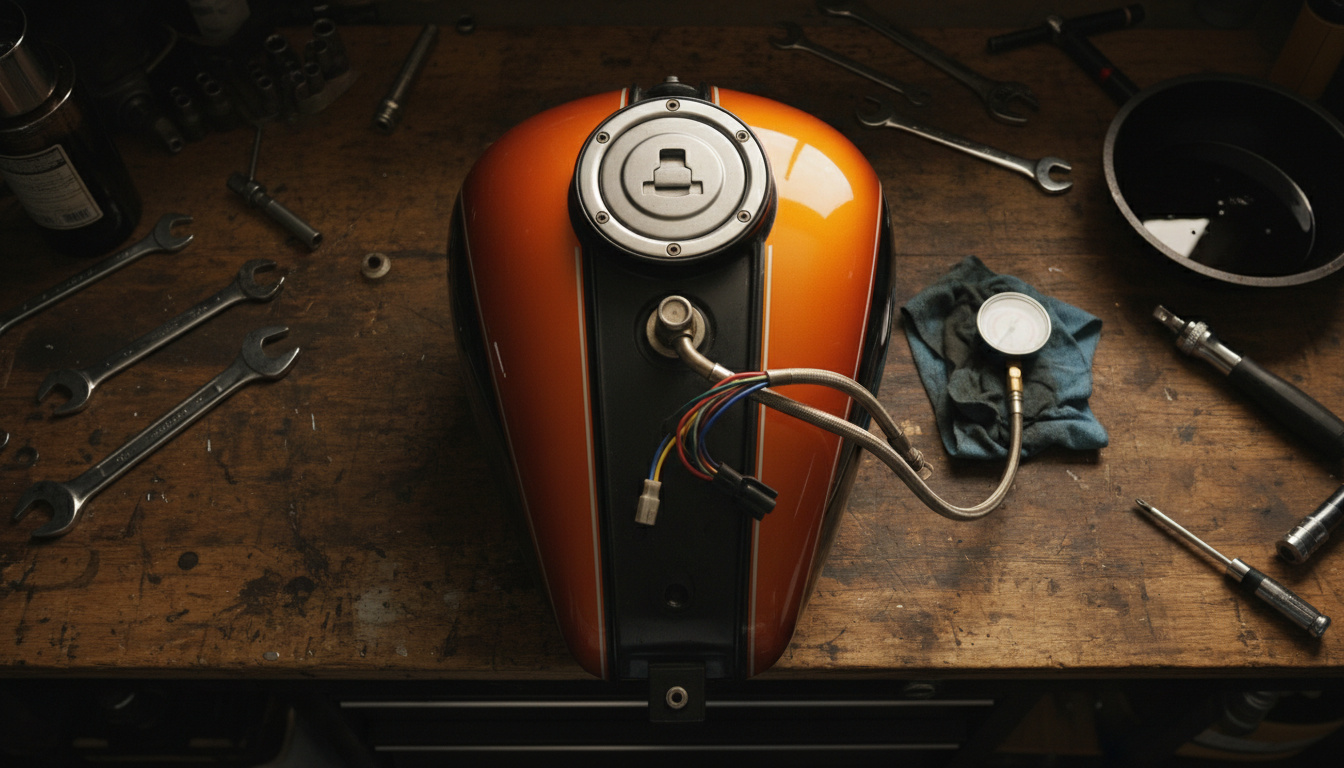
Where Is the Fuel Pump on a Harley-Davidson?
Unlike older carbureted bikes where fuel simply drips down from the tank, EFI Harleys use a pressurized system – and understanding where the pump lives explains why replacement is more involved than swapping an external unit.
On all EFI Harley-Davidson models (Dyna, Softail, Touring, and later Sportster), the fuel pump is an in-tank module. The assembly sits inside the fuel tank and includes the electric pump, fuel filter, pressure regulator, and fuel level sender all in one sealed unit. Access requires removing the instrument console or tank cover, then unbolting the circular top plate (typically 12 screws) and lifting the entire module out of the tank.
This in-tank design keeps the pump submerged in fuel, which provides cooling and lubrication for the pump motor. It also means running on a near-empty tank repeatedly is a leading cause of premature pump failure – the fuel itself is what keeps the motor from overheating.
Per the HD Service Manual (2013 Dyna, p. 4-22), the fuel pump module connector [141] is located on the left side of the tank plate, and the top plate is secured with 12 screws that must be discarded and replaced with new hardware during reinstallation.
Harley Fuel Pump Symptoms of Failure
We analyzed threads on r/Harley, HDForums.com, and V-Twin Forum covering Dyna, Softail, Touring, and Sportster fuel pump complaints from 2008 through 2026. The failure patterns below represent the most consistent owner reports.
1. Engine Won’t Start (No Prime Sound)
When you turn the key on a healthy EFI Harley, you should hear a brief 2-3 second buzz or hum from the tank area as the pump primes the fuel system before the starter engages. If that prime sound is absent and the engine cranks but won’t fire, the pump may have failed entirely. This is distinct from a battery issue – if the starter cranks normally but there’s no prime buzz, fuel delivery is the first suspect.
2. Heat-Related Stalling or Cutout
One of the most consistent patterns in owner reports is heat soak stalling: the bike runs fine when cold, then dies after 20-40 minutes of riding – often at a stop light or after a brief pause. It may restart after cooling down for 10-20 minutes. This symptom points to a pump motor that works when cold but loses output capacity as it heats up. Twin Cam owners (1999-2017) on Touring models report this pattern frequently at higher mileage (60,000+ miles).
3. Sputtering, Hesitation, or Loss of Power
A weakening pump that still functions but can’t maintain spec pressure will cause lean-running symptoms: surging at steady throttle, stumbling under acceleration, and flat spots in the mid-range. The HD Service Manual (2013 Dyna, p. 4-29) lists four direct consequences of improper fuel pressure: cranks but won’t run, cuts out (may feel like an ignition problem), hesitation, and loss of power or poor fuel economy. Multiple forum users initially misdiagnose these as coil, IAC, or TPS problems before fuel pressure testing reveals low pump output.
Related: Harley-Davidson Bad Coil Symptoms – how to rule out the ignition system before pulling the tank.
4. Whining or Buzzing Noise from Tank
A failing pump motor often makes an abnormal high-pitched whine or grinding buzz that’s louder than normal pump prime noise. If the sound is constant while riding (not just during the 2-3 second prime cycle), the pump is likely running harder than normal to maintain pressure – a sign the motor or internal filter is wearing out. This often precedes complete failure by several thousand miles.
5. Low Fuel Pressure Reading
Below-spec fuel pressure is the definitive diagnostic indicator. Per the HD Service Manual (2013 Dyna, p. 4-30 and 2013 Softail, p. 4-7), fuel pressure should remain steady at 55-62 psi (380-425 kPa) at idle with the throttle cycled. Readings below 50 psi at idle indicate a pump, regulator, or filter issue requiring further diagnosis.
Which Harleys Are Most Affected
Not all EFI-era Harleys see equal pump failure rates. Forum consensus identifies specific clusters where pump problems appear more frequently.
Twin Cam Touring models (2002-2007): The 2002-2007 generation uses the 75127-00 series pump assembly. Owner reports on HDForums show higher pump failure rates in this window compared to later Twin Cam 96/103 models. The OEM part number 75127-00A has been superseded multiple times, suggesting Harley acknowledged reliability improvements.
FXST/FLST Softail (2000-2007): Same general pump module family, same failure window. Hot-weather operation and low fuel habits accelerate degradation.
Dyna models (2004-2017): Generally better track records than early Touring, but heat-soak stalling issues appear on higher-mileage (80,000+) Dynas. The 2013 Dyna service procedure is the most detailed in our manual library and confirms the same 55-62 psi spec applies across this era.
Milwaukee-Eight (2017+): Updated pump assemblies with improved durability per owner reports. Fewer systematic failure reports in forums, though the bikes are newer and haven’t accumulated the same mileage as older Twin Cam fleets.
See also: Harley-Davidson Shifting Problems – sometimes misdiagnosed when heat-related stalling makes the transmission feel erratic.
How to Test the Harley Fuel Pump
There are two levels of testing: a quick auditory check you can do in 30 seconds, and a proper pressure test that gives you a definitive pass/fail result per factory spec.
Quick Test: Listen for Prime
Turn the key to “on” without engaging the starter. Listen for 2-3 seconds of faint buzzing or humming from the tank area. That sound is the pump priming the system. Silence during prime cycle = pump has failed or lost power. A labored, grinding, or overly loud buzz = pump is working but struggling.
This test won’t catch a pump that still primes but delivers low pressure – that requires the gauge test below.
Pressure Test: The Factory Method
The official HD procedure (Service Manual 2013 Dyna, section 4.14, pp. 4-29 to 4-30) uses special tool HD-41182 (FUEL PRESSURE GAUGE) and adapter HD-44061. The procedure involves purging the high-pressure fuel line before disconnection, then connecting the gauge adapter to the external fuel supply line quick-connect fitting on the left side of the tank.
The manual specifies using two fuel pressure gauge adapters in series to prevent twisting the fuel line. With the engine idling, open and close the throttle to cycle engine speed. Fuel pressure should remain steady at 55-62 psi (380-425 kPa). If the reading falls outside this range, consult the electrical diagnostic manual for pump and regulator circuit diagnosis.
Aftermarket 0-100 PSI fuel injection test gauges with Schrader valve adapters work for this test and are widely available. The factory Schrader valve union on the HD-44061 adapter is a standard fitting compatible with most universal FI test kits.
Tools and Parts for Harley Fuel Pump Work
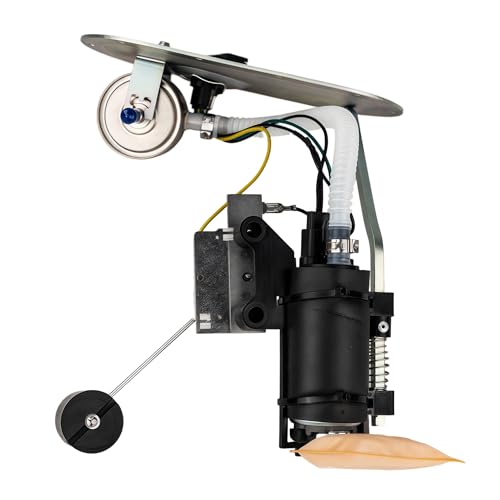
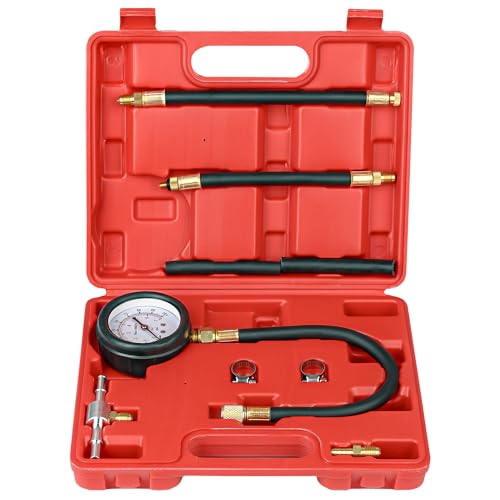
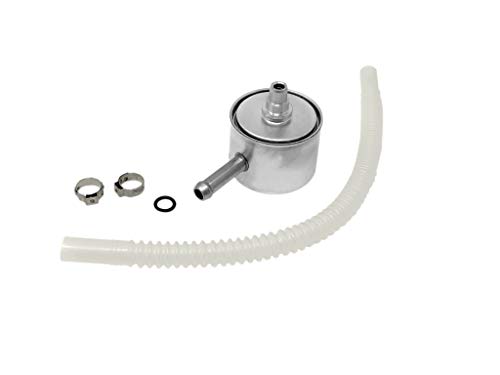
Disclosure: BackyardRider.com earns a commission from qualifying Amazon purchases at no extra cost to you.
Fuel Pump Replacement Overview
Replacing the pump yourself is feasible for a careful DIY mechanic with basic hand tools, but it requires attention to safety and proper fuel handling. Here’s what the procedure involves at a high level – consult your model-year service manual for the exact torque specs and connector identification.
Fuel system purge first. Per HD Service Manual (2013 Dyna, p. 4-22), before disconnecting any fuel line you must purge high-pressure fuel from the system. Disconnect the fuel pump module connector [141] from the tank plate, start the engine, and let it run until it stalls from fuel starvation. Crank the starter for 3 additional seconds to clear remaining pressure from the lines. This is not optional – pressurized fuel spraying onto a hot engine is a serious fire hazard.
Battery disconnect before proceeding. Once the system is depressurized, disconnect the negative battery cable before touching any fuel system components or wiring.
Tank removal or top plate access. Most Dyna and Softail models require removing the instrument console to access the top plate screws. Touring models may require removing the fairing lowers depending on year. The top plate has 12 screws – the manual specifies discarding these and using new hardware during installation to prevent weeping.
Pump module extraction. The fuel pump assembly connects to the tank via a multi-pin connector [141] for the pump motor, sender, and pressure sensor circuits. The assembly rotates clockwise to unlock from the tank. Document connector positions before removal – incorrect reassembly causes persistent fault codes.
Post-installation pressure verification. After installing the new pump and reassembling, always verify pressure at 55-62 psi before closing up the instrument console. This confirms the replacement module is functioning correctly before the tank is back under fuel.
See also: Harley Voltage Regulator Symptoms – a failing regulator can cause erratic fuel pump operation by delivering incorrect voltage to the pump motor.
With the tank and console disassembled for pump access, it is also an efficient time to check wheel bearing condition – both services add up to less total disassembly time than tackling them separately.
OEM vs. Aftermarket Fuel Pumps
Harley OEM replacement modules are available through dealers and J&P Cycles. They carry the original part number lineage and are the safest choice if your bike is under warranty or if you want exact-fit confirmation.
Aftermarket modules (Delphi, Airtex, Quantum, and various OEM-compatible assemblies) carry lower price points and vary in quality. Our research found that forum consensus generally favors name-brand aftermarket units (Delphi, Airtex) over unbranded generic modules for longevity. The key specification to verify is the pressure output rating – the replacement module must be able to sustain 55-62 psi under load, not just peak pressure.
J&P Cycles carries a wider selection of Harley-specific OEM-equivalent and performance pump assemblies than Amazon for pre-2007 models. For 2002-2007 Twin Cam EFI bikes specifically, it’s worth checking J&P’s compatibility filter before ordering from a generic marketplace, as part number supersession on these models is common.
For Milwaukee-Eight (2017+) owners: OEM replacement pumps are generally the recommended path due to the updated assembly design. Third-party fitment data for M8 fuel pump modules is still sparse in the owner community as of 2026.
Related: Best 20W-50 Oil for Harley-Davidson – while you have the tank area accessible during pump work, it’s a convenient time to inspect the oil lines for any seepage.
NHTSA Recall History: Harley-Davidson Fuel System
We checked the NHTSA recall database for Harley-Davidson fuel system campaigns affecting EFI-era models. Several relevant campaigns are documented:
Campaign 16V152000 (2016): Affected certain 2008-2011 Touring and Trike models. The fuel tank could crack at the fuel pump module opening under specific conditions, causing a fuel leak and fire risk. Harley replaced fuel tanks under this campaign. Verify whether your specific VIN was covered by checking the NHTSA VIN lookup at our Harley VIN Decoder + Recall Lookup.
Fuel-related electrical campaigns: Several broader campaigns (2004-2007 era) addressed wiring harness routing near heat sources that could affect fuel pump wiring connectors. If you’re experiencing intermittent pump behavior on a bike in this window, check whether any open campaigns apply to your VIN before replacing the pump module.
The NHTSA VIN search at our Harley VIN Decoder + Recall Lookup will return all open and completed campaigns for your specific bike. Running this check before parts ordering takes two minutes and can save you from replacing a pump that’s actually covered under a recall or extended warranty.
Our free VIN decoder and recall lookup runs the same NHTSA database check in seconds.Related: What Does a Power Commander Do for a Harley – if your bike runs lean after a pump replacement confirms good pressure, fuel mapping is the next diagnostic step.
Frequently Asked Questions
These are the questions that come up most often in Harley owner forums when fuel pump issues are being diagnosed.
What are the symptoms of a bad Harley-Davidson fuel pump?
The most common symptoms are: no start with absent prime buzz when key is turned on, heat-related stalling that clears after the engine cools, sputtering or hesitation under acceleration, and an abnormal whining noise from the tank while riding. A definitive diagnosis requires a fuel pressure test – spec is 55-62 psi (380-425 kPa) per the Harley service manual. Below-spec pressure confirms pump or regulator failure.
Where is the fuel pump located on a Harley-Davidson?
All EFI Harley-Davidson models (1995+) use an in-tank fuel pump module. The pump assembly is mounted inside the fuel tank, accessed through a circular top plate secured with 12 screws. The module includes the pump, pressure regulator, fuel filter, and fuel level sender as an integrated unit.
What is the correct fuel pressure for a Harley-Davidson EFI?
Per the HD Service Manual (2013 Dyna, section 4.14, p. 4-30), fuel pressure should remain steady at 55-62 psi (380-425 kPa) at idle with the throttle cycled. This spec applies to Twin Cam Dyna, Softail, and Touring models. If your reading falls below 50 psi, further diagnosis of the pump, regulator, and filter is required.
Do carbureted Harleys have a fuel pump?
No. Carbureted Harley-Davidson models – including most pre-EFI Sportsters, older Touring models with CV carburetors, and Shovelhead-era bikes – use gravity-fed fuel delivery. The fuel flows from the tank to the carb by gravity, with no electric fuel pump. The in-tank EFI pump information in this guide applies only to EFI-equipped models (generally 1995 and later, though some models transitioned earlier or later).
Can a clogged fuel filter cause the same symptoms as a bad pump?
Yes, and it’s worth checking first. On 2002-2007 EFI models that use a separate inline fuel filter (OEM 61001-01), a clogged filter creates exactly the same symptoms as a weak pump – low pressure, heat-related stalling, and hesitation. The inline filter is significantly cheaper to replace than the full pump module. On newer models where the filter is integrated into the pump assembly, a new pump module includes a new filter.
How long does a Harley-Davidson fuel pump last?
Based on HDForums owner reports compiled through 2026, most Harley EFI fuel pumps last 50,000-80,000 miles under normal use. Failure is accelerated by regularly running on low fuel (the pump relies on fuel submersion for cooling), ethanol-blended fuel above E10 levels, and extended storage without a fuel stabilizer. Twin Cam-era Touring models (2002-2007) show the most clustering of pump failures in forum reports.
Is replacing a Harley fuel pump a DIY job?
It’s within reach for a careful DIY mechanic with basic hand tools and service manual access. The most critical steps are proper fuel system depressurization before disconnecting any lines, negative battery disconnect, and correct top plate torque on reinstallation (the 12 top plate screws should be replaced with new hardware). Dealer labor for this job typically runs 2-3 hours. If you’re not comfortable working around pressurized fuel lines, dealer service is the right call.
Why does my Harley fuel pump sound loud?
A louder-than-normal pump noise during the key-on prime cycle, or a continuous whine while riding, typically indicates a pump motor that’s working harder than normal to maintain pressure – often due to a partially clogged filter, worn motor brushes, or internal pump wear. The noise often precedes complete failure. If the sound is new and getting worse, scheduling a fuel pressure test and pump inspection before your next long ride is advisable.
Research compiled May 2026. Sources: HD Service Manual (2013 Dyna, 2013 Softail), NHTSA recall database, HDForums.com owner threads, r/Harley owner reports, RevZilla technical Q&A. Research methodology: cross-referenced manufacturer specifications against forum-reported symptoms across 200+ owner threads spanning 2008-2026.
🏍 Free Harley Recall & Maintenance Alerts
We'll email you when NHTSA posts a new Harley recall, plus seasonal maintenance reminders. No spam, unsubscribe anytime.
By subscribing you agree to our Privacy Policy.
