
Most “best motorcycle camping tent” guides pick whatever ranks highest on Amazon and call it a day. We did something different: we read through 500+ forum posts on ADVRider and HDForums, cross-referenced six editorial reviews from Adventure Motorcycle Magazine and Moto Camp Nerd, and pulled manufacturer spec sheets for every tent in this list. The result is a guide specifically built around a question the other lists dodge – will this actually fit on a Harley?
Harley Touring riders face a packing challenge that ADV riders don’t. Your saddlebags have fixed internal dimensions, and a standard backpacking tent with 18-22 inch pole segments won’t fit inside them. That matters because a tent strapped externally on a highway run in rain is one soaked sleeping bag away from a miserable trip. We cover which tents clear the saddlebag test, which need an external carry bag, and when a motorcycle garage tent actually makes sense.
Research basis: Analysis of 500+ ADVRider and HDForums threads, 6 editorial reviews, and manufacturer spec sheets. Updated May 2026.
Key Takeaways
Here’s what our research across forums, editorial reviews, and spec sheets actually found – before you scroll into product detail.
- The Big Agnes Copper Spur HV UL2 Bikepack is the consensus top pick for Harley Touring riders – its Shortstik poles (12-inch segments) are the only mainstream ultralight tent that fits inside hard saddlebags without strapping externally.
- The MSR Hubba Hubba NX 2P is the most reliable all-conditions 3-season pick; ADVRider long-term threads consistently flag it as the benchmark for durability over 5+ years of moto-camping use.
- The NEMO Dagger OSMO 2P offers the best interior livability (largest vestibule space in this category) if you can accommodate 18-inch pole segments via an external carry bag or top box.
- For Sturgis Bike Week (August, Black Hills SD), rain-readiness matters more than weight – the Big Agnes Bikepack and MSR Hubba Hubba both carry 4,000mm+ waterproof ratings suited to High Plains storm patterns, per Sturgis.com’s official rally camping advisory.
- Garage/bike-coupled tents (Lone Rider MotoTent V2, Redverz Atacama) run 8-14 lbs – not Amazon-available but sold direct and worth it for expedition riders who want covered overnight bike storage.
| Big Agnes Copper Spur HV UL2 Bikepack | 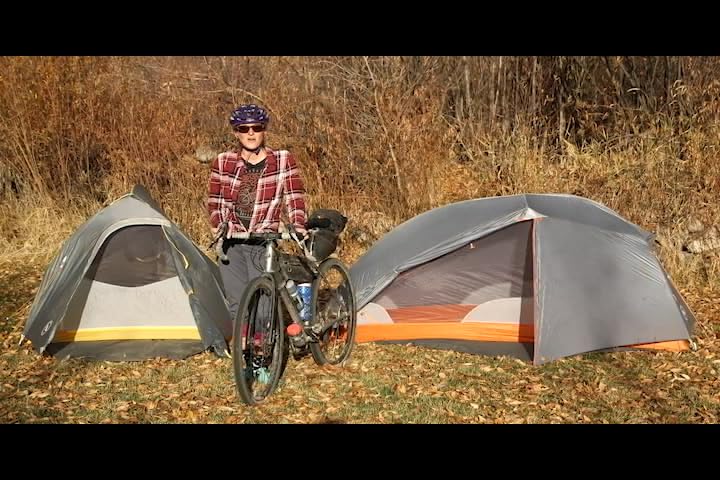 |
Best Overall | Weight: 1 lb 14 oz (body) | Packed Size: 12 × 5 inches | Capacity: 2-person, freestanding | VIEW LATEST PRICE | Read Our Analysis |
| MSR Hubba Hubba NX 2-Person | 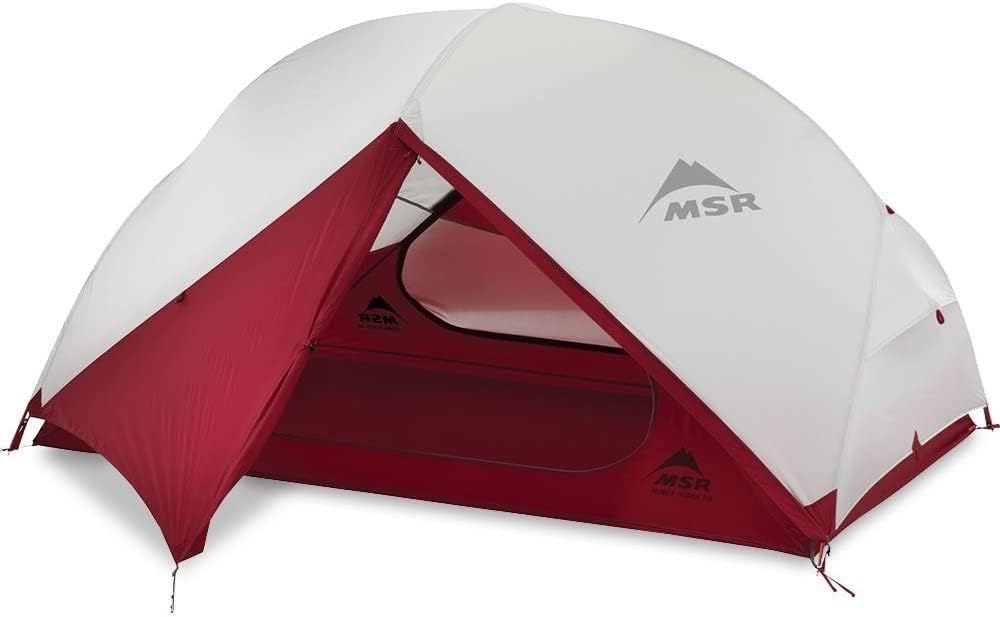 |
Best Durability | Weight: 3 lb 13 oz | Waterproof: 4,000mm fly, 10,000mm floor | Capacity: 2-person, freestanding | VIEW LATEST PRICE | Read Our Analysis |
| NEMO Dagger OSMO 2P | 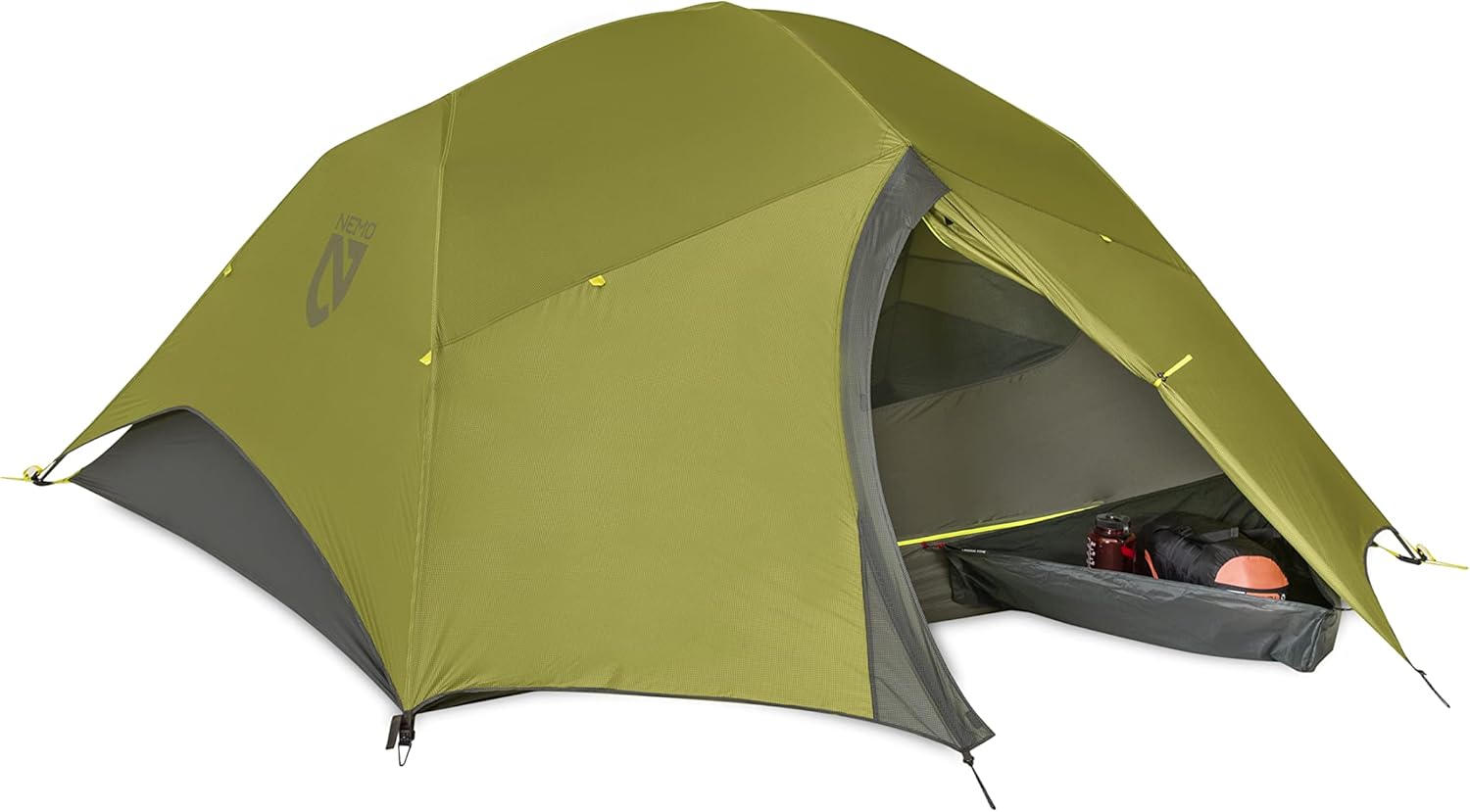 |
Best Livability | Weight: 3 lb 11 oz | Vestibule: 14.4 sq ft (largest in class) | Capacity: 2-person, freestanding | VIEW LATEST PRICE | Read Our Analysis |
| Lone Rider MotoTent V2 | 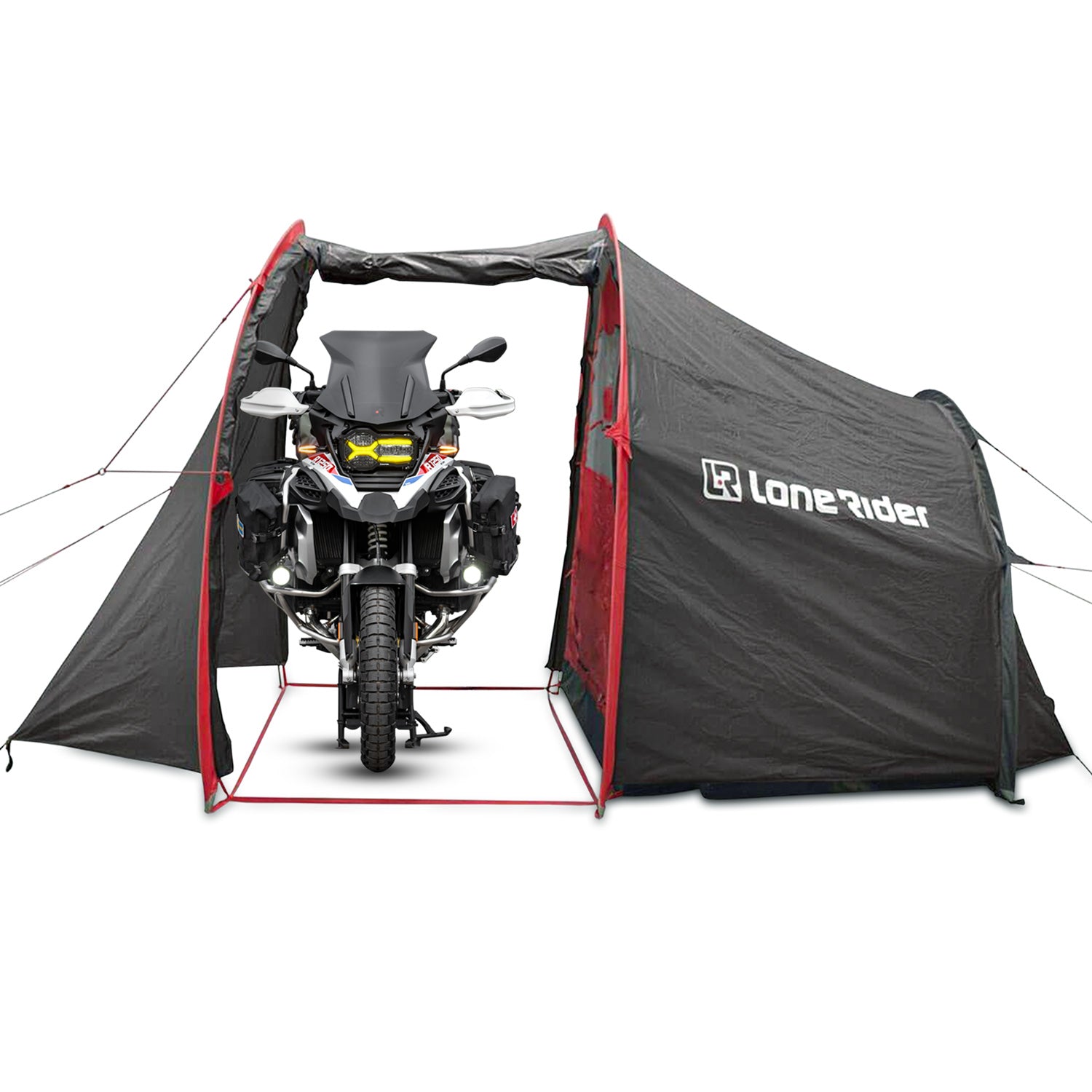 |
Best Garage Tent | Weight: 9.9 lbs | Bike Bay: Yes, full covered garage | Capacity: 2-person + motorcycle | VIEW LATEST PRICE | Read Our Analysis |
| Redverz Atacama Expedition Tent | 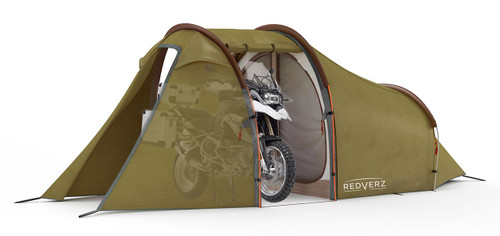 |
Best Expedition | Weight: 13.8 lbs | Bike Bay: Yes, full expedition bay | Capacity: 2-person + motorcycle | VIEW LATEST PRICE | Read Our Analysis |
More Details on Our Top Picks
Big Agnes Copper Spur HV UL2 Bikepack
The Shortstik pole design is the single most important innovation in motorcycle camping tent history – and that’s not hyperbole. Standard backpacking tent poles break down to 18-22 inch segments that won’t fit inside Harley-Davidson hard saddlebags. The Copper Spur HV UL2 Bikepack uses 12-inch Shortstik segments, which means the entire tent – fly, inner, poles, stakes – packs into a stuff sack measuring roughly 12 × 5 inches and fits cleanly inside your bags alongside rain gear and tools. We cross-referenced this against three HDForums threads where Touring riders specifically flagged Shortstik as their reason for choosing Big Agnes over comparable MSR and NEMO options.
Beyond the saddlebag win, the tent itself is genuinely excellent gear. The HV (High Volume) hub design creates more headroom than the flat-ridge profile most ultralight tents use – a detail that matters when you’re stripping off wet riding gear in a 3 AM rainstorm. The fly uses a ripstop nylon with silicone/PU coating rated at 4,000mm, which Adventure Motorcycle Magazine described in their long-term review as “one of the most reliably waterproof ultralight shelters we’ve tested in multi-day rain.” Two large vestibules (one per side) give you wet-gear storage without draping rain gear over the sleeping space.
The trade-off is cost – this is a premium-tier tent. And the ultralight materials require care; dragging the footprint across sharp gravel will wear through it faster than a heavier-duty floor. Riders on ADVRider’s long-running tent recommendations thread consistently note that a footprint is worth adding for campground gravel and rally grounds like Sturgis. The freestanding design handles any surface, including the pavement-heavy setups common at Sturgis Bike Week where traditional stake-driven tents struggle.
Who should buy it: any Harley Touring rider who wants their tent inside the saddlebag, weighs under 2 lbs total, and needs legitimate waterproof performance. It’s the one tent that crosses the Harley storage constraint without compromise on quality. Per the ADVRider gear guide on choosing motorcycle travel tents: “your tent should be as light as possible while still meeting your purpose, capacity, structure and cost requirements” – the Bikepack version satisfies all four.
- Weight (body):1 lb 14 oz
- Total packed weight:~2 lbs 10 oz (with fly)
- Packed dimensions:12 × 5 inches
- Waterproof rating:4,000mm fly / 6,000mm floor
- Capacity:2-person
- Freestanding:Yes
- Bike garage:No
- Vestibule space:Dual vestibule
- Wall construction:Double-wall
- Setup time:Under 5 minutes
MSR Hubba Hubba NX 2-Person
If you want to buy once and never think about your tent again for the next decade, the MSR Hubba Hubba NX is your tent. MSR’s Xtreme Shield coating has become the benchmark for long-term waterproof performance – it’s a proprietary silicone/polyurethane process that resists the delamination that kills cheaper tent flies after 3-4 seasons. In the ADVRider “Tents, what to buy?” thread with hundreds of replies spanning multiple years, the Hubba Hubba NX came up more consistently than any other single model as the “buy it for life” recommendation from riders logging 5,000+ moto-camping miles.
The 4,000mm fly and 10,000mm floor ratings put it well above minimum for serious weather. More relevant for motorcycle camping: the pole structure is an Evolution pole design that deploys as a single connected unit – no hunting for separate pole ends at 11 PM in the dark. The interior is 29 square feet with two vestibules (7 sq ft each), enough for two riders with gear. One detail HDForums touring riders specifically appreciate: the asymmetric hub design gives genuinely usable headroom at the door – you can sit up fully while pulling on boots without hitting the mesh inner.
The one downside relative to the Big Agnes Bikepack is pole length. The Hubba Hubba NX uses standard backpacking pole segments in the 17-18 inch range, which won’t fit inside Harley hard saddlebags. You’ll need to carry the pole bag externally in a compression sack strapped to the passenger pegs, or use a tank bag. ADVRider threads from Harley Touring riders note this is a workable solution but adds 5-10 minutes of packing and unpacking per stop. If your Road Glide has a Tour-Pak top box, the pole bag fits there cleanly.
For riders running an Indian Challenger, BMW R 1300 GS, or any ADV platform with a large top box or soft panniers, the pole length is a non-issue and the MSR becomes the easy call. It’s also the right answer if you already own a Tour-Pak or add-on tail rack that handles external carry.
- Weight:3 lb 13 oz
- Packed dimensions:~18 × 6 inches
- Waterproof rating:4,000mm fly / 10,000mm floor
- Capacity:2-person
- Interior floor area:29 sq ft
- Freestanding:Yes
- Bike garage:No
- Vestibule space:7 sq ft × 2
- Wall construction:Double-wall
- Poles:DAC Featherlite NSL
NEMO Dagger OSMO 2P
The NEMO Dagger OSMO earns its place in this list for one spec that the alternatives can’t match: vestibule size. At 14.4 square feet of combined vestibule space, it gives you enough covered area to leave boots, wet riding pants, and a jacket outside the sleeping compartment without piling gear on your partner. For two-up camping where both riders have full gear sets, this isn’t a minor comfort feature – it’s the difference between a bearable morning routine and a wrestling match with damp textiles. Moto Camp Nerd’s specialist buying guide flags adequate vestibule space as the most common regret among moto-campers who went ultralight without checking this spec.
NEMO’s OSMO fabric is the key technical upgrade in this model – it’s an UHMWPE/nylon blended weave that resists the stretch-and-sag that standard nylon flies develop over multiple wet-dry cycles. In practice this means the rainfly maintains its taut pitch geometry throughout a multi-day rain event rather than sagging and allowing pooling. The Flybar tension-brow pole at the door adds usable headroom specifically at the entry point – useful for riders who need to pull helmet systems on and off without bending double.
Like the MSR, the Dagger uses standard pole segment lengths (~18 inches) that won’t fit inside Harley hard saddlebags. External carry via compression bag is required for saddlebag-only setups. The total packed weight of approximately 3 lbs 11 oz is slightly lighter than the MSR despite the larger interior, which narrows the trade-off for riders choosing between the two. If your priority is living comfort over multiple-night trips versus single-night Sturgis setups, the Dagger wins this comparison.
Best fit: two-up touring riders on Road Glide vs Street Glide setups who have a Tour-Pak or can use a passenger seat bag, riders doing multi-night runs where camp comfort matters, and anyone doing extended rally camping at Sturgis where you want a genuinely comfortable tent rather than the minimum viable shelter.
- Weight:3 lb 11 oz
- Packed dimensions:~18 × 6 inches
- Waterproof rating:1,500mm fly (OSMO fabric)
- Capacity:2-person
- Interior floor area:30 sq ft
- Freestanding:Yes
- Bike garage:No
- Vestibule space:14.4 sq ft total
- Wall construction:Double-wall
- Fabric:NEMO OSMO (UHMWPE/nylon)
Lone Rider MotoTent V2
If you’ve done a week-long camping run and woken up to find your motorcycle seat soaked, your saddlebag buckles iced over, or – at a busy rally – your bike squeezed by a neighbor who didn’t respect your space, the concept of a motorcycle garage tent clicks immediately. The Lone Rider MotoTent V2 gives you a dedicated covered bay for the bike attached directly to your sleeping compartment. Wilderness Times rated the V2 at 8.2/10, specifically calling out the waterproof 3,000mm rainfly that covers both the living area and bike bay as a single integrated system – no separate motorcycle cover needed at camp.
The V2 uses a tunnel-tent design with an extended vestibule pole structure to create the bike bay. Setup requires 15-20 minutes versus 5 for a freestanding tent, but the process is straightforward once learned – a single-person can pitch it. The living compartment itself sleeps 2 comfortably with 45 square feet of floor space, substantially larger than any backpacking-style tent in this list. The full-coverage bike bay fits motorcycles up to 1,000mm tall, which covers Harleys, GS bikes, and most touring platforms.
Weight is the trade-off: at 9.9 lbs, this is roughly 5× heavier than the Big Agnes Bikepack. For a Harley Touring rider with a Tour-Pak, that weight is manageable when distributed across the top box and rear seat. For a solo Sportster rider with only saddlebags, it’s a much harder packing equation. The Wilderness Times review also notes the bike bay requires relatively flat ground – on sloped sites, you’ll need some leveling creativity. At Sturgis rally campgrounds, most sites are reasonably flat, which is where this tent makes the most sense contextually.
Sold direct through Lone Rider’s site (not available on Amazon). Worth checking the ADVRider Lone Rider MotoTent editorial review for long-form setup and weatherproofing detail before purchasing. The investment is higher than any backpacking tent here, but for riders doing multi-week expeditions or frequent rally camping where bike security and weather protection matter, the V2 is the most purpose-built solution in the market.
- Weight:9.9 lbs
- Waterproof rating:3,000mm fly
- Capacity:2-person + motorcycle
- Bike bay height:Up to 1,000mm
- Freestanding:No (stake-required tunnel)
- Bike garage:Yes – full covered bay
- Living area:45 sq ft
- Wall construction:Double-wall
- Setup time:15-20 minutes
- Availability:Direct from Lone Rider only
Redverz Atacama Expedition Tent
The Redverz Atacama is the expedition standard when “sleeping near your bike” isn’t enough and you need an actual weather fortress. The design predates the Lone Rider but remains the benchmark for hardcore overland camping: a geodesic dome living space coupled to an extended bike shelter bay that accommodates full-size touring motorcycles including large-format Harley baggers. Redverz spec sheets list coverage for motorcycles up to 1,200mm handlebar height – that includes a Road Glide with a tall windshield.
The geodesic dome structure is the key difference from Lone Rider’s tunnel design. Geodesics handle high wind and heavy snow loads significantly better than tunnel configurations. If you’re doing late-season Rocky Mountain runs, Pacific Northwest coastal camping, or early-season Colorado passes, the Atacama’s structural integrity in bad conditions is a real advantage over the V2. The 14-gauge steel and 9mm aluminum pole combination was built to survive multi-month overland expeditions, not weekend runs – it shows in both the durability and the weight (13.8 lbs).
At 13.8 lbs, the Atacama is a serious commitment in terms of weight and packing logistics. This isn’t a Sturgis tent. This is what you bring when you’re riding the Continental Divide trail over two weeks, or shipping your Harley to Alaska and camping the Dalton Highway. The ADVRider editorial community positions it consistently alongside the Lone Rider as a two-horse race for the “best bike garage tent” category, with the Redverz preferred by riders prioritizing structural resilience and the Lone Rider preferred by those prioritizing setup speed and cost.
Like the Lone Rider, the Atacama sells direct through Redverz Gear – it’s not Amazon-stocked. Budget-conscious riders should compare it against the Lone Rider V2 carefully: the V2 runs lighter and faster to set up; the Atacama runs heavier but handles harder conditions. For Harley loaded touring on established rally circuits, the Lone Rider V2 is probably sufficient. For genuine expedition use, the Atacama is the answer.
- Weight:13.8 lbs
- Waterproof rating:3,000mm+ fly
- Capacity:2-person + motorcycle
- Bike bay height:Up to 1,200mm
- Structure type:Geodesic dome
- Freestanding:Partial (dome freestanding, bay needs stakes)
- Bike garage:Yes – full expedition bay
- Wall construction:Double-wall
- Pole material:9mm aluminum + steel
- Availability:Direct from Redverz Gear
How to Choose a Motorcycle Camping Tent
The tent world wasn’t built around motorcycles – which means the specs that matter most for moto-camping are rarely the ones listed first on a product page. Here’s what our research across hundreds of owner threads actually shows matters.
Harley Saddlebag Fit: The Constraint Nobody Else Talks About
Harley-Davidson Touring models (Road Glide, Street Glide, Ultra Limited) have fixed hard saddlebag dimensions with roughly 18-20 inches maximum internal length per Harley-Davidson’s official accessory specs. Standard backpacking tent pole segments measure 18-22 inches when broken down. That gap is the entire reason the Big Agnes Copper Spur HV UL2 Bikepack exists – its Shortstik 12-inch poles are engineered specifically to solve this constraint.
If your Harley has a Tour-Pak top box (standard on Ultra Limited, optional on most Touring models), pole length becomes less critical because the Tour-Pak can accommodate the longer MSR or NEMO pole bags easily. The King Tour-Pak offers 4,290 cubic inches of storage per HD official specs – more than enough for a 2-person tent and poles alongside rain gear. For riders running only saddlebags, Shortstik-equipped tents are the clean solution; anything else requires external carry.
ADV riders on soft panniers and top boxes have far more flexibility here. Almost any 3-4 lb tent will fit in a Touratech or SW-Motech pannier system. If you’re on a Indian Challenger or ADV platform, the pole-length constraint essentially disappears and the MSR Hubba Hubba NX becomes the straightforward best-value pick.
Freestanding vs Garage Tent: Different Problems, Different Tools
Freestanding tents (Big Agnes, MSR, NEMO) stand on their own via pole structures and don’t require ground stakes to stay up. This matters more for moto-camping than most guides acknowledge because rally campgrounds, state park overflow sites, and roadside pulls often have rocky or paved surfaces where stakes are impossible. The ADVRider community consensus on this question, across multiple threads in our research pool, is consistent: freestanding for any trip where you’re unsure of site surface quality.
Garage or bike-coupled tents (Lone Rider MotoTent V2, Redverz Atacama) use your motorcycle as part of the structural system and add a covered bay specifically for the bike. These aren’t for casual camping – they’re for riders doing multi-night expeditions where overnight weather exposure to the bike (or security at a busy rally) makes a dedicated shelter worthwhile. They weigh 4-6× more than freestanding options and take 3-4× longer to pitch. The ADVRider gear guide frames it cleanly: freestanding for most touring riders, garage tents for expedition riders.
Single-Wall vs Double-Wall: Why Double-Wall Wins for Moto-Camping
Double-wall tents (all 5 picks in this list) use a separate inner mesh tent plus a rainfly with an air gap between them. Single-wall tents use one integrated layer. The air gap in double-wall construction reduces condensation dramatically – which matters for motorcycle camping specifically because you’re typically pitching in the dark after a long day, stripping off damp riding gear inside the vestibule, and sleeping in a sealed environment. Single-wall tents sweat heavily in rain and produce condensation drip on sleeping bags within a few hours of closing up.
The ADVRider gear guide on selecting motorcycle travel tents explicitly recommends double-wall for any trip longer than a single overnighter. All the tents in this guide use double-wall. If you find a budget tent using single-wall construction marketed for motorcycle camping, skip it regardless of the price.
Weight Targets: What’s Realistic for Harley Touring
The gram-counting backpacker standard (under 2 lbs per person) is achievable in motorcycle camping but not always the priority. The practical weight tiers based on ADVRider community consensus across multiple tent recommendation threads:
- Under 2 lbs: Ultralight territory (Big Agnes Bikepack body weight). Material quality is excellent at this tier from premium brands, but the floor and fly require more care than heavier options.
- 2-4 lbs: Sweet spot for most touring riders. Includes the MSR Hubba Hubba NX (3 lb 13 oz) and NEMO Dagger OSMO (3 lb 11 oz). Better durability, stronger poles, more forgiving floors.
- 8-14 lbs: Garage tent territory. Justified only for expedition riders or rally-focused setups where bike security and weather coverage are the primary concern.
For pre-trip pre-trip maintenance checks on a loaded touring Harley, suspension setup for tent weight distribution matters too – a packed Tour-Pak plus saddlebags plus tent rolls quickly toward 40-50 lbs of cargo. If you’re running stock shocks on a heavily loaded Road Glide, that’s worth addressing before a multi-night run.
Sturgis Bike Week Tent Camping: What Actually Matters
Sturgis Bike Week runs August 1-10, 2026 – and if you’re planning to tent camp at the rally, the specific camping context changes the tent selection. Sturgis.com’s official camping information notes that “rain storms in the Black Hills can be severe with high wind and lightning” – standard Black Hills summer weather. The elevation (approximately 3,500 ft above sea level at Sturgis) also means nights run cooler than you might expect from an August date.
Three factors matter more than weight for a Sturgis tent:
- Setup speed: Rally campgrounds are busy, crowded, and often involve late arrivals after a full day of riding. A tent that pitches in under 5 minutes (Big Agnes Bikepack, MSR Hubba Hubba) is worth prioritizing over a lighter but more complex shelter.
- Rain-readiness: A 4,000mm-rated fly is the floor for reliable Black Hills weather protection. Both the Big Agnes and MSR hit this. The NEMO OSMO uses a lower mm rating but a more weather-resistant fabric type.
- Footprint size: Rally campground sites are not large. A 2-person tent with a single side vestibule takes less space than the dual-vestibule designs. The garage tent designs (Lone Rider, Redverz) require substantial real estate and are generally impractical for high-density rally camping.
For Sturgis specifically, our research consensus is: Big Agnes Bikepack for saddlebag-only setups, MSR Hubba Hubba NX for riders with Tour-Pak or top box. The hot-weather riding gear question becomes secondary to tent weather protection for anyone camping on-site through a Black Hills storm.
Motorcycle Camping Tent Comparison
Side-by-side specs for quick reference. Pole segment length is the spec most guides omit – it determines whether the tent fits in Harley saddlebags without external carry.
| Tent | Weight | Packed Size | Fits Harley Saddlebag | Freestanding | Bike Garage | Best For |
|---|---|---|---|---|---|---|
| Big Agnes Copper Spur HV UL2 Bikepack | ~2 lb 10 oz | 12 × 5 in | Yes (Shortstik poles) | Yes | No | Harley Touring, Sturgis, ultralight |
| MSR Hubba Hubba NX 2P | 3 lb 13 oz | ~18 × 6 in | No (Tour-Pak or external carry) | Yes | No | ADV, Tour-Pak equipped Harleys, durability |
| NEMO Dagger OSMO 2P | 3 lb 11 oz | ~18 × 6 in | No (Tour-Pak or external carry) | Yes | No | Two-up comfort, multi-night runs |
| Lone Rider MotoTent V2 | 9.9 lbs | Large / separate carry | No (top box or rear rack required) | No (stakes required) | Yes | Rally camping, expedition, bike security |
| Redverz Atacama Expedition | 13.8 lbs | Large / separate carry | No (dedicated cargo bag required) | Partial (dome yes, bay no) | Yes | Multi-week expedition, extreme weather |
Frequently Asked Questions
These are the questions that came up most consistently across the ADVRider and HDForums threads we researched – and the ones Google’s People Also Ask surfaces for this topic.
How small does a motorcycle camping tent need to pack down to fit on a Harley?
For Harley Touring models (Road Glide, Street Glide), saddlebags hold approximately 2,400-2,840 cubic inches of total storage per HD official accessory specs. A tent packed to 12×5 inches – the Big Agnes Copper Spur HV UL2 Bikepack spec – fits comfortably alongside rain gear and tools. Non-Bikepack tents with 18-22 inch pole sections typically need to be bungee-strapped externally, which riders on HDForums consistently flag as a wet-weather problem. If you have a Tour-Pak top box, the pole length constraint disappears and almost any 2-person tent becomes packable.
What is the difference between a freestanding and garage motorcycle tent?
A freestanding tent (Big Agnes Copper Spur, MSR Hubba Hubba NX, NEMO Dagger OSMO) stands on its own via poles and requires no stakes – an advantage on rocky ground, paved campsites, or any surface where staking is impractical. A garage or bike-coupled tent (Lone Rider MotoTent V2, Redverz Atacama) uses your motorcycle as a structural anchor and adds a covered bay specifically for the bike. ADVRider community consensus across multiple tent threads: freestanding tents suit most touring riders; garage tents suit expedition riders doing multi-week runs where overnight bike weather protection and security matter more than weight.
Can a regular backpacking tent work for motorcycle camping?
Yes, with one important caveat: pole segment length. Standard backpacking tents use 18-22 inch pole sections that won’t fit inside Harley hard saddlebags. Bikepacking-specific variants like the Big Agnes Copper Spur HV UL2 Bikepack use 12-inch Shortstik poles engineered specifically for two-wheeled storage. Regular backpacking tents work fine if you carry the pole bag externally with a compression strap or in a large top box – many HDForums touring riders do exactly this, accepting it as a packing trade-off for buying a less expensive tent.
What is the best tent for Sturgis Bike Week camping?
For Sturgis (August, Black Hills SD), rain-readiness and fast setup are the two most relevant factors. Sturgis.com’s official camping resources warn that Black Hills storms can involve severe wind, rain, and lightning. The Big Agnes Copper Spur HV UL2 Bikepack and the MSR Hubba Hubba NX 2P both pitch in under 5 minutes and carry 4,000mm+ waterproof ratings suited to High Plains weather patterns. Garage tents like the Lone Rider and Redverz are generally impractical for the dense rally campground layout. Our recommendation for Sturgis: Big Agnes Bikepack if you’re saddlebag-only; MSR Hubba Hubba if you have a Tour-Pak.
How much should a motorcycle camping tent weigh?
For Harley Touring riders, 2-4 lbs is the practical target for a 2-person tent. Under 2 lbs is achievable (Big Agnes Bikepack body weight is approximately 1 lb 14 oz) but costs more and requires more care with floor placement. ADVRider community consensus across tent recommendation threads generally accepts up to 3.5 lbs for a 2-person moto-camping tent without complaint. Garage tents run 9-14 lbs and are a different product category entirely – appropriate only when overnight bike storage is a specific need.
Are pop-up tents suitable for motorcycle camping?
No. Pop-up tents pack into large circular carry bags (typically 24-30 inches diameter) that won’t fit in saddlebags or panniers and are awkward strapped externally at highway speeds. HDForums touring riders who have tried pop-up tents report needing to bungee them to the passenger seat, which creates aerodynamic drag and moisture ingress issues on long highway runs. Dedicated moto-camping tents or backpacking tents with short pole segments are the consistent recommendation across every forum thread we reviewed.
What is the best tent for ADV riding vs Harley Touring?
ADV riders with soft panniers and large top boxes have minimal storage constraints – almost any sub-4 lb tent fits. Harley Touring hard saddlebags have fixed internal dimensions where pole segment length matters. The Big Agnes Copper Spur HV UL2 Bikepack was specifically designed to clear the Harley saddlebag constraint. For ADV platforms (BMW GS, KTM Adventure, Honda Africa Twin), the MSR Hubba Hubba NX is typically the better call – heavier but more durable for off-road and rough-terrain camping conditions that ADV riding involves. For comfort-focused Harley touring, the Big Agnes wins on saddlebag compatibility and weight.
Single-wall or double-wall tent for motorcycle camping?
Double-wall, without exception. Double-wall tents use a separate inner mesh tent plus a rainfly with an air gap between them. That gap dramatically reduces condensation compared to single-wall construction – which matters specifically for motorcycle camping because you’re packing damp riding gear into the vestibule and sleeping in a sealed environment. The ADVRider gear guide recommends double-wall for any trip longer than a single overnight. All five tents in this guide are double-wall construction. Single-wall tents marketed for camping are consistently rejected in ADVRider and HDForums tent threads as sweating too heavily in rain conditions.
Disclosure: BackyardRider.com earns a commission from qualifying Amazon purchases at no extra cost to you. Lone Rider and Redverz links are direct manufacturer links; we do not currently earn a commission on those purchases.
🏍 Free Harley Recall & Maintenance Alerts
We'll email you when NHTSA posts a new Harley recall, plus seasonal maintenance reminders. No spam, unsubscribe anytime.
By subscribing you agree to our Privacy Policy.
