
Quick answer: The Harley-Davidson Road Glide years most worth avoiding are 2015-2016 (first Twin-Cooled generation with documented overheating and coolant system complaints) and 2017-2018 (Milwaukee-Eight launch years with oil sumping, oil cooler line recall 17V333000, and clutch master cylinder recall 18V734000). The Road Glide was also discontinued in 2014 – only the Road Glide Ultra (FLTRU) continued that year, making pure FLTRX examples from 2014 extremely rare. The strongest used buys are 2009-2013 (refined Twin Cam 96/103, proven reliability) and 2020 and newer (mature Milwaukee-Eight, oil pump redesigned, recalls resolved).
The Harley-Davidson Road Glide occupies a unique place in the Touring lineup. Its defining feature – a frame-mounted shark-nose fairing that does not turn with the handlebars – gives it a different feel and a loyal following that separates it from the Street Glide and Ultra Limited. That distinction is worth understanding up front: this guide covers Road Glide models only (FLTRX, FLTRXS, FLTRU, and FLTRUSE), not the Street Glide or Road King. The fairing mounting architecture is entirely different.
Our research team cross-referenced NHTSA recall campaigns, HD Technical Service Bulletins filed with NHTSA (including TSB M1450 and TT466 on M8 oil sumping), analyzed the 2019 Touring M8 Service Manual (3,473 pages, HD part no. 94000688), and reviewed owner threads across HDForums and roadglide.org spanning 2005 through 2026. Here is the year-by-year breakdown of what the data actually shows.
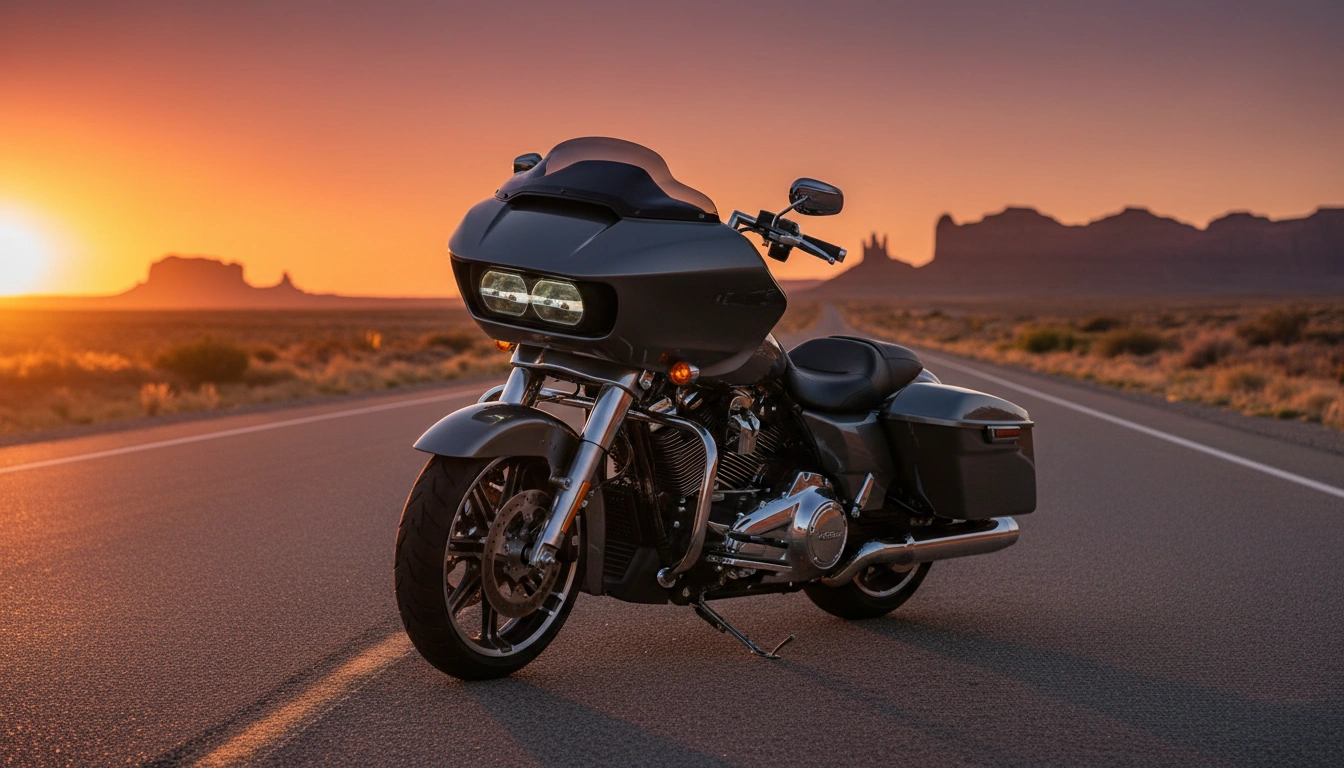
Road Glide Engine Eras and the 2014 Gap
Understanding the Road Glide’s used-market reliability starts with knowing its production history – including the year it essentially disappeared from the lineup.
| Years | Model | Engine | Displacement | Verdict |
|---|---|---|---|---|
| 2001-2013 | FLTRSEI/FLTRSE/FLTRX | Twin Cam 88/96/103 | 88-103 cu in | 2001-2007 Avoid early units; 2009-2013 solid value |
| 2014 | FLTRU only (Ultra) | Twin Cam 103 | 103 cu in (1690cc) | FLTRX discontinued – Ultra only, rare |
| 2015-2016 | FLTRX, FLTRU | Twin-Cooled 103 | 103 cu in (1690cc) | Caution – first Twin-Cooled gen, heat issues |
| 2017-2018 | FLTRX, FLTRXS, FLTRU | Milwaukee-Eight 107/114 | 107/114 cu in | Avoid early units – oil pump + recalls |
| 2019 | FLTRX, FLTRXS, FLTRU | Milwaukee-Eight 107/114 | 107/114 cu in | Caution – verify oil pump update, recalls resolved |
| 2020+ | FLTRX, FLTRXS, FLTRU | Milwaukee-Eight 107/114/117 | 107-117 cu in | Best years to buy – mature platform |
2001-2008 Twin Cam Road Glide – The Early Problems
The Road Glide entered the Twin Cam era in 1999-2000 (FLTRSEI CVO editions) and was refreshed as the FLTRX in 2001. These early years share the same cam drive weaknesses documented across the Twin Cam lineup.
Cam Chain Tensioner Failures (2001-2008)
The Twin Cam 88/96 uses two cam chains with spring-loaded plastic shoe tensioners. On 2001-2008 Road Glides, those shoes wear at a rate that the design did not fully anticipate. Per the HD Service Manual for 2009 Touring models (Section 3, Cam Support Plate), Harley specifies replacing tensioner shoes when the contact face wears below 0.060 inches (1.52 mm). Multiple owner threads on HDForums document shoes worn completely through on 2001-2007 engines between 30,000 and 50,000 miles – sometimes earlier on bikes ridden hard in summer heat.
Symptoms: metallic rattle on cold start (first 20-30 seconds), ticking that fades with oil pressure build-up, occasional cam timing irregularities if ignored. A 2005 FLTRX owner on HDForums (forum post thread #1389) reported complete shoe failure at 44,000 miles, requiring full cam chest disassembly. Updated tensioner shoes and Feuling cam plate upgrades are well-documented fixes – but verify history before buying.
Compensator Clunking (2001-2013)
The primary compensator – the spring-loaded shock absorber between the engine sprocket and primary chain – produces a loud clunk on deceleration and at very low rpm on 2001-2011 examples. This is particularly common on 2001-2006 models. The clunk comes from worn spring tension in the compensator body. Harley revised the design multiple times, with a significant update arriving in 2012. Cost to resolve: $400-700 in parts plus labor, or an aftermarket solid compensator sprocket that eliminates the spring mechanism entirely.
2007-2008 Six-Speed Cruise Drive First-Year Issues
When Harley introduced the 96ci engine and new 6-speed Cruise Drive transmission in 2007, the Road Glide shared the same early-production transmission issues seen across the Touring lineup. First-year Cruise Drive units had documented false neutral tendencies between 5th and 6th gear under hard acceleration. Dealers issued updates, and most surviving 2007 Road Glides have been through the relevant service by now – but verify with the seller that the transmission shifts cleanly through all six gears.
A 2001-2008 Road Glide with documented cam tensioner replacement and a clean compensator is a different risk profile than one with 60,000 miles and zero service records. Our guide to Harley Twin Cam years to avoid covers this era in full detail across all model families. For the Road King buyer specifically, our Road King years to avoid guide covers the FLHR platform with the same year-by-year structure.
2009-2013 Twin Cam 96/103 – The Sweet Spot for Used Buyers
This is the Road Glide era that generates the least controversy in owner forums and the best value-to-reliability ratio on today’s used market.
By 2009, Harley had addressed the worst of the Cruise Drive transmission issues and had updated tensioner designs were widely available. The 2009-2011 FLTRX runs the 96ci engine; 2012-2013 models moved to the 103ci (1690cc) with a more generous torque curve. Both are well-understood by every Harley dealer and independent shop in the country.
2012-2013 improvements: The upgraded compensator design (introduced in 2012) reduced the clunking complaints significantly. The 103ci engine added approximately 11% more displacement without changing the fundamental cam drive architecture – the tensioner design was proven by this point. For buyers on a $8,000-12,000 budget, a 2012-2013 FLTRX with documented service history is one of the most cost-effective entries into the Road Glide lineup.
What to inspect on 2009-2013 examples: Stator and charging system output (older Touring models are known stator wear items), cam tensioner documentation, any evidence of coolant leaks (pre-2015 Road Glides are air-cooled only, so coolant leaks are not applicable – look for oil seeping from the cam chest or primary instead), and Boom Box infotainment responsiveness on 2013 models.
For suspension work on any used Road Glide, our guide to the best Harley Touring shocks covers the full aftermarket upgrade path for the 2009-2016 platform.
2014 – The Year the Road Glide Essentially Disappeared
In 2014, Harley overhauled the Touring lineup with a revised frame, new suspension geometry, and the “Project Rushmore” features package (larger infotainment screen, improved wind protection, better footboard placement). For most Touring models this was an upgrade year – but the standard Road Glide (FLTRX) did not carry over.
2014 Road Glide production: Harley continued only the Road Glide Ultra (FLTRU) for 2014. The standard FLTRX was not produced that year. If you find a seller advertising a “2014 Road Glide” that is not a Road Glide Ultra, verify the VIN and title carefully – it may be a 2013 that has been dated wrong, or a fraudulent listing. Legitimate 2014 FLTRU examples exist and are solid bikes (same Twin Cam 103 as 2013), but they are less common than other years.
The 2014 clutch recall: The 2014 Touring refresh introduced a hydraulic clutch system on some models. NHTSA campaign records show clutch-related investigations for 2014-2016 Touring models – owners should run their specific VIN at our Harley VIN Decoder + Recall Lookup to confirm any open or completed campaigns.
2015-2016 Twin-Cooled 103 – The Overheating Era to Watch
The Road Glide returned in 2015 with a significant new feature: liquid-cooled cylinder heads on the 103ci engine. Harley called the system “Twin-Cooled” – small radiators mounted inside the lower fairing circulated coolant through the cylinder heads while the cylinders themselves remained air-cooled. The goal was to reduce heat rejection to the rider in stop-and-go traffic.
First-Generation Twin-Cooled System Complaints
Per the 2019 Touring M8 Service Manual (HD part no. 94000688, Chapter 7 – Cooling System), the Twin-Cooled system on 2015-2016 models uses coolant hoses routed through the lower fairing to cylinder head port fittings. The system holds approximately 0.8 qt (0.76 L) of coolant. Owner feedback in 2015-2016 HDForums threads and roadglide.org discussion boards documents two recurring complaints from this first generation: coolant line connection leaks at the head fittings (reportedly worsened by vibration-induced fatigue on early hose clamp designs), and inconsistent cooling effectiveness in sustained stop-and-go traffic where the electric coolant pump struggled to maintain adequate flow.
Multiple 2015-2016 Road Glide owners on roadglide.org reported the “Twin-Cooled temp light” illuminating during slow freeway traffic in hot climates, even after dealer coolant system flushes. A recurring thread titled “TC overheat on 2015 FLTRX – not just me” (roadglide.org, 2015) had 47 replies documenting the same coolant system complaint pattern across multiple states.
ABS Module Software (2014-2016)
The 2014-2016 Touring lineup, including ABS-equipped Road Glides, had an ABS module software recall affecting certain configurations. Owners of 2015-2016 FLTRX models with ABS should verify via our Harley VIN Decoder + Recall Lookup (enter the full 17-character VIN) that any relevant software update was performed at a Harley dealer.
Boom Box Infotainment Reliability
The 2015-2016 Road Glide ran the Boom Box 6.5GT infotainment system – a touchscreen unit that owners found susceptible to moisture infiltration and glitchy GPS software. Instrument cluster failure after rain exposure was documented in multiple NHTSA complaint filings for 2015 FLTRUSE models (ODI #10913674 and ODI #10899296, both citing instrument cluster failure triggered by moisture). While these were filed on the Ultra variant, the infotainment hardware was shared across the lineup. Verify that any touchscreen on a used 2015-2016 responds consistently and check for water damage around the fairing seals.
The Twin-Cooled system itself is not fundamentally flawed – it works as designed when properly maintained. But first-generation examples need a coolant system inspection before purchase: check hose integrity, look for coolant staining around head fittings, and confirm the coolant was replaced within the recommended 30,000-mile interval per the maintenance schedule in the 2019 Touring SM (coolant replacement every 30,000 mi / 48,000 km).
2017-2019 Milwaukee-Eight Road Glide – Real Issues, Clear Fix Path
The Milwaukee-Eight – Harley’s eighth-generation Big Twin, introduced in 2017 – was the most significant engine redesign in 15 years. The Road Glide FLTRX got it in 2017, alongside the FLTRXS Special and the FLTRU Ultra. With 107 cubic inches (1,753cc) as standard displacement and 114ci (1,868cc) available on Special and Ultra trims, the M8 represented a genuine power upgrade over the Twin Cam 103.
Per the HD Service Manual (2019 Touring M8, p. 4-3): the Milwaukee-Eight is a pressurized dry-sump engine with a twin gerotor, dual-scavenge oil pump that is crankshaft-mounted and driven. The specification table describes it as: “Twin gerotor, dual scavenge, crank mounted and driven, internal oil pump, dry sump.” Engine oil service capacity with filter is 4.8 qt (4.5 L) for a standard oil change on the M8 107 Touring models.
Oil Sumping – The Core 2017-Early 2019 Problem
Sumping – formally “wet sumping” – occurs when oil migrates from the external oil reservoir into the engine crankcase while the bike sits. The M8 is designed as a dry-sump engine: oil lives in an external tank, not in the crankcase. When the scavenge side of the pump cannot return oil fast enough, the crankcase overfills.
Per HD Technical Tip TT466 (filed with NHTSA, dated 2019-08-20), the root cause on 2017-2019 engines was the original scavenge gerotor design. The early pump used a 10-lobe scavenge gerotor; Harley’s engineers determined it did not remove oil from the cam and flywheel compartments quickly enough under sustained load. The redesigned 2020 pump uses an 8-lobe gerotor – counterintuitively, fewer lobes increase displacement per revolution, improving scavenge volume. HD also filed TSB M1450 documenting the oil pump production change and corrective procedure.
Per the HD Service Manual (2018 Softail SM 94000529): “Early and late production oil pump components are not interchangeable.” The two production runs have different oil pressure relief valve designs – early units use a spring-piston-roll-pin assembly; late units use a revised configuration.
Road Glide owners on roadglide.org and the HDForums Milwaukee-Eight Engine subforum documented the sumping pattern consistently from 2017: blue smoke on first start after a week of sitting, oil weeping from the air cleaner, and dipstick level dropping then “returning” as the scavenge pump cleared the crankcase. Our dedicated Milwaukee-8 oil sumping guide covers the full diagnostic and fix path. For Road Glide buyers: ask specifically about oil pump update history and look for evidence of the fix (updated pump install date in service records, or Feuling HP+ aftermarket oiling system).
NHTSA Recall 17V333000 – Oil Cooler Line Clamp
NHTSA recall campaign 17V333000 covers 2017 Harley-Davidson Touring models (including FLTRX Road Glide) for a defective oil cooler hose clamp. The concern: if the oil cooler hose fitting loosens at highway speed, it can deposit hot engine oil on the rear tire – a high-severity safety event. Harley issued a remedy involving replacement oil line clamps. Verify your specific VIN at our Harley VIN Decoder + Recall Lookup to confirm this recall was completed before buying any 2017 Road Glide.
NHTSA Recall 18V734000 – Clutch Master Cylinder
NHTSA recall 18V734000 covers 2017-2018 Harley-Davidson Touring and Softail models for a clutch master cylinder defect where the internal seal could fail, causing loss of hydraulic clutch function. This affects FLTRX, FLTRXS, and FLTRU Road Glide models from those years. Remedy: dealer replacement of the clutch master cylinder assembly. Again, VIN-specific verification at our Harley VIN Decoder + Recall Lookup is mandatory for any 2017-2018 purchase.
2018: The clutch master cylinder recall (18V734000) covers 2018 models. The oil pump production split existed in early 2018 production runs – some 2018 Road Glides shipped with the updated pump, some did not. Ask the seller for service records showing pump inspection or replacement.
2019: The updated oil pump (8-lobe gerotor) was standard from the 2020 model year, but many late-2019 production units already incorporated it. No engine-wide Touring recalls were found for 2019 on NHTSA records. A 2019 FLTRX with verified 18V734000 remedy and clean service history is a reasonable purchase – but still inspect for the sumping symptoms described above.
Related reading: our Milwaukee-8 years to avoid guide covers the full M8 production run across all models, not just Road Glide.
2020 and Newer – The Best Road Glides to Buy Used
The 2020 model year marks the clear inflection point where the Milwaukee-Eight Road Glide became a genuinely mature platform. Three things changed for 2020 that matter to used buyers:
- Oil pump redesign finalized: The 8-lobe scavenge gerotor became standard across 2020+ production. The systematic sumping complaint largely disappears from forum threads for 2020 and newer Road Glides.
- Major recalls resolved: 17V333000 and 18V734000 remedies had been completed on the vast majority of affected bikes by 2020. Buying a 2020+ avoids the need to verify these campaigns.
- M8 114 availability improved: The FLTRXS Road Glide Special got the 114ci engine standard from 2019 onward, and by 2020 the 114 was well-established in the lineup. Per the 2019 Touring M8 Service Manual (Table 4-2), the M8 114 specs: 4.016 in bore, 4.500 in stroke, 10.5:1 compression ratio, pressurized dry-sump lubrication with oil cooler, 950 rpm hot idle.
The 2022-2023 Road Glide Special is the current performance benchmark in the non-CVO Road Glide lineup. It runs the M8 114 with the Boom Box GTS infotainment (upgraded from the earlier 6.5GT), improved Reflex Linked Brakes with ABS, and Milwaukee-Eight-era engine management. Owner threads on roadglide.org from 2022-2023 show dramatically fewer mechanical complaints compared to 2017-2019 equivalents.
Price reality in 2026: A 2020 FLTRX in good condition will typically run $18,000-23,000 used depending on mileage. A 2022-2023 FLTRXS Special runs $24,000-28,000. These are substantially more than a 2013 Twin Cam ($8,000-11,000), so decide whether you want to optimize for budget (2009-2013 era) or reliability (2020+).
NHTSA Recall Summary – Road Glide (FLTRX/FLTRU) Key Campaigns
Always verify your specific VIN at our Harley VIN Decoder + Recall Lookup before purchasing any used Road Glide. Campaign status (“open” vs. “completed”) is VIN-specific. An “open” recall can typically be resolved at any Harley dealer at no cost to the owner even after private purchase.
| Campaign Number | Model Year(s) | Issue | Severity |
|---|---|---|---|
| 17V333000 | 2017 Touring (FLTRX, FLTRU) | Oil cooler hose clamp – potential oil spray onto rear tire | High – safety |
| 18V734000 | 2017-2018 Touring and Softail | Clutch master cylinder seal failure – loss of hydraulic clutch | High – safety |
| Various (2014-2016) | 2014-2016 Touring (ABS models) | ABS module software update – braking behavior in certain conditions | Medium |
| Various (2015-2016) | 2015-2016 Touring (Twin-Cooled) | Clutch master cylinder – potential loss of clutch function | High – safety |
| 22V781000 | 2020+ (various) | Brake light switch – lights may not illuminate | Medium – unrelated to engine |
Road Glide Pre-Purchase Inspection Checklist
Before committing to any used Road Glide, these are the specific checks our research found matter most by era.
- Run the VIN at our Harley VIN Decoder + Recall Lookup – confirm 17V333000 and 18V734000 completed on any 2017-2018
- Cold-start test after overnight sit – watch for blue smoke on 2017-2019 M8 models (sumping indicator)
- Check the air cleaner – oil residue on filter = active sumping (2017-2019 M8)
- Coolant system inspection on 2015-2016 – look for staining around head fittings, check hose integrity
- Cam tensioner history on 2001-2011 – ask specifically; budget $600-900 for service if undocumented
- Compensator noise test – listen for clunking on deceleration (2001-2013)
- Touchscreen functionality on 2015-2019 – test GPS, radio, cruise control integration
- Full gear shift test – all six gears cleanly on 2007-2008 Cruise Drive
- Charging system check – stator output test on any pre-2017 with over 50,000 miles
- Frame-mounted fairing check – the fairing should NOT rotate with the bars. If it does, it’s a Street Glide or non-original fairing swap
Affiliate Resources for Road Glide Owners
If you’re buying or maintaining a Road Glide, these are the most commonly needed upgrade categories based on forum research.
Road Glide Windshields
The stock Road Glide windshield fits the frame-mounted fairing – a different mount pattern than Street Glide. Our full guide covers the top replacement options by riding style: best windshield for Road Glide. For aftermarket shopping, J&P Cycles carries the widest Road Glide-specific windshield selection.
Shop Road Glide WindshieldsTouring Shocks for Road Glide
The 2009-2016 Road Glide runs the same rear shock mount as the Road King and Street Glide – most Touring-spec shocks are cross-compatible. Our guide to best Harley Touring shocks covers the Ohlins, Progressive, and Fox options for the FLTRX platform.
Shop Touring ShocksBrake Pads for Road Glide Touring
Road Glide brake pad replacement is shared with the Touring family. EBC, SBS, and Galfer pads all list FLTRX compatibility. Our guide to best brake pads for Harley Davidson Touring covers the sintered vs. organic choice with service manual torque specs.
Shop Touring Brake PadsRoad Glide vs. Street Glide – Does Model Choice Affect Reliability?
Both models share the same engine family, same transmission, and same basic Touring platform. The reliability differences between a Road Glide and Street Glide of the same year are minimal from a powertrain standpoint. The fairing architecture introduces one Road Glide-specific wear item worth knowing: the frame-mounted fairing uses a different steering head damper setup, and the headlight/instrument nacelle on older Road Glides can develop rattles from vibration. Our comparison of Road Glide vs. Street Glide covers both models side by side for buyers still deciding between the two.
What Are the Best Road Glide Years to Buy Used?
Based on our research, here is the simplified buying guide by budget tier.
| Budget Range | Best Option | Why |
|---|---|---|
| $7,000-10,000 | 2009-2011 FLTRX (TC96) | Proven engine, 6-speed sorted by then, widely serviced |
| $9,000-13,000 | 2012-2013 FLTRX (TC103) | Better compensator, more torque, pre-Twin-Cooled simplicity |
| $13,000-18,000 | 2019 FLTRX or FLTRXS (M8 107/114) | M8 power with recalls resolved; verify oil pump status |
| $18,000-24,000 | 2020-2022 FLTRX or FLTRXS | Mature M8, no sumping concerns, best tech |
| $24,000+ | 2022-2023 FLTRXS Special (M8 114) | Current-gen performance, Boom Box GTS, full warranty history |
Years to avoid outright: 2015-2016 unless the coolant system has been inspected and the ABS software updated, and 2017 and early-2018 unless both NHTSA recalls (17V333000 and 18V734000) are confirmed completed and the oil pump has been inspected or updated. The 2014 FLTRX technically did not exist in standard form – only the FLTRU Ultra continued that year.
Frequently Asked Questions – Road Glide Years to Avoid
What year Road Glide should I avoid?
The years with the most documented owner complaints are 2015-2016 (first-generation Twin-Cooled overheating and coolant system issues) and 2017-2018 (Milwaukee-Eight oil sumping, plus two significant NHTSA recalls: 17V333000 for oil cooler hose and 18V734000 for clutch master cylinder). The 2014 model year is an anomaly – the standard Road Glide (FLTRX) was not produced; only the Road Glide Ultra (FLTRU) continued that year.
What is the best year Road Glide to buy used?
For budget buyers, 2012-2013 FLTRX models (Twin Cam 103, updated compensator, pre-Twin-Cooled) represent the best value under $12,000. For buyers willing to spend more, 2020 and newer Road Glides are the safest buy: the Milwaukee-Eight oil pump was redesigned for 2020, major recalls are resolved, and the platform is fully mature.
Did Harley Road Glide have major recalls?
Yes. Two significant NHTSA recalls affect 2017-2018 Road Glides: campaign 17V333000 (oil cooler hose clamp – potential oil on rear tire) and 18V734000 (clutch master cylinder seal failure). ABS software updates affected 2014-2016 Touring models with ABS. Always run the VIN at our Harley VIN Decoder + Recall Lookup before buying used.
Does the Milwaukee-Eight Road Glide have oil sumping problems?
On 2017-early 2019 production, yes. The original scavenge gerotor design (10-lobe) did not remove oil from the crankcase efficiently enough under sustained load. HD documented this in TSB M1450 and Technical Tip TT466 and changed to an 8-lobe gerotor for improved scavenge volume. Symptoms include blue smoke on cold start after extended storage and oil residue in the air cleaner. Our dedicated guide covers Milwaukee-8 oil sumping in full detail.
Is the Road Glide discontinued?
The standard Road Glide (FLTRX) was temporarily discontinued for the 2014 model year only – only the Road Glide Ultra (FLTRU) continued that year. The FLTRX returned in 2015 with the Twin-Cooled 103ci engine. As of 2026, the Road Glide lineup (FLTRX, FLTRXS Special, FLTRU Ultra) continues in production.
What is the difference between Road Glide and Street Glide reliability?
Both share the same engine, transmission, and Touring platform – year-specific reliability issues (M8 sumping, Twin Cam tensioners, recalls) apply equally to both. The Road Glide’s frame-mounted fairing does not introduce additional mechanical failure points versus the Street Glide’s fork-mounted batwing. Choose between them based on riding preference, not reliability differences.
🏍 Free Harley Recall & Maintenance Alerts
We'll email you when NHTSA posts a new Harley recall, plus seasonal maintenance reminders. No spam, unsubscribe anytime.
By subscribing you agree to our Privacy Policy.
