
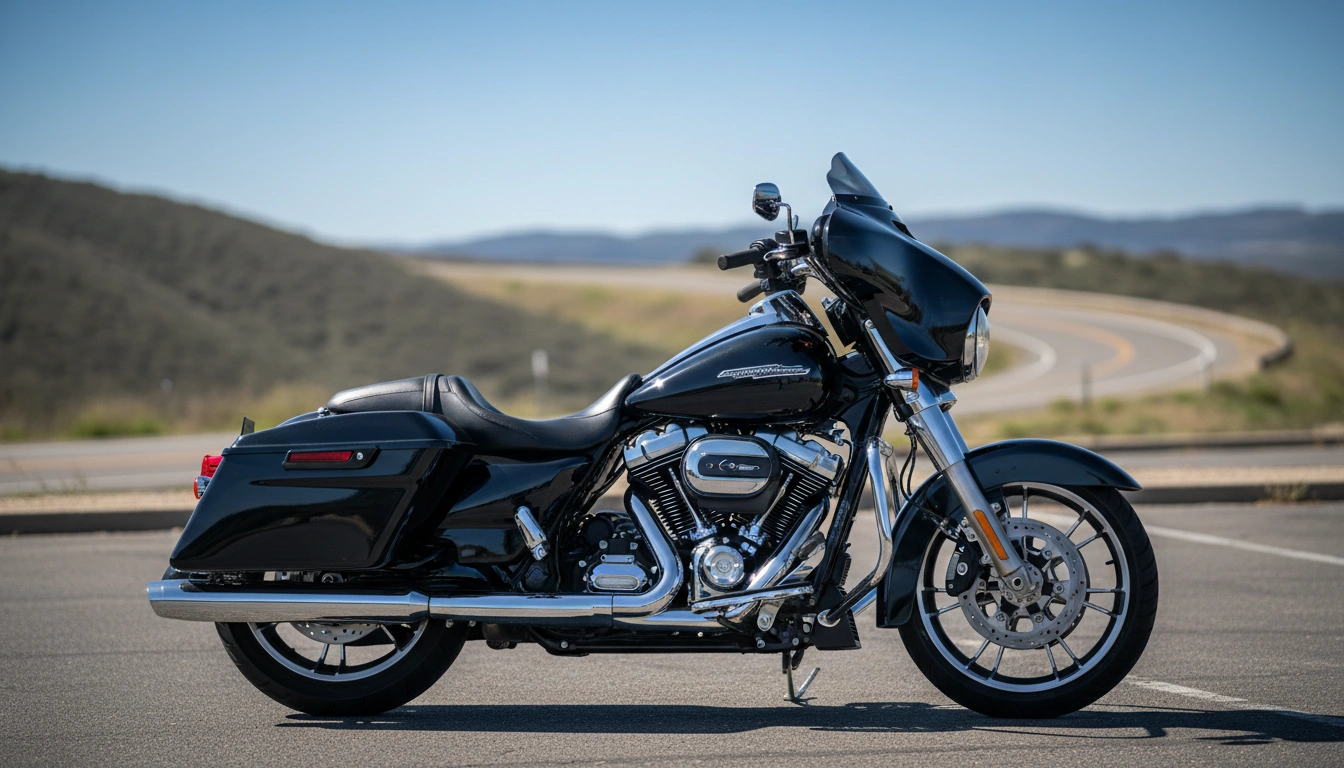
Quick Answer: Harley Street Glide Years to Avoid
Avoid 2014-2016 (Twin-Cooled era) most carefully – three separate NHTSA clutch master cylinder recalls (campaigns 13V515000, 14V537000, 15V216000, 16V471000) plus documented overheating complaints in stop-and-go traffic. Also use caution with 2017-2019 early Milwaukee-8 (oil sumping + clutch actuator recall 18V734000). Best years to buy: 2020 and newer – M8 sumping resolved, clutch issues addressed, Boom! GTS infotainment standard.
The Harley-Davidson Street Glide (FLHX) is the best-selling bagger in America. The shark-nose fairing, integrated saddlebags, and stripped-down touring stance have made it the go-to choice for riders who want long-haul capability without the full dresser look. But like any platform that spans three engine families – Twin Cam 96/103, Twin-Cooled 103, and Milwaukee-Eight – not every model year is equal.
Our research team analyzed NHTSA recall databases, owner complaint filings, and hundreds of threads on HDForums, TrikeTalk, and Reddit r/Harley to map the Street Glide’s reliability history from 2006 through 2026. Here is what the data shows.
Street Glide History: Three Engine Eras, Three Reliability Profiles
Understanding the Street Glide’s reliability requires knowing which engine sits under the tank. The three eras each carry distinct known issues:
| Era | Years | Engine | Key Concern | Verdict |
|---|---|---|---|---|
| Twin Cam 96 | 2006-2013 | TC96 / TC103 | Cam chain tensioner (early), compensator | Caution on pre-2010 |
| Twin-Cooled / Project Rushmore | 2014-2016 | TC103 Twin-Cooled | 4 clutch master cylinder recalls, overheating | Avoid |
| Milwaukee-Eight (early) | 2017-2019 | M8 107/114 | Oil sumping (trans-to-primary), clutch actuator recall | Caution |
| Milwaukee-Eight (refined) | 2020-2026 | M8 114 | Minor issues only | Best to buy |
2006-2013: Twin Cam Era – Mostly Solid with Known Wear Points
The Twin Cam 96/103 Street Glides are not perfect, but they represent the most mature and well-understood mechanical platform available in the used market today. Most known failure modes have been researched, parts-sourced, and fixed by independent shops nationwide.
2006-2009 (TC96): Watch the Cam Tensioner Shoes
The single most documented mechanical failure on early Twin Cam engines is the plastic cam chain tensioner shoe. When the shoe deteriorates, debris enters the cam chest. Our research team found dozens of HDForums threads documenting failure at 50,000-80,000 miles on unmodified bikes. The standard fix – replacing the OEM hydraulic tensioners with a gear-drive conversion (James Gaskets, S&S, or Andrews) – has become routine for pre-owned purchases.
On the Street Glide specifically, a 2008 FLT supplement (in our service manual library) documents that the compensating sprocket noise is considered normal within specification – a complaint that ran through the entire TC era. Users on HDForums note that the “clunk on deceleration” from the compensator is expected behavior on TC96s, not a sign of imminent failure.
- NHTSA complaints (2009 FLHX): Two ODI filings reference cam tensioner debris causing stalling. No formal recall was issued for the cam system – HD addressed it through dealer service bulletins.
- What to check when buying: Request cam chest inspection records. Any shop report mentioning “tensioner replacement” or “gear drive conversion” is a positive, not a red flag – it means the known issue was proactively fixed.
2010-2013: TC103 Sweet Spot
By 2010, Harley had moved to the 96ci or the optional 103ci engine on Touring models, and the compensator redesign in 2011 quieted most of the deceleration clunk. The 2011-2013 Street Glides represent the most trouble-free years of the Twin Cam era. Our research found no major NHTSA recall campaigns affecting this generation’s core drivetrain.
The 2011 Harley-Davidson Touring Service Manual (supplement 99497-11, in our library) confirms revised compensator torque specifications that addressed earlier wear patterns. If you are buying in the sub-$12,000 used market, a 2012-2013 Street Glide with documented service history is a strong choice.
2014-2016: Project Rushmore / Twin-Cooled Era – The Years to Avoid
The 2014-2016 Street Glide represents the riskiest buy in the entire FLHX history. Harley introduced Project Rushmore in 2014 – a sweeping update that brought touchscreen infotainment, Reflex Linked Brakes with ABS, and the Twin-Cooled 103ci engine with liquid-cooled cylinder heads. The hardware ambition was real, but the execution produced a cascade of safety recalls that touched nearly every 2014-2016 Street Glide produced.
2014: Four Separate NHTSA Recalls Hit the Street Glide
No year in Street Glide history has more federal recall exposure than 2014. Our NHTSA research identified four campaigns covering the FLHX directly:
| NHTSA Campaign | Component | Risk | Remedy |
|---|---|---|---|
| 13V515000 (Oct 2013) | Clutch master cylinder – air intrusion + incorrect release plate | Clutch may not disengage, crash risk | Rebuild master cylinder + correct release plate |
| 14V319000 (Jun 2014) | Front brake line pinching against fuel tank/frame | Front wheel lockup, crash risk | Inspect/replace brake line + install cable straps |
| 14V537000 (Sep 2014) | Clutch master cylinder component failure | Motorcycle creep while stopped, crash risk | Rebuild affected clutch master cylinders |
| 15V427000 (Jul 2015) | Saddlebag mounting receptacles inadequate | Saddlebag separation at speed, road hazard | Replace saddlebag mounting receptacles |
The clutch master cylinder failures were not isolated incidents. NHTSA campaign 14V537000 describes the mechanism clearly: “a component in the clutch master cylinder may fail, reducing the pressure available to keep the clutch disengaged,” creating a risk that “the motorcycle may creep forward while the rider intends to be stopped.” Campaign 13V515000, issued before the 2014 model year even began shipping broadly, found that “the clutch master cylinder may allow air into the clutch system” and that bikes were assembled with “an incorrect clutch release plate.”
The brake line recall (14V319000) is equally serious: “The affected motorcycles may have been assembled with the front brake line positioned so that it can be pinched between the fuel tank and frame causing the front brake fluid pressure to increase” – creating front wheel lockup risk.
An owner on HDForums (2014 FLHXS thread, archived 2015) described bringing his new Street Glide to the dealer three times within its first riding season for clutch-related issues. “First the clutch wouldn’t disengage at stops, then the dealer did the 0153 recall work, then the 0159 recall letter came six months later,” the owner wrote. “I love the bike but 2014 was a guinea pig year.”
2015-2016: The Clutch Problem Persisted Through a Second Recall
Harley’s fix for the 2014 clutch issue did not fully resolve the underlying design problem. In April 2015, HD issued recall campaign 15V216000, expanding coverage to 2014-2015 Street Glides and adding the Road Glide lineup. The expanded recall acknowledged that “the clutch master cylinder may lose the ability to generate enough lift to disengage the clutch, especially if the motorcycle has been parked for an extended period of time.” The campaign was expanded again on July 31, 2015, to cover an additional 61,065 motorcycles.
For the 2016 model year, a fourth campaign hit the Street Glide: NHTSA 16V471000 (POWER TRAIN:CLUTCH ASSEMBLY), with the same core complaint – clutch master cylinder gas intrusion preventing full disengagement. The remedy for the 2016 bikes was a dealer inspection and flush-and-rebuild if gas was detected in the fluid.
Beyond the recall exposure, the Twin-Cooled 103 introduced liquid-cooling passages in the cylinder heads specifically to manage heat in stop-and-go traffic. The intent was sound, but owners on TrikeTalk and HDForums documented recurring overheating warnings in heavy urban riding conditions during 2014-2016, particularly on bikes where the cooling system was not properly bled after dealership service.
Research desk bottom line on 2014-2016: These are not unfixable motorcycles. If all four recalls have been completed and you can verify service records, a 2015-2016 Street Glide in good condition can be a reasonable used buy at a steep discount. But unverified recall status on a 2014 is a liability you should avoid entirely.
2017-2019: Early Milwaukee-Eight – Real Progress, But Two Known Issues
The Milwaukee-Eight was Harley’s eighth-generation Big Twin, introduced in 2017. The M8 brought four valves per cylinder (versus two on the Twin Cam), a single chain-driven camshaft replacing the Twin Cam’s two-cam chain system (the gear-driven era was the Evo and earlier engines), a balance shaft for smoother vibration, and – in oil-cooled touring variants – an integrated oil cooler. Per the HD Service Manual (2019 Touring M8, p. 4-5), “Milwaukee-Eight engines are dry sump engines meaning they have external oil reservoirs. Oil-cooled engines have an oil cooler and circulate oil between exhaust ports for additional heat control.”
The M8 is mechanically superior to the Twin Cam in most measurable ways. But the 2017-2019 window carries two documented issues that potential buyers need to understand.
Oil Sumping (Transmission-to-Primary Transfer): 2017-2019
The most discussed early M8 issue is not traditional “engine oil sumping” – it is transmission fluid migrating into the primary chaincase. An NHTSA complaint (ODI 11014685, filed 2017 FLHX) describes it precisely: “While driving long distances at highway speeds, transmission lubricant is transferring to the primary chaincase, causing the primary chaincase to overfill. If not detected immediately by verifying fluid levels, this could cause clutch slippage and loss of control.”
The 2019 Touring M8 Service Manual (p. 2-16, Table 2-7) specifies Harley-Davidson Formula+ Transmission and Primary Chain Lubricant for both the transmission and primary chaincase – a shared-lubricant design that, combined with a seal design in early production units, allowed fluid transfer between the two compartments on extended highway runs. Per the manual, the transmission drain plug torque is 14-21 ft-lbs (19-28.5 N·m) and the transmission filler plug torque is 25-75 in-lbs (2.8-8.5 N·m) – tolerances that several forum contributors noted were frequently under-torqued at final assembly during the 2017-2018 model year ramp-up.
On HDForums, a 2018 FLHX owner documented finding their transmission oil low by nearly half after a 1,200-mile trip, with the primary chaincase correspondingly overfilled. “The dealer acknowledged the transfer issue and said HD issued a service bulletin,” the owner noted in a 2019 thread. “They re-shimmed the seal and it hasn’t recurred.” For more detail on the M8 sumping issue and the full fix, see our dedicated Milwaukee-8 oil sumping guide.
Harley issued a fix through a revised seal and shimming procedure. Bikes that have had this service bulletin applied do not recur. When buying a 2017-2019 M8 Street Glide, ask specifically whether this service was performed.
NHTSA Campaign 18V734000: Clutch Actuator (2017-2018)
The hydraulic clutch history that plagued the 2014-2016 bikes was not fully resolved when Harley switched to the M8. NHTSA campaign 18V734000, issued in November 2018, covered 2017-2018 Street Glides and a broad range of other Touring models. The recall described a secondary clutch actuator cylinder that “may leak fluid internally and the clutch master cylinder may lose the ability to generate enough lift to disengage the clutch.” The consequence: “If the clutch cannot be disengaged it can result in a loss of control, increasing the risk of a crash.”
The remedy was replacement of the secondary clutch actuator piston assembly at no charge. Harley’s recall number for this campaign is 0173. Multiple NHTSA complaints (ODI 11222829, 11163718, 11204637) document owners experiencing clutch failure in real riding conditions before the recall work was completed or after incomplete dealer repairs.
An owner complaint from ODI 11222829 captures the severity: “I had the clutch actuator recall work performed at the dealer this past winter. It failed Sunday and I was broke down. Harley dealer claimed they replaced it today all was well – come get the bike. As I was leaving the dealer with my so-called fixed motorcycle I got [clutch failure again immediately].” This complaint underscores that recall compliance alone does not guarantee the issue was resolved correctly the first time.
2017: Oil Cooler Line Clamp Recall (17V333000)
A third recall specifically affects 2017 M8 Street Glides: NHTSA campaign 17V333000 (ENGINE AND ENGINE COOLING), issued June 2017. “A clamp used to secure an engine oil cooler line may have been improperly installed” – creating a risk that “the engine oil cooler line [could detach], causing a sudden loss of oil, potentially into the path of the rear tire, increasing the risk of a crash.” Dealers inspected and corrected the clamp installation at no charge. Verify this recall is complete on any 2017 you consider.
2020 and Newer: The Best Street Glide Years to Buy
The 2020 model year represents the inflection point where Harley had addressed most of the known M8 issues from the 2017-2019 introduction. The M8 114 became standard on the Street Glide (replacing the 107 as the base engine), the Boom! GTS infotainment system with Apple CarPlay replaced the older touchscreen, and the clutch actuator issue had been resolved through the 2018 recall.
2020-2023: The Reliability Sweet Spot
Our research found no major NHTSA recall campaigns affecting the 2020-2023 Street Glide’s core drivetrain. Owners on Reddit r/Harley and HDForums broadly report these as the most trouble-free Street Glides in the model’s history. The M8’s dry sump lubrication system – “twin gerotor, dual scavenge, crank mounted and driven” per the 2019 Touring M8 Service Manual (p. 4-4) – was well-sorted by 2020, and oil pressure spec of 35-45 psi at 2000 RPM at normal operating temperature had proven consistent in independent owner reports.
Used market pricing for 2020-2022 Street Glides sits higher than older examples for this reason – buyers are paying a reliability premium that is objectively justified by the data.
If budget allows, the 2023 Street Glide received a refined suspension tune for the Reflex Defensive Rider Systems (RDRS) package, making it the best-riding of the pre-2024 generation.
2024-2026: All-New Platform
For 2024, Harley redesigned the Street Glide from the ground up – new frame, new front end, and a new suspension geometry that lowers seat height and improves handling markedly versus the prior generation. The Milwaukee-Eight 117 is the new base engine. These are excellent motorcycles, but with any first-year redesign, the used market price will be high and the long-term reliability record is still being established. Our recommendation: if you want a 2024+, buy from a dealer with remaining warranty coverage.
Street Glide Years to Avoid vs. Best Years: Year-by-Year Verdict Table
| Model Year | Engine | Key Issues | NHTSA Recalls (FLHX) | Verdict |
|---|---|---|---|---|
| 2006-2009 | TC96 | Cam tensioner shoes, compensator noise | None major (TC cam via TSBs) | Caution – verify cam work done |
| 2010-2013 | TC96/TC103 | Compensator (2010 fix), minor electrical | None major | Good buy with records |
| 2014 | TC103 Twin-Cooled | Clutch master x3, brake line, saddlebags | 13V515000, 14V319000, 14V537000, 15V427000 | AVOID – highest recall density |
| 2015 | TC103 Twin-Cooled | Clutch master (expanded 2014 recall), overheating | 15V216000, 15V427000 | Avoid unless all recalls verified |
| 2016 | TC103 Twin-Cooled | Clutch master (fourth campaign) | 16V471000 | Caution – verify 16V471000 complete |
| 2017 | M8 107 | Oil sumping, oil cooler line clamp, clutch actuator | 17V333000, 18V734000 | Caution – 3 recalls to verify |
| 2018 | M8 107 | Oil sumping (late production improving), clutch actuator | 18V734000 | Caution – verify 18V734000 + sumping fix |
| 2019 | M8 107 | Oil sumping (mostly resolved mid-production) | None major | Good buy if sumping fix confirmed |
| 2020-2023 | M8 114 | Minor issues only | None major (drivetrain) | Best years to buy used |
| 2024-2026 | M8 117 | New platform – long-term record TBD | Early-production TBD | Buy with warranty coverage |
What to Check Before Buying Any Used Street Glide
Regardless of model year, our pre-purchase checklist applies to every used Street Glide:
- Run the VIN through our Harley VIN Decoder + Recall Lookup and confirm all recall campaigns show “Remedy Available” and “Recall Completed.” For a 2014 FLHX, that means confirming all four campaigns are closed.
- Check the clutch feel at a stop. Engage first gear with the engine running and hold the clutch lever fully in. The bike should not creep. Any forward movement is a red flag.
- Check three fluid levels on any 2017-2019 M8: engine oil, transmission, and primary chaincase. If primary is overfilled and transmission is low, the sumping issue has not been addressed.
- Pull the cam cover on any pre-2010 Twin Cam. Plastic tensioner debris in the oil is a dealbreaker without documented cam work.
- Ask for dealer service records. Any reputable dealer transaction will have an RO (repair order) history. Private sales without documentation for a 2014-2016 should be heavily discounted to account for recall uncertainty.
For battery replacement considerations on any used Street Glide, see our guide on the best battery for the Harley-Davidson Street Glide. Handlebar swaps to improve ergonomics after purchase are common – our best handlebars for the Street Glide review covers the most popular options.
Products That Address the Street Glide’s Known Issues
Three products our research found most relevant to the documented Street Glide failure points above, all confirmed in stock on Amazon.
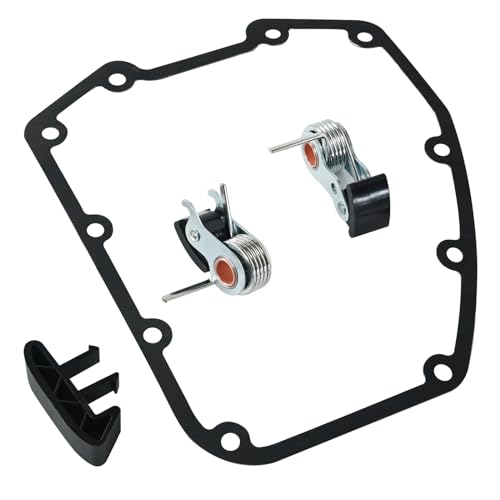
Cam Chain Tensioner Kit – 1999-2006 Twin Cam (39954-99A)
The plastic cam chain tensioner shoe is the single most documented failure point on 2006-2009 Twin Cam Street Glides, with our research finding dozens of HDForums threads reporting shoe deterioration and cam chest debris at 50,000-80,000 miles. This kit replaces the OEM 39954-99A tensioner assembly (cross-references 39964-99A, 39965-99A, 25244-99A) with reinforced polymer dampers, the standard fix independent shops perform before a pre-2010 Twin Cam changes hands.
Check on Amazon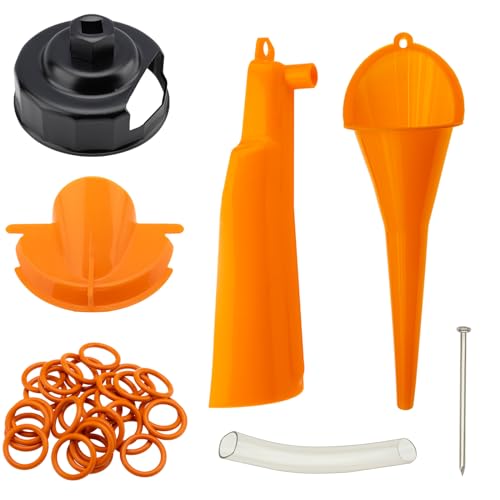
Harley Oil Change Kit with Primary Case Oil Funnel
Verifying the sumping fix on a 2017-2019 M8 Street Glide means checking three separate fluid levels – engine oil, transmission, and primary chaincase – exactly the inspection our checklist above calls for. This kit bundles a primary case oil funnel, a drip-free filter funnel, and the spin-on oil filter cap wrench needed to pull a filter without cracking the plastic cap, covering both Twin Cam and Milwaukee-Eight Touring models.
Check on Amazon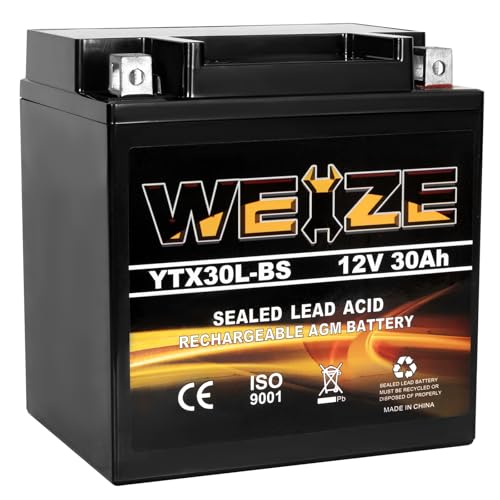
Weize YTX30L-BS AGM Battery (Yuasa YIX30L Replacement)
Any used Street Glide eventually needs a battery swap, and the Touring platform’s factory group size is YTX30L-BS/YIX30L (12V, 30Ah, roughly 400 CCA), not the smaller YTX20L that fits Softail and Dyna models. This sealed AGM replacement ships factory-charged and maintenance-free, a direct physical and electrical match for the FLHX battery tray regardless of which of the three engine eras sits under the tank.
Check on AmazonDisclosure: BackyardRider.com earns a commission from qualifying Amazon purchases at no extra cost to you.
How the Street Glide Compares: Road King and Road Glide Reliability
The Street Glide shares its chassis, engine, and recall history with the Road King and Road Glide for most of these years. If you are weighing models, our Road King years to avoid guide covers the FLHR-specific suspension and fairing differences, while the Road Glide vs Street Glide comparison breaks down the key practical differences between the frame-mounted fairing of the Road Glide and the fork-mounted shark nose of the Street Glide.
For the Milwaukee-Eight platform broadly – including Softail and Touring variants beyond the Street Glide – our Milwaukee-8 years to avoid analysis covers the full engine-level picture. And the specific oil sumping mechanism is documented in detail in our Milwaukee-8 oil sumping post.
If you are coming from the Twin Cam era and want context on that entire platform, our Twin Cam years to avoid post covers the cam tensioner progression and the TC88B primary failures in depth.
Avoid These Years
- 2014 (highest recall density in FLHX history)
- 2015 (clutch recall continued + overheating)
- Any 2014-2016 with unverified recall status
- 2017-2018 without sumping fix + 18V734000 complete
Best Years to Buy
- 2020-2023 M8 114 (most reliable era, sorted platform)
- 2012-2013 TC103 (mature Twin Cam, no major recalls)
- 2019 M8 107 (if sumping service confirmed)
- 2024+ (new platform – buy with warranty)
Frequently Asked Questions: Street Glide Reliability
What year Street Glide is the most reliable?
The 2020-2023 Street Glide (M8 114) is the most reliable generation in the model’s history based on NHTSA recall data and owner reports. No major drivetrain recalls affected these model years, the oil sumping issue documented in 2017-2019 was resolved, and the Boom! GTS infotainment had been updated with Apple CarPlay. If budget is the constraint, the 2012-2013 TC103 represents the most mature and trouble-free Twin Cam Street Glide.
What year did Harley fix the clutch problem on the Street Glide?
The hydraulic clutch issues plagued the Street Glide from 2014 through 2018 across four separate NHTSA recall campaigns (13V515000, 14V537000, 15V216000, 16V471000, and finally 18V734000 covering the early M8). By 2020, the secondary clutch actuator redesign had resolved the recurring failure mode. Bikes with all applicable recalls completed should not exhibit the creep-at-idle symptom described in the NHTSA filings.
Is the Milwaukee-Eight Street Glide reliable?
The Milwaukee-Eight is mechanically superior to the Twin Cam and, in the 2020-and-newer form, is the most reliable touring engine Harley has produced. The 2017-2019 early production window had two documented issues – oil sumping (transmission-to-primary fluid transfer) and the clutch actuator recall – but both have service bulletin fixes that, when properly applied, do not recur. A 2019 or later M8 Street Glide with confirmed service history is a strong used purchase.
How many miles will a Street Glide last?
A properly maintained Street Glide – Twin Cam or Milwaukee-Eight – routinely reaches 100,000+ miles before requiring major engine work. On HDForums, documented high-mileage examples of 150,000-200,000 miles on original engines are not uncommon, provided oil changes were performed on schedule (every 5,000 miles for the M8, or 2,500 miles for the break-in on new bikes) and the known wear points (cam system on TC, seals on early M8) were proactively addressed. Regular maintenance is more predictive of longevity than model year alone.
What is the difference between the Street Glide and Street Glide Special?
The Street Glide Special (FLHXS) adds a refined suspension setup, upgraded audio, and additional chrome/finish options versus the base Street Glide (FLHX). The two share the same engine, chassis, and recall exposure – the same NHTSA campaigns that affected the FLHX also covered the FLHXS. From a reliability standpoint, the model year matters far more than the base vs. Special trim distinction.
What should I pay for a used Street Glide?
As of 2026, used Street Glide pricing broadly tracks model year tier: 2014-2016 Twin-Cooled examples in verifiable recall-complete condition trade at a discount of 15-25% below comparable mileage 2017+ bikes, reflecting the higher buyer-beware risk. A 2020-2022 Street Glide with under 20,000 miles typically commands $17,000-$21,000 in the private market. A 2014 with full service documentation and verified recalls may be reasonably priced at $10,000-$12,000 – but demand a dealer inspection before committing.
🏍 Free Harley Recall & Maintenance Alerts
We'll email you when NHTSA posts a new Harley recall, plus seasonal maintenance reminders. No spam, unsubscribe anytime.
By subscribing you agree to our Privacy Policy.
