
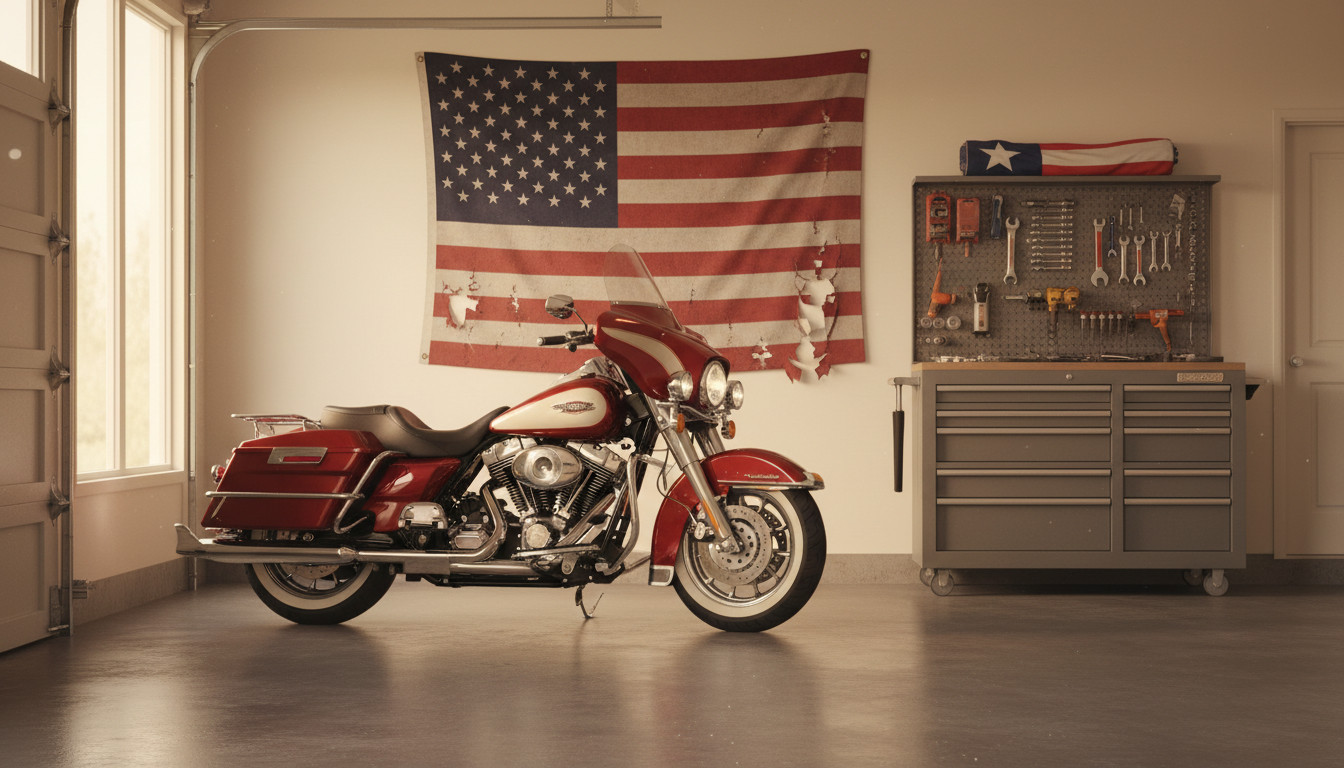
Quick Answer: Harley-Davidson Insurance is a branded program underwritten by third-party carriers (not HD itself). It offers solid coverage tailored to Harley owners – especially the custom parts and accessories add-on – but it is not automatically the cheapest option. Our research shows it competes well for older Touring models and heavily customized bikes, but independent quotes from Progressive or Dairyland often win on price for newer, stock machines. Always compare at least three quotes before deciding. Estimate your real monthly payment with our free Harley loan calculator – knowing your financed amount up front sharpens the insurance-to-payment trade-off.
What Is Harley-Davidson Insurance, Exactly?
Most riders assume “Harley-Davidson Insurance” means HD itself is the insurer. That is not the case – and understanding the distinction matters when you are evaluating value.
The Harley-Davidson Insurance program is a co-branded insurance offering marketed through Harley-Davidson dealerships and the official HD website (harley-davidson.com/insurance). The actual underwriting is handled by third-party insurance carriers. HD licenses its name and distributes the product; the insurer takes on the financial risk. This model is common in branded insurance – Ford, USAA, and several other manufacturer-affiliated programs operate similarly.
Per the Insurance Information Institute (III), manufacturer-affiliated insurance programs are generally competitive for specific customer segments – particularly owners who keep high-value or heavily customized equipment that standard carriers undervalue in claims. (III.org – Motorcycle Insurance)
What HD Insurance does well is bundle the “Harley owner” profile into one policy: your motorcycle, trailer, spare parts in storage, and riding apparel can all fall under one umbrella. Whether that packaging justifies the premium depends on your specific situation.
Coverage Types Available Under HD Insurance
The program covers more than just the bike – here is a breakdown of what HD Insurance typically offers and what each component actually does for a Harley owner.
- Liability Coverage: Covers bodily injury and property damage you cause to others in an at-fault accident. Required by law in nearly every U.S. state. Per NHTSA 2023 Traffic Safety Facts, motorcyclists are approximately 28x more likely per vehicle mile traveled to die in a crash than passenger car occupants – making adequate liability limits non-negotiable. (NHTSA.gov – Motorcycle Safety)
- Collision Coverage: Pays to repair or replace your Harley if you hit another vehicle or object, regardless of fault. Important for financed bikes – lenders typically require it.
- Comprehensive Coverage: Covers non-collision losses: theft, vandalism, fire, flooding, and weather damage. Given that Harley-Davidson motorcycles rank among the most frequently stolen motorcycle brands in the U.S. (per NHTSA theft data), this is not an optional luxury.
- Custom Parts and Accessories (CP&A) Coverage: This is the standout feature for Harley owners. Standard policies often cap aftermarket coverage at $1,000-$3,000. HD Insurance can extend coverage for chrome accessories, audio upgrades, custom paint, and performance parts – relevant given that many Touring owners spend $5,000-$15,000+ on customization.
- Uninsured / Underinsured Motorist (UM/UIM): Covers you if an at-fault driver has no insurance or insufficient coverage. The III recommends UM/UIM for all motorcyclists given the high rate of uninsured drivers in some states. (III.org – Uninsured Motorists)
- Medical Payments / Personal Injury Protection (PIP): Covers your medical expenses after an accident, regardless of fault. PIP is mandatory in no-fault states; optional in others.
- Roadside Assistance and Trip Interruption: Towing, fuel delivery, and lodging/transportation reimbursement if your bike breaks down away from home. Forum discussions on HDForums.com frequently cite this benefit as a practical reason to consider HD-branded coverage for long-distance Touring riders.
- Trailer Coverage: Covers a motorcycle trailer while attached to your tow vehicle. Useful for riders who haul their bike to rallies like Sturgis or Daytona Bike Week.
What Factors Determine Your Premium?
Insurance pricing varies widely – what your neighbor pays for the same model tells you almost nothing about what you will pay. Here are the main variables that move the needle.
- Age and Riding Experience: Riders under 25 and those with fewer than 3 years of experience typically pay significantly higher premiums. Insurers use actuarial data showing elevated claims frequency in these groups.
- Location: Urban ZIP codes with higher theft rates, traffic density, and repair costs push premiums up. Rural storage with lower crime rates can reduce rates. State minimum requirements also vary.
- Motorcycle Model and Value: A 2024 Road Glide with a $27,000+ MSRP costs more to insure than a 2010 Sportster 883. Engine displacement, vehicle age, and replacement part costs all factor in.
- Customization Level: Heavily modified bikes – stage kits, custom paint, audio systems, extended saddlebags – increase replacement cost and thus premiums, especially if CP&A coverage is included.
- Riding Record: At-fault accidents and traffic violations within the past 3-5 years raise rates. A clean record is the single most controllable factor.
- Annual Mileage: Lower annual mileage (commuter vs. weekend rider) often qualifies for reduced rates under usage-based programs.
- Storage and Security: Bikes stored in a locked garage with a disc lock or alarm typically get better rates than those parked on the street. For related tips, see our guide on how to store your Harley for winter. Before purchasing a used Harley, run a VIN decoder and recall lookup to confirm the title is clean and no open NHTSA campaigns apply.
- Deductible Level: A higher deductible lowers your annual premium but increases out-of-pocket cost at claim time. Common deductibles range from $250 to $1,000.
Note: We do not publish specific premium figures because ranges vary too widely by state, rider profile, and model year to be useful. Always obtain a direct quote from the insurer for accurate pricing.
HD Insurance vs. Independent Insurers: A Practical Comparison
This is where most riders want a clear answer – and the honest one is “it depends on your profile.”
Our research reviewed coverage discussions across HDForums.com, r/Harley, and multiple insurance comparison resources. Here is what consistent patterns show:
| Factor | HD Insurance (Branded) | Progressive | Dairyland | Geico Motorcycle |
|---|---|---|---|---|
| Custom Parts / Accessories | Strong – dedicated CP&A coverage | Good – “custom parts” add-on available | Limited by default | Limited by default |
| Multi-bike households | Competitive | Strong multi-vehicle discounts | Moderate | Good multi-vehicle |
| High-mileage Touring riders | Competitive | Strong – Snapshot program | Adequate | Adequate |
| Riders with past violations | May be less flexible | Known for accepting high-risk riders | Specializes in high-risk | Moderate flexibility |
| Roadside assistance quality | Strong (HD network) | Good | Basic | Good |
| Quote availability | Via HD dealership or hdinsurance.com | Online instant | Online or broker | Online instant |
When HD Insurance tends to win: Heavily customized bikes with $5,000+ in aftermarket parts, riders who want one policy covering bike + trailer + gear, and long-distance Touring riders who value HD’s roadside network. For a full evaluation of the long-distance platform, see our analysis of whether Harley-Davidson is good for long-distance riding.
When independent carriers tend to win: Riders with clean records on stock or lightly modified bikes who can negotiate multi-vehicle discounts, and riders with past violations who need a flexible underwriter like Dairyland.
Owning a Harley also comes with ongoing maintenance costs – see our breakdown of whether Harley-Davidson maintenance is expensive for the full picture of ownership costs.
The Custom Parts and Accessories Coverage: Why It Matters for Harley Owners
Of all the coverage features, CP&A is the one most worth scrutinizing closely – because it is the area where standard policies fall shortest for Harley owners.
The average Harley-Davidson owner spends considerably more on accessories and customization than owners of Japanese or European brands. Saddlebags, crash bars, highway pegs, audio systems, custom paint jobs, and engine upgrades are common – especially on Touring models like the Road King, Street Glide, and Road Glide. A standard homeowner’s or renter’s policy will not cover motorcycle accessories. A basic motorcycle policy may cap accessories at $1,000-$3,000, leaving a significant gap for a heavily modified Touring bike.
HD Insurance’s CP&A coverage is specifically structured to cover parts and accessories installed on your Harley. The key question to ask any insurer – HD or independent – is: “Does my policy cover aftermarket parts at replacement value or actual cash value?” Replacement value coverage is what you want. Actual cash value subtracts depreciation, which can result in a substantially lower payout.
If you are financing your Harley, your lender’s requirements intersect with this question. For a full overview of the purchase and financing landscape, see how much the cheapest Harley-Davidson costs and how to finance a Harley with bad credit.
Important Safety and Theft Context
Insurance decisions should be informed by real-world risk data – not just marketing copy. Two data points from government sources are worth anchoring your decision.
Crash risk: Per NHTSA’s 2023 Traffic Safety Facts, motorcyclists accounted for 14% of all traffic fatalities despite representing approximately 3% of registered vehicles. This disproportionate risk underscores the importance of carrying adequate liability AND uninsured motorist coverage – not just minimum state-required amounts. (NHTSA.gov)
Theft risk: The NHTSA and FBI crime statistics consistently show that Harley-Davidson is among the top brands targeted for theft, due to high resale value of parts. Comprehensive coverage is not optional if your bike is parked in an urban area or left unattended at events. Our research on whether Harley-Davidson is the best motorcycle covers resale value retention vs. competitors – useful context when deciding how much coverage to carry. A reliable security system can reduce both your theft risk and your premium – see our guide on Harley-Davidson security system reset for related setup information.
How to Get the Best Rate (HD or Independent)
Whether you end up with HD Insurance or a standalone carrier, the steps to optimize your rate are the same – and riders who skip these steps routinely overpay by hundreds of dollars annually.
- Get at least three quotes before committing. Include HD Insurance, Progressive, and one regional carrier. Use each insurer’s online tool for an apples-to-apples comparison of the same coverage limits.
- List all customizations accurately. Underreporting aftermarket parts saves a small amount on premium but can leave you dramatically underinsured at claim time.
- Ask about discounts: Safety course completion (MSF Basic or Advanced), multi-vehicle, paid-in-full, and anti-theft device discounts are widely available but not always proactively offered.
- Review coverage limits annually. As your Harley ages and your riding profile changes, your coverage needs shift. A bike you ride 500 miles per year may qualify for lower mileage tiers.
- Check AM Best or Demotech ratings for any insurer you consider. These ratings measure financial strength – relevant because you want your insurer to actually pay claims. III recommends checking insurer ratings before binding coverage. (III.org – How to Choose an Insurer)
Disclaimer: Nothing on this page constitutes insurance advice. Premiums, coverage terms, and availability vary by state, insurer, and individual profile. Always consult a licensed insurance agent before making coverage decisions.
Frequently Asked Questions
These are the questions our research found riders asking most often about HD Insurance across forums, Reddit, and review sites.
Is Harley-Davidson Insurance actually underwritten by Harley-Davidson?
No. Harley-Davidson licenses its name to a co-branded insurance program, but the actual underwriting is handled by third-party insurance carriers. HD distributes the product through dealerships and its website (harley-davidson.com/insurance). This is standard practice for manufacturer-affiliated insurance programs.
Is HD Insurance cheaper than Progressive or Geico for Harley owners?
Not automatically. HD Insurance tends to be competitive for heavily customized bikes where CP&A coverage is a priority, and for multi-asset policies (bike + trailer + gear). For stock or lightly modified bikes with a clean riding record, Progressive and Geico often return lower quotes. Always compare at least three quotes with identical coverage limits before deciding.
Does Harley-Davidson Insurance cover custom parts and aftermarket accessories?
Yes – custom parts and accessories (CP&A) coverage is one of HD Insurance’s highlighted features. It is designed for the Harley owner who has invested in chrome upgrades, audio systems, custom paint, or performance parts. The key question to ask is whether your specific policy covers parts at replacement value or actual cash value – replacement value is significantly more protective.
What types of vehicles does HD Insurance cover?
The HD Insurance program covers motorcycles (all Harley models), as well as trailers used to haul motorcycles. Coverage for ATVs, personal watercraft, and snowmobiles may also be available depending on the specific policy and state. Verify current offerings directly at harley-davidson.com/insurance or through a participating dealer.
Does HD Insurance include roadside assistance?
Yes – roadside assistance is typically included or available as an add-on. For Touring riders who cover long distances, this benefit is practically valuable: towing, battery jump, fuel delivery, and trip interruption reimbursement (lodging and transportation) are standard inclusions in the HD-branded roadside program. Riders on HDForums.com note this benefit as a practical advantage for Sturgis or cross-country trips.
How much is Harley-Davidson insurance per month?
There is no single answer – premiums vary significantly based on your age, location, riding record, bike model, customization level, coverage limits, and deductible. Providing a specific figure would be misleading. The best approach is to get a direct quote from HD Insurance (via harley-davidson.com/insurance) alongside two or three independent carriers, specifying identical coverage limits for each quote.
Is comprehensive coverage worth it for a Harley?
For most Harley owners, yes. NHTSA theft data consistently shows Harley-Davidson motorcycles rank among the top-stolen brands due to their high parts value. Comprehensive coverage protects against theft, vandalism, fire, and weather damage. If your bike is financed, your lender will require it. For paid-off bikes with lower market value, weigh the annual premium against the bike’s actual cash value to decide if it makes financial sense.
Can I get HD Insurance if I buy a used Harley from a private seller?
Yes – HD Insurance is not restricted to new dealer purchases. You can obtain a quote for any owned Harley-Davidson motorcycle regardless of where you purchased it. Contact HD Insurance directly at harley-davidson.com/insurance or call the program’s customer line to confirm eligibility for your specific model and year.
Research compiled May 2026. Sources: NHTSA.gov (motorcycle safety and theft statistics), Insurance Information Institute (III.org), harley-davidson.com/insurance (coverage overview), HDForums.com and r/Harley (owner experience discussions). This article is for informational purposes only and does not constitute insurance or financial advice.
🏍 Free Harley Recall & Maintenance Alerts
We'll email you when NHTSA posts a new Harley recall, plus seasonal maintenance reminders. No spam, unsubscribe anytime.
By subscribing you agree to our Privacy Policy.
